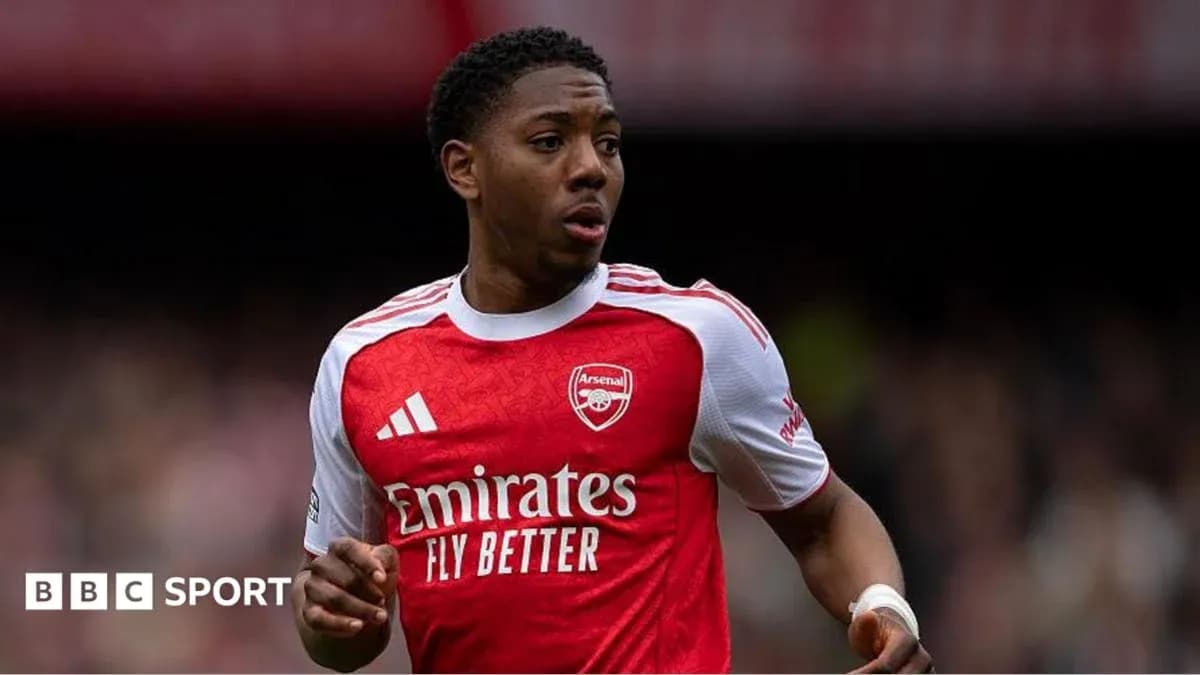
Myles Lewis-Skelly: Arsenal's Rising Star in Midfield
Myles Lewis-Skelly has never taken the easy route into Arsenal’s first team. He’s had to slip through side doors, seize moments, and turn crises into opportunity. Now, on the brink of another season, he stands somewhere between “pure profit” on a balance sheet and the beating heart of Arsenal’s next midfield.
A full-back who never really was
When Arsenal’s squad creaked under the weight of injuries in the 2024-25 campaign, Lewis-Skelly was pushed into the gap at left-back. Nineteen years old, a Hale End midfielder by trade, suddenly patrolling the flank in a title-chasing side.
He didn’t just cope. He flourished.
By the end of that season he had muscled his way into the conversation as one of the Premier League’s standout young full-backs. He inverted into midfield with the ease of someone who had grown up there, slipped out of tight spaces, and glided away from challenges. Arsenal’s back four became a launchpad for his midfield instincts.
Those qualities had already made him a star of the academy. Now everyone else could see them too.
England came calling. In March 2025, under the arch at Wembley, he became the youngest player to score on his England debut, opening the scoring in a 2-0 win over Albania. A few months later, Arsenal tied him down to a new five-year deal. The club’s message was clear: this was one of their own, and he was part of the future.
The twist, of course, was that his breakthrough had come in a role that wasn’t supposed to be his.
The squeeze
The second act is rarely as simple.
Last season, the competition around him thickened. Riccardo Calafiori, signed for £42m in 2024, finally shook off his fitness issues. The Italian’s ability to step into midfield and his streak of chaos in the final third became central to Mikel Arteta’s attacking structure. On top of that, Piero Hincapie arrived from Bayer Leverkusen, initially on loan and now permanently, adding another experienced left-sided defender to the mix.
Both older. Both with more senior minutes. Both trusted.
Lewis-Skelly’s minutes dried up. Arteta admitted he had been “tough” on the teenager. The manager could lean on seasoned internationals; the academy kid had to wait.
Then the season began to bite back at others.
Martin Zubimendi, so often the metronome at the base of midfield, saw his form dip as the campaign wore on. With four Premier League games left and the title race in full swing, Arteta finally turned to Lewis-Skelly in his natural habitat: central midfield, away at Fulham.
The response was emphatic. He played with the composure of a veteran and the energy of a teenager desperate to prove a point. From that moment, he started all but one of Arsenal’s remaining games as they surged to the Premier League title and reached the Champions League final, where Paris St-Germain stopped them one step short.
He hadn’t just filled in. He had changed the temperature of Arsenal’s midfield.
“Pure profit” and pure football
Modern football doesn’t allow romance to live on its own. Every academy success story comes with a spreadsheet shadow.
As a homegrown player, any sale of Lewis-Skelly would count as “pure profit” in Arsenal’s accounts. In a world of financial regulations and long-term planning, that phrase carries weight in boardrooms, even if it grates on terraces.
Lewis-Skelly knows it. When Arsenal celebrated their title at Selhurst Park on the final day of last season, he posted a picture with the Premier League trophy and captioned it, pointedly, “pure profit”.
It was a nod to the debate swirling around him. Arsenal spent around £250m on new signings last summer. They want to run as a sustainable club. Trading is part of the model. That reality put him on the list of players the club were at least prepared to listen to offers for.
Then came that late-season run in midfield. Those performances forced a pause. Selling an academy graduate who had just shown he could dictate games in the position he has always claimed as his own suddenly felt less like smart business and more like self-sabotage.
Guimaraes, traffic, and a window of opportunity
The calculation is still complicated. Arsenal are edging closer to completing the signing of Newcastle captain Bruno Guimaraes for a fee that could rise to £80m. A player of that calibre doesn’t arrive to sit and watch. He arrives to start, to shape the midfield, to demand the ball when it matters most.
On paper, that’s another barrier in Lewis-Skelly’s path. Declan Rice, Martin Odegaard, Eberechi Eze, Zubimendi, Mikel Merino, potentially Guimaraes – it’s a crowded room.
Yet timing has opened a crack in the door.
The World Cup’s late finish has left a clutch of Arsenal’s midfielders lagging behind in their preparations. Rice and Eze with England, Merino with Spain’s winning side, Zubimendi and Odegaard too – none of them have fully rejoined the group. Their legs will take time to catch up.
Lewis-Skelly doesn’t have that problem. He has started pre-season friendlies against Girona and Real Betis and looked like a player intent on nailing down his claim before anyone else can even lace up properly.
Against Betis, Arteta trusted him as the deepest midfielder. He accepted the responsibility, screened the back line, then drove forward when Arsenal needed someone to carry the ball through the thirds. He didn’t just sit; he stitched.
The connection with Calafiori, now pushed higher and encouraged to roam, looked natural.
“We just speak in the last few days about this connection that we have – we don’t need to speak,” Calafiori said afterwards. “I really like to play with him, a really good player.”
One drifts forward, the other slides out to cover at left-back, then steps back inside when the move resets. It’s the kind of instinctive understanding that can’t be bought easily, which is exactly why clubs try to grow it at places like Hale End.
Nine days to make a statement
Nine days from now, Arsenal face Manchester City in the Community Shield. It’s not a trophy that defines seasons, but it does often reveal a manager’s early pecking order.
Lewis-Skelly has pushed himself towards the front of that queue. He has survived the positional reshuffle, the influx of big-money signings, and the cold logic of balance sheets. He has already shown he can be an emergency left-back, a modern inverted full-back, and a high-level central midfielder in a title-winning side.
Now comes the real question: in a squad stacked with internationals and superstars, is he still just “pure profit” – or the player Arsenal can least afford to lose?