Morocco's Tactical Mastery vs Canada in World Cup Round of 16
Canada’s 4-4-2 against Morocco’s 4-2-3-1 at NRG Stadium produced a match where structure and control belonged to Morocco, even if the shot volume leaned slightly toward Canada. The 3-0 scoreline in this World Cup Round of 16 tie reflected Morocco’s superior management of space, tempo and transitions rather than sheer attacking volume.
Morocco’s 4-2-3-1, with Ayyoub Bouaddi and Neil El Aynaoui as the double pivot, was built to dominate the ball and deny Canada access to central zones. Their 55% possession and 472 passes (389 accurate, 82%) show a side comfortable circulating under pressure. The pivots consistently offered angles behind Canada’s first line, allowing Achraf Hakimi and Noussair Mazraoui to advance as high full-backs while Bilal El Khannouss and Brahim Díaz drifted inside. This created a fluid box in midfield that outnumbered Canada’s flat 4-4-2.
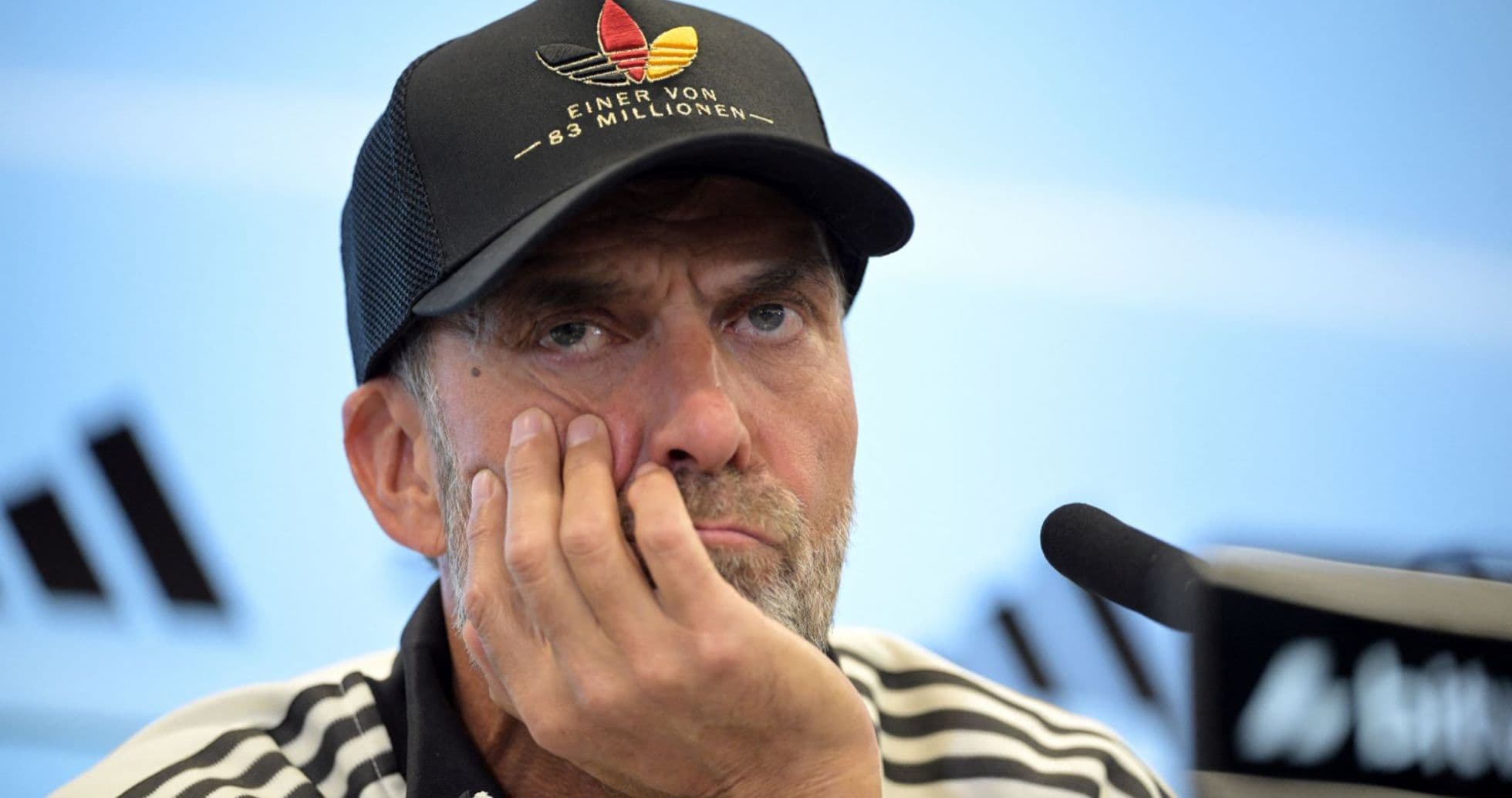
Canada’s 4-4-2 under Jesse Marsch was aggressive but often reactive. With 45% possession and 357 passes (272 accurate, 76%), they leaned on verticality and wing progression rather than sustained control. The front two, Jonathan David and Tani Oluwaseyi, tried to screen Morocco’s pivots, but the distance between Canada’s forwards and midfield line grew as Morocco circulated the ball. That gap forced Stephen Eustaquio and Niko Sigur to step out late, contributing to Canada’s 24 fouls and four yellow cards as they repeatedly arrived a step behind the play.
First Half
In the first half, Canada’s defensive block was relatively compact, and Morocco’s final-third play was more probing than penetrative. Morocco had only five total shots all game (four on goal), but their shot selection was high quality, reflected in an xG of 0.78 from limited attempts. Canada, by contrast, produced 11 total shots (three on goal, three blocked, seven inside the box) for an xG of 0.86, but their finishing lacked clarity and composure. Many of Canada’s efforts came from broken plays and second balls rather than well-constructed attacks.
Second Half
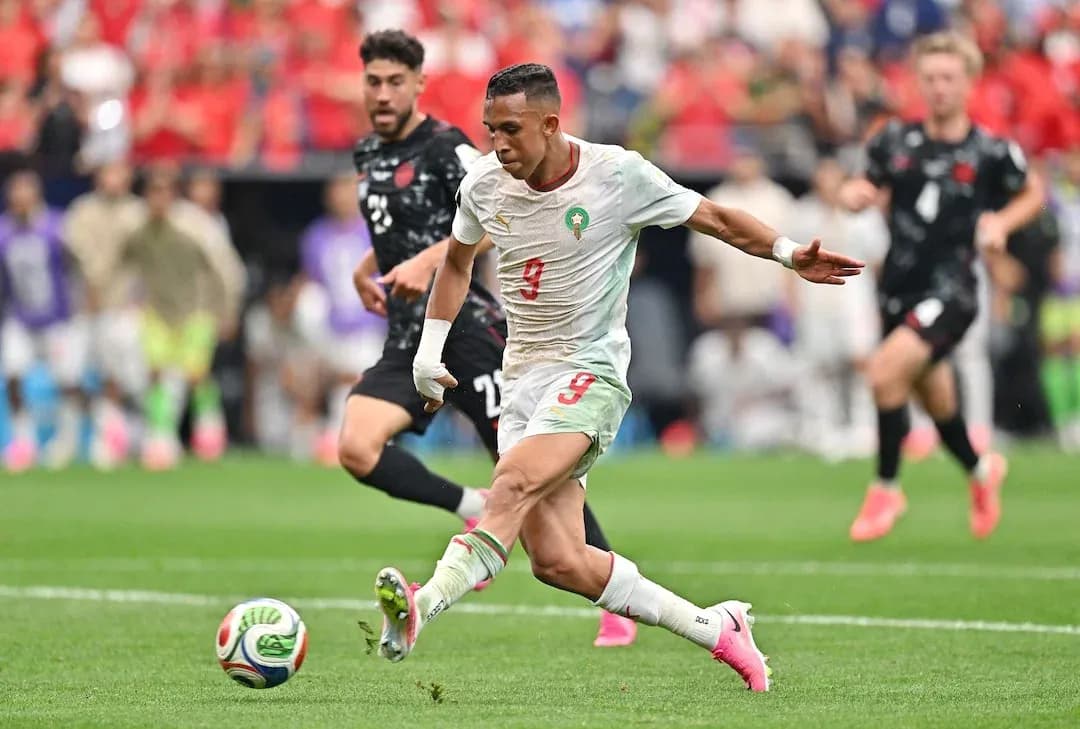
The second half exposed the tactical fault lines. The first goal at 50' came from exactly the pattern Morocco had been trying to establish: Hakimi advancing from right-back, combining and delivering quality into the half-space, with Azzedine Ounahi arriving from midfield. Canada’s wide midfielders, Tajon Buchanan and Ali Ahmed, were pinned deep by Morocco’s full-backs, and the back four were slow to step to the edge of the box. That hesitation allowed Ounahi to exploit the seam, underlining Morocco’s superior occupation of the interior channels.
Marsch’s response was to adjust the front line. The substitution vector at 63' — Cyle Larin (IN) came on for Tani Oluwaseyi (OUT) — aimed to add a more traditional penalty-box reference and improve Canada’s ability to hold the ball up. Later, Jacob Shaffelburg (IN) for Richie Laryea (OUT) and Promise David (IN) for Ali Ahmed (OUT) at 78' pushed Canada toward a more attacking 4-2-4/4-2-3-1 hybrid, with more direct dribbling threat from wide. Jayden Nelson (IN) for Tajon Buchanan (OUT) and Jonathan Osorio (IN) for Niko Sigur (OUT) at 87' further tilted the side toward chase mode, sacrificing some midfield stability for additional runners.
However, Morocco’s bench management was sharper. The early change at 22' — Soufiane Rahimi (IN) came on for Ismael Saibari (OUT) — added a more vertical threat in the forward line, which later paid off with his goal at 90+8'. At 63', Sofyan Amrabat (IN) came on for Ayyoub Bouaddi (OUT) and Chemsdine Talbi (IN) came on for Bilal El Khannouss (OUT), reinforcing control and fresh energy in midfield and the attacking three. Finally, Samir El Mourabet (IN) for Azzedine Ounahi (OUT) and Marwane Saadane (IN) for Issa Diop (OUT) at 87' were classic game-management moves: preserve legs, lock down the central corridor, and still retain transition threat.
Defensive Performance
Defensively, Morocco were impressively clean structurally. They committed only 14 fouls and received four yellow cards, compared to Canada’s 24 fouls and four yellows, yet they maintained compactness and discipline between the lines. Their back four, with Diop and Redouane Halhal centrally, conceded 11 shots but allowed very few clear looks, as indicated by Canada’s modest xG of 0.86. Morocco’s block was narrow, forcing Canada wide and trusting the central defenders to handle crosses.
Goalkeeping
In goal, Maxime Crépeau (Canada) faced a ruthless efficiency problem. Canada’s statistics show just one goalkeeper save and goals prevented at 0.66, which, combined with Morocco’s four shots on goal and three goals, underscores how clinical Morocco were when they did break through. At the other end, Yassine Bounou (Morocco) made three saves, matching Canada’s three shots on target, with his goals prevented also at 0.66. His presence underpinned Morocco’s willingness to defend slightly higher and compress play in Canada’s half, knowing he could handle the direct balls in behind.
Set Pieces
Set pieces told a story of underused opportunity for Canada. They earned 11 corner kicks to Morocco’s one, yet could not convert that territorial advantage into meaningful chances. Morocco’s zonal structure and first-contact dominance in the box neutralized these moments, while Canada lacked varied routines to unbalance that block.
Statistical Verdict
The statistical verdict aligns neatly with the tactical picture. Morocco, with fewer shots but better structure, turned 0.78 xG into three goals through superior execution and timing of runs, particularly from Ounahi and Rahimi. Canada, marginally higher in xG at 0.86 and ahead in total shots, were undone by imprecision in the final action and a midfield that could not consistently control Morocco’s rotations. The 3-0 scoreline, given Morocco’s shot quality, passing superiority, and game management, feels like an accurate reflection of a tie where the more tactically mature side advanced.