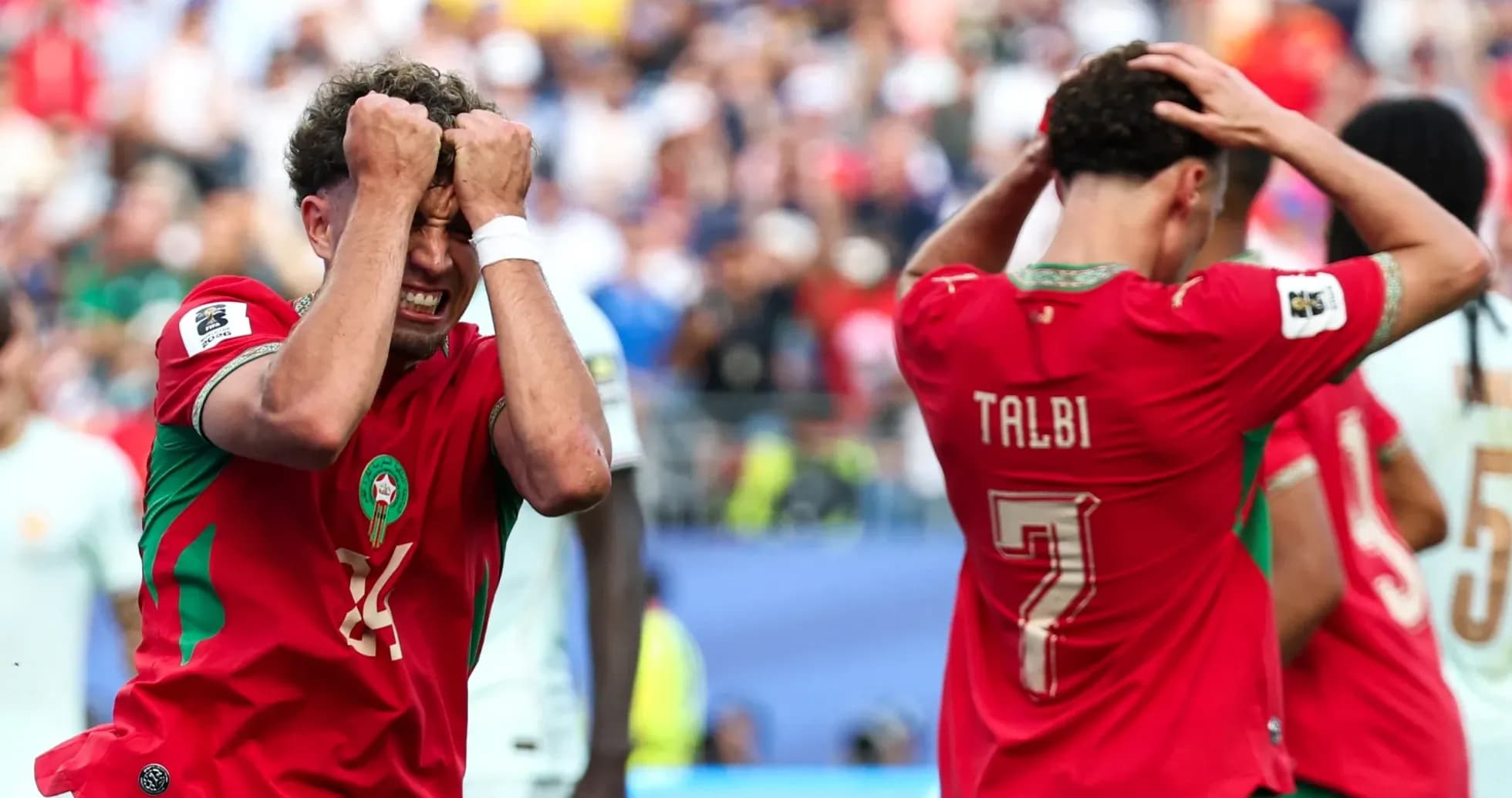
Morocco vs France: Quarterfinal Clash at 2026 World Cup
Boston, United States – By the time the final whistle cut through the East Coast heat, a curious sight unfolded outside the stadium: Morocco shirts on shoulders, Kylian Mbappe on their lips.
Their team had just been knocked out of the World Cup. Some of them were already signing up, at least in spirit, to the Mbappe fan club.
He had earned it. One ruthless, curling finish. One burst and slide-rule pass six minutes later. A 2-0 win for France, and a performance that had Moroccan fans calling the French an “unstoppable force” even as they trudged away.
“They start with 11 very good players on the pitch, but they also boast one of the best bench strengths in the tournament,” said Yaseen Maroufi, shrugging as he walked out. “France are the team to beat, and it’s very hard to beat them at the moment.”
Revenge in the heat
That was not the script Morocco carried into this first quarterfinal of the 2026 World Cup, played in stifling conditions in Boston.
This was supposed to be payback. The semifinal loss of 2022 still stung, a scar they had spent four years staring at. The talk among Moroccan fans before kick-off mixed belief and caution: a young, fearless side, a new coach, and one simple wish – that Mbappe would finally have a bad day.
For half an hour, it looked like the prayers might land.
In the 29th minute, Mbappe stood over the ball from the spot, the stadium braced for the inevitable. Then chaos. Players jostled on the edge of the box, the ball was moved and reset, the wait dragged on. When he finally ran up, the usually clinical forward stuttered, hesitated and hit a tame effort.
Yassine Bounou, Morocco’s hero in goal, read it, held it, and roared.
The miss summed up a cagey first half. Both sides probed, but neither wanted to be the one caught out. Attacks stalled. Midfields clogged. Every forward run came with a glance over the shoulder. It was tense, tight, and for Morocco, quietly encouraging.
Morocco step up – and pay for it
After the break, Morocco pushed. The fear seemed to peel away with the rising noise from the stands. They were first to threaten, breaking into the French half with intent and finally forcing a save.
That was their only effort on target.
The moment they tried to tilt the game, the trap snapped shut. As the Atlas Lions committed bodies forward, gaps opened behind them. Against this France side, space is an invitation to disaster.
Mbappe accepted.
Working from the left, he began to glide into those empty channels. Defenders backed off, then lunged, then simply watched as he twisted past them. On the hour, the pressure broke. A sharp move, Mbappe slicing through the Moroccan back line, and his eighth goal of the 2026 World Cup was in the books.
Six minutes later, he shifted gears again, this time as creator. Driving at the defence, he drew bodies towards him and slipped the ball to Ousmane Dembele, who finished for France’s second and his own fifth of the tournament.
With that, France carved out a small piece of World Cup history: the only team ever to have two players score five or more goals in the same edition.
The noise turns
Mbappe’s dizzying runs kept coming, even if the scoreline stayed put. Each feint and burst pushed Morocco further back, draining belief and energy from a team that had looked France in the eye for 45 minutes.
The match that had felt even, almost balanced, in the first half began to tilt sharply. Morocco’s attacks grew ragged. Their passes forward became hopeful, then desperate. The French, 2018 champions and now swaggering contenders again, controlled the tempo and the mood.
Inside the stadium, the shift was brutal.
“Dima Maghreb” had rattled around the stands all afternoon, a wall of sound that wrapped itself around the pitch. As the second goal went in and the minutes slipped away, that chant faded. The red end of the ground fell quiet.
Only then did “Allez les Bleus” truly ring out. French fans, some of them second-generation supporters in the United States, sensed something bigger than a quarterfinal win. They saw a young, loaded squad that might not stop at one trophy.
“It was wonderful to watch all this French talent,” said French American supporter Claude Beyanoun, standing with his son Zach, both grinning as they soaked in the moment.
Same score, same pain
For Morocco, the symmetry cut deep. Same opponent. Same stakes. Same scoreline as 2022.
This time, it was a younger group, one that had carried the hopes of a nation dreaming of rewriting history. They walked off with shoulders slumped but not broken, their fans filing out with the look of people who had seen this film before.
Yet even among the dejection, there was defiance.
“We didn’t win this one, but we’ll win the next World Cup at home,” said Hamza, a Morocco fan who offered only his first name, already thinking of 2030, when Morocco will cohost the tournament.
The quarterfinal in Boston ended in familiar heartbreak for the Atlas Lions. But with a home World Cup on the horizon and a new generation already hardened by this kind of defeat, the question is no longer whether Morocco belongs on this stage.
It’s how far they will go the next time France, or anyone else, tries to stand in their way.