MLS: From World Cup Legacy to Global Ambition
“Thanks world, we’ll take it from here.”
The line flashes across the screen, carried by the faces of Lionel Messi, Son Heung-min, David Beckham and a cast of MLS stars. It’s part invitation, part declaration. The World Cup party is over. Major League Soccer wants the afters.
This latest campaign, a slick, big-budget film, leans on the global icons who now call the US top flight home. It urges the millions who discovered or rediscovered football during the World Cup to stay tuned as the MLS regular season restarts. The league is even dangling free tickets for new fans, a bold move in a market where attention is the most valuable currency.
Dan Courtemanche, MLS executive vice-president and one of the league’s earliest architects, has watched this project grow from a concept on paper to a 30-club enterprise.
“The World Cup has now exposed millions of people to Major League Soccer,” he says. “We’re going to continue to capitalise on that momentum.”
The question hangs over all of it: could this World Cup finally push MLS into the orbit of Europe’s elite leagues?
From 1994 experiment to 30-club machine
MLS itself is a World Cup legacy. When the United States won hosting rights for the 1994 tournament, Fifa insisted on a professional league as part of the deal. What followed in 1996 was modest: 10 teams, no purpose-built stadiums, and a sport still seen as an outsider in its own country.
Three decades on, the landscape is unrecognisable. The league now boasts 30 clubs and almost as many football-specific stadiums, the kind of infrastructure that once felt like fantasy in the US.
The 2026 World Cup poured more fuel on that growth. Predictions of half-empty venues, priced out by expensive tickets, never materialised. Stadiums were full, noise poured down from the stands, and TV audiences surged, even after the US national team exited in the last 16.
The USA’s defeat to Belgium in that round delivered the most-watched football match on a single US network, drawing more than 33 million viewers on Fox. England’s last-16 win over Mexico went even bigger: a combined 45 million watched across Fox and Telemundo, the largest football audience in US history.
Those numbers put football shoulder to shoulder with the NFL’s regular-season games. They still trail the behemoth of American television – the Super Bowl – but the gap is narrowing in cultural terms if not yet in raw figures. The 2025 Super Bowl, the most-watched ever, pulled in 127.7 million viewers across English and Spanish broadcasts and streaming, many of them tuning in as much for Kendrick Lamar’s half-time show as for the sport itself.
MLS knows where it stands and where it wants to go. The ambition is clear: sit at the same table as Europe’s top competitions.
“I think we’re looked at as the top, one of the top leagues commercially,” commissioner Don Garber said at a recent event on the league’s post-World Cup future. “We’ve cracked that code. Now we’ve got to crack the rest of it.”
From ‘retirement home’ to launchpad
On the pitch, the league’s profile has quietly shifted.
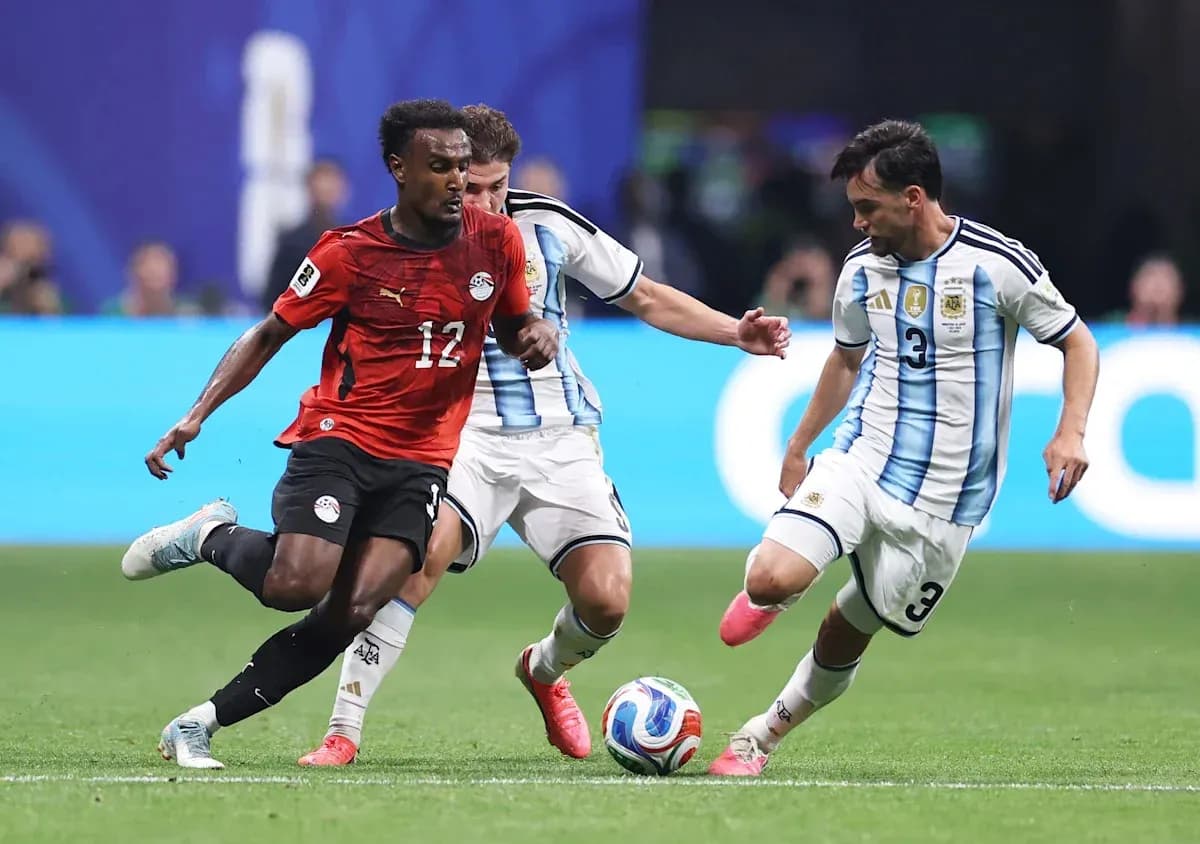
At the 2026 World Cup, 45 MLS players represented their countries. Two of them, Messi and Rodrigo de Paul, walked out in the final for Argentina. That alone would have been unthinkable in the league’s early years.
For a long time, MLS carried a reputation as a final stop for ageing superstars – a lucrative, sun-drenched retirement home for the likes of Beckham and, more recently, Messi after their European peaks. Courtemanche insists that label no longer fits. The average age of new international arrivals is now 23.8 years. Many still dream of using MLS as a stepping stone to Europe, but the direction of travel is younger, hungrier, more ambitious.
The calendar will shift too. In 2027, MLS will move to a summer-to-spring schedule, mirroring Europe’s season and smoothing transfer pathways. It’s a technical change with strategic intent: make it easier for players to move between continents and for MLS to sit inside the same global rhythm as the sport’s traditional power bases.
Beneath the first teams, the league’s leadership is pouring energy into youth development. Every MLS club now operates a youth academy. On one night in Los Angeles, as LA Galaxy hosted a viewing party for the US win over Bosnia-Herzegovina on a big screen, dozens of kids barely glanced up. They played on three small-sided pitches instead, sprinting, tackling, shouting, only rushing to the screen when a roar signalled a goal.
These were rare pick-up games in a country where childhood is often hyper-organised and heavily scheduled. The standard was high. Several of those children were already part of MLS youth setups.
Eight-year-old Landon – named after US legend Landon Donovan – stood out, cheerfully rotating between goalkeeper and forward. His mother, coach Jen Wing, said her children attend MLS camps and play on travel teams back home in New Jersey. Landon’s dream is already fixed.
“LAFC,” he says when asked where he wants to play.
The dream is clear. The pathway is less so.
The pay-to-play problem
For all the progress, one criticism refuses to go away: the cost of becoming good enough to be noticed.
At the top of the pyramid, MLS academies do not charge players, mirroring European models. Once a teenager is in, coaching and development are free. The problem is getting in.
Across the US, families typically pay thousands of dollars for private coaching and travel teams before a club academy ever comes calling. It’s a familiar story across American youth sports and one that filters talent through the lens of who can afford the journey as much as who can play.
That “pay-to-play” culture is seen by many as the single biggest barrier between MLS and genuine parity with Europe’s best. The league pushes back, pointing to scholarships and a constantly evolving development structure. Every club, officials say, holds places for talented youngsters who cannot pay.
Garber speaks about youth development as the league’s next big frontier. The goal is simple: produce better players, in greater numbers, and feed both MLS and the US men’s national team.
He wants them “better, bigger, stronger, faster,” players who can change what American football – the global version – looks like in the US.
Messi, money and the pull of celebrity
On the commercial side, MLS is already playing a different game.
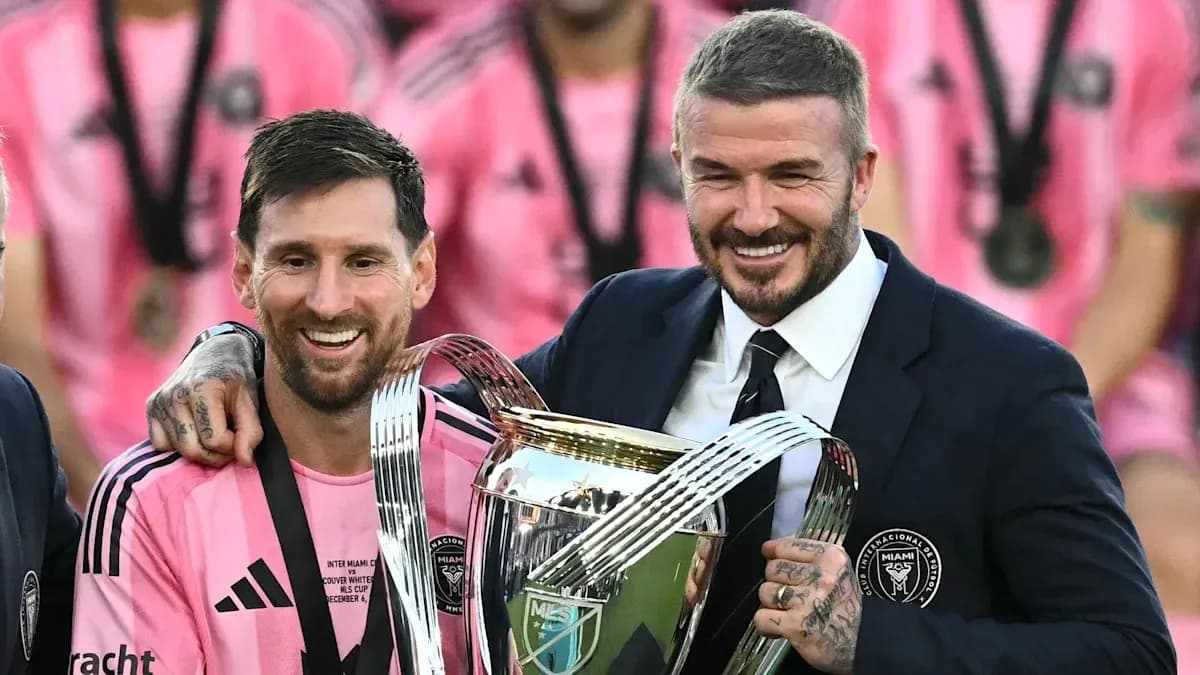
Messi is the league’s unrivalled magnet. His arrival at Inter Miami CF transformed ticket sales, shirt sales and global interest in a way no marketing campaign could match. But the star power doesn’t stop at the pitch.
Ownership groups read like Hollywood credits. Will Ferrell has a stake in LAFC. Reese Witherspoon is part of the group at Nashville SC. Matthew McConaughey is tied to Austin FC. Magic Johnson is among the investors at LAFC. The presence of these names turns MLS clubs into cultural properties as much as sporting ones.
The money involved has soared. When Seattle Sounders joined MLS in 2009, Drew Carey came in as an original owner for a $30m expansion fee. Today, the Sounders are valued at more than $900m. David Beckham’s 2007 deal with LA Galaxy included an option to buy an expansion team for $25m. He exercised it and now owns Inter Miami CF, a club valued by experts at over $1bn.
This is no longer a speculative experiment. It’s a serious business with serious upside.
Culture clash: Friday night lights vs Saturday mornings
Still, there’s a ceiling MLS must crack that has nothing to do with transfer fees or TV deals: American sporting culture.
For many, the US will always be a country where “football” means helmets and shoulder pads. Brian Udovich, whose 12-year-old son Croil plays in an MLS Next Level league in Southern California, sees the tension up close. He watches talented boys drift away from soccer as they hit their teenage years, seduced by the spectacle of American football.
On Friday nights, high school football players get their names on the scoreboard, marching bands blaring, cheerleaders on the sidelines, and thousands in the stands. Soccer, by contrast, often unfolds on quiet Saturday mornings, parents in folding chairs, no fanfare, little noise.
“It just means so much more to other cultures than us,” Udovich says.
Michael Bradley, now head coach of New York Red Bulls, understands that divide. He also believes it is shrinking.
“We don’t have the long, storied football history that other countries do,” he told the BBC. For years, that absence fed an inferiority complex, a nagging fear that football would never truly take root in the United States.
The World Cup shifted that mood. Bradley sees a different kind of fan now, more confident, more invested, more proud of their place in the global game.
“I think we can all unequivocally say in 2026, football is not going anywhere.”
The question for MLS is no longer whether the sport will survive. It’s whether this league can turn a World Cup sugar high into something lasting, something that forces the rest of the football world to look not just at America’s crowds and celebrities, but at its football – and take it seriously.