MLS All-Star Game: Stars Unite for a Special Experience
Steven Moreira remembers the first time he saw the NBA All-Star Game on TV. The lights, the stars, the show. When he arrived in MLS in 2021, that was the dream: become an All-Star, feel what that stage is like.
He’s done it twice now.
“I wanted to see how it looks,” the Columbus Crew defender told GOAL. “Because I love the NBA and that was crazy. I’m from France, so all of my ex-teammates, when they saw I was an All-Star, they were like, ‘Damn, that’s crazy!’ What the league does and everything, they really enjoy the concept. Even me, I really enjoy the concept.”
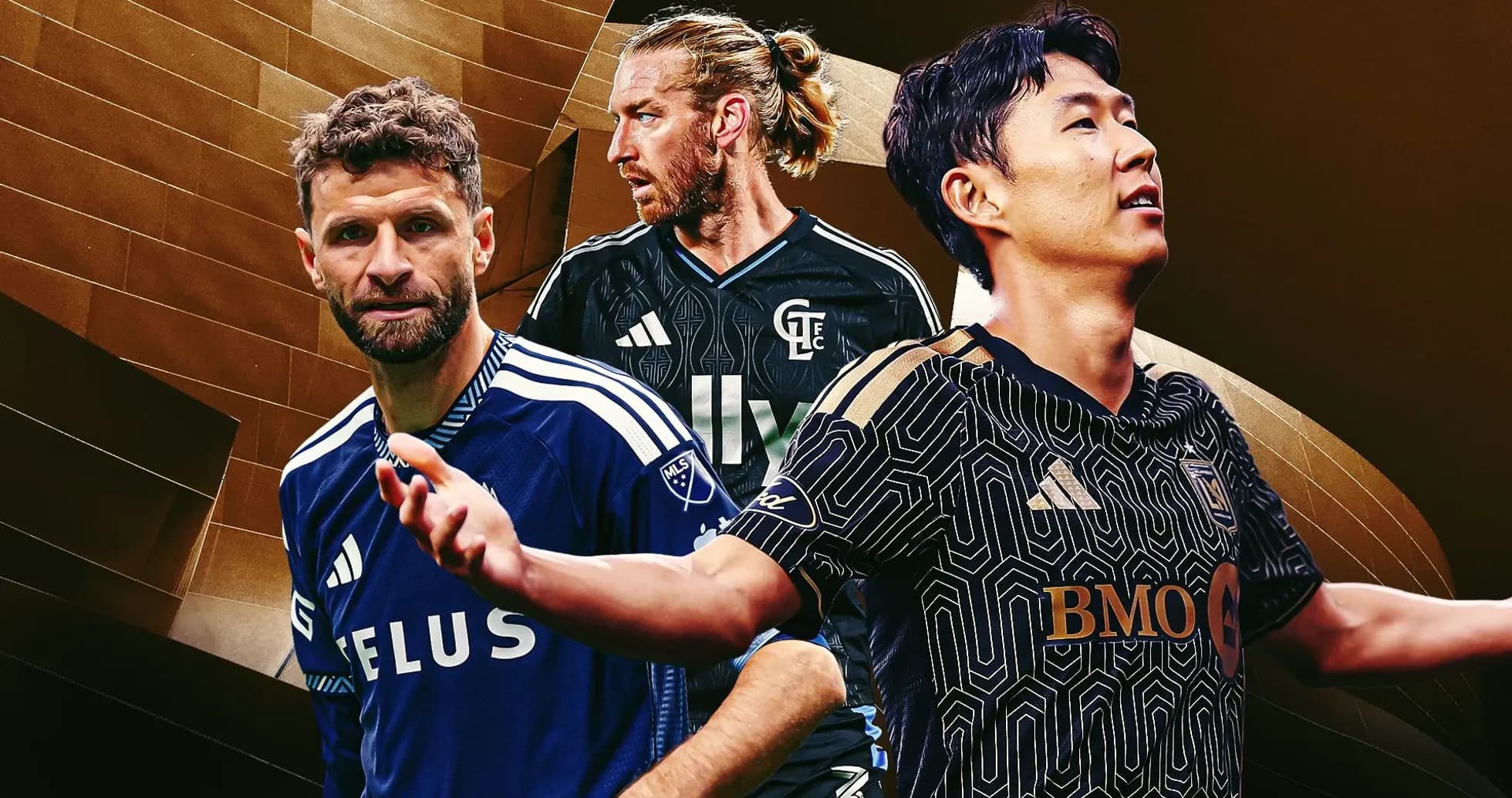
He’s not the only one. In Charlotte this week, some of the game’s heaviest hitters – Thomas Muller, Son Heung-Min – are treating MLS All-Star week as something more than a midseason distraction. They’ve won titles, lifted trophies, conquered Europe. Yet here they are, embracing a badge that, on paper, doesn’t change a thing in their careers.
“Being called up for the All-Star Game, I think it’s everybody wants to participate in these events,” Son said. “It’s a great experience to be here with great players, great names, and I’m looking forward to it.”
Stars, rivals and a rare truce
For players like Son, this is part reward, part reunion. A few days to swap shirts and stories instead of tackles. Muller, Tim Ream, Ashley Westwood – men who have spent years making each other’s lives miserable – now share the same dressing room and the same jokes.
There’s a simple joy in that. In finally getting to know the person behind the opponent.
For the kids, it’s something else entirely.
Teenagers like Zavier Gozo, Julian Hall and Lucas Herrington are dropped into this orbit and told to breathe. They’re not just meeting idols; they’re training with them, playing next to them, listening to them.
“It sounds weird, but it just reminds me of when I was 17 or 18, you know?” Son said. “Probably, they’re a little bit nervous, but it’s an amazing experience. I think they have a chance to learn, to speak with us, and to play with us. I think it’s a great honor.
“Also, I say age is just a number, so I think they deserve to be here. We are, as athletes, happy to have them, and also, from my side, I’m very happy to play with the young boys. I’m also learning something from these young kids and the younger generation.”
While Son bridges generations on the pitch, another kind of meeting is unfolding in the background – one that could reshape MLS itself.
The real power plays happen upstairs
All-Star week is one of the few times MLS can get its most powerful people in the same city. Owners, executives, billionaires. The faces you don’t see on the broadcast, but whose decisions define what the league looks like five years from now.
On Wednesday, The Athletic reported that the MLS Board of Governors would gather in Charlotte, with a proposal from the sporting and competition committee on the table. The topic: changes to roster-building rules that could fundamentally alter how clubs construct their squads.
So while cameras track Son’s movement and Muller’s smile, the most consequential moments of the week are taking place in hotel lobbies and behind closed doors. That’s where the league’s future is argued, sold, reshaped.
At the same time, this is a marketplace. Every major MLS sponsor has some stake in All-Star week. Corporate activations, suites, meetings, handshakes. The game is the hook; the real value lies in who shows up and what gets signed.
On the surface, the All-Star Game is a spectacle. Underneath, it’s infrastructure.
A showcase squeezed into a brutal calendar
For players, the game itself is often something they squeeze in rather than circle in red.
The calendar is merciless. A World Cup summer has already stretched legs and minds. MLS fixtures last weekend, more this weekend. The Columbus Crew and FC Cincinnati were scrapping in a post-game tunnel scuffle on Saturday; days later, Steven Moreira and Max Arfsten are All-Star teammates with Evander. Dean Smith, coaching the MLS All-Stars, will be back on the Charlotte FC touchline against the Chicago Fire almost immediately after.
The real games, the ones that decide playoff places and jobs, don’t stop.
Layer in World Cup duty, transatlantic flights, and the strain becomes obvious. This year’s schedule has also stripped the event of some of its biggest names. Lionel Messi and Rodrigo De Paul haven’t returned from international duty. Sebastian Berhalter and Hugo Cuypers have moved on from MLS entirely.
Messi’s absence changes the glow. The league knows it. The players feel it.
“Obviously, if I’m honest, the schedule was a little bit crazy because we had way too many games and filling in this game in that schedule, I think it was a little bit crazy,” Son said. “But look, this experience is huge for everyone. Thomas and me, we are getting a little bit older, but I think this experience is special. It doesn’t matter how old you are, and we are all excited and we are all happy to be here, and we want to make this game as special as possible.”
From European visitors to regional rivalry
To crank up the stakes, MLS has leaned into a different idea of “special.” The days of flying in European giants in preseason mode, half-fit and half-interested, are gone. The All-Stars now face a selection from Liga MX.
“When you get the English sides over here, they’re in the middle of their preseason so they don’t take it seriously,” Charlotte FC captain and former Burnley midfielder Ashley Westwood said. “It’s just a workout for them. To play Liga MX, it makes it more competitive. We’re representing the MLS, representing America, and we want to win.”
This is about tapping into a rivalry that runs from boardrooms down to backyard arguments. MLS and Liga MX are partners in some competitions, rivals in others, and neighbors in every sense.
“The rivalry just starts from the top and trickles down into every level,” USMNT captain Tim Ream said. “I don’t think there’s any way around saying that. It starts at the very top. It starts at the league level. It goes into the teams. It goes to the players. It goes to family ties. It’s everything, right?
“It’s such a big rivalry, and whether it’s an All-Star Game or not, one side wants to get over the other. That’s forever how it’s been and forever how it always will be. I think that’s just being competitors and being so close. It’s about who can get the best out of themselves and get the better of their opponent.”
Even those without personal history in the U.S.-Mexico-Canada dynamic feel it. You don’t get to this level without a competitive edge, and it’s been visible all week – in the Skills Challenge, in training, in the way players talk about the match.
“As an athlete, you don’t want to lose the game,” Son said. “But most importantly, I think both sides, we stay healthy, and we don’t get hurt. I think this is most important. We want to make it as fun as possible and entertaining as possible. We don’t want to get hurt, but we still want to win this game.”
Rain, mascots and the value of a laugh
Even the sideshow had its own drama. The Skills Challenge was hit by heavy rain, forcing a long delay. For a while it looked like the night might fizzle out.
Then the mascots came back. The players followed. Celebrities drifted along the touchline. The contests resumed, the crowd settled back in, and the mood lifted.
The football was only part of it. The laughter mattered just as much.
“You get to just enjoy,” Moreira said. “Yeah, you get to take a breath and enjoy and just laugh. It’s just a pretty cool moment, and that’s cool because we’re so focused and you don’t have time to just relax and enjoy. Now, you just enjoy the moment with everyone. It’s perfect.”
That’s the sell. MLS wants this week to feel like an invitation. Come for Muller and Son. Stay because you’ve just discovered Evander. Or because a kid in the stands has seen Gozo or Hall for the first time and decided, on the spot, that these are his players now.
“It’s a great event to have all these names here playing for the MLS,” Westwood said, “but I think the MLS in general is doing that. They’re attracting attention off the back of the World Cup. They’re doing a great thing. You see how many people are here today and yesterday. It’s phenomenal, so it’s doing a great job. It’s being recognized around the world. We’ve got some top talent here. Obviously, [Robert] Lewandowski has just joined as well. Players want to be here, and that’s a sign of how far the league’s grown.”
A moving target with a clear purpose
The cast will change. Maybe Lewandowski pulls on an All-Star shirt next year. Maybe Messi does. By then, MLS will be staring at an even bigger transition: a sprint season in 2027, then a full switch to align with Europe’s calendar.
So what does this game actually mean?
The 90 minutes themselves might never carry the weight the league would like. The scoreline will fade almost instantly. But the week around it still bites. It remains a mark of status for players, a shop window for sponsors, a summit for decision-makers.
The debates about relevance and format will roll on, as they do with every All-Star concept in American sports. For now, the event survives on three pillars: players who genuinely want to be there, fans who find something worth watching, and a league that uses the platform to push itself forward.
“A lot of players in the league want to be here,” Moreira said. “So you have to enjoy, represent them, and just enjoy the moment. You see these other guys, and you can spend so much time together, so that’s nice to see them outside.
“All the marketing stuff, I feel like the league deserves way, way more. Everyone here is just giving their best to put the league on top of the world.”
That’s the real contest: not MLS vs. Liga MX, not East vs. West, but a league trying to turn a midweek exhibition into proof that it belongs among the game’s global heavyweights.