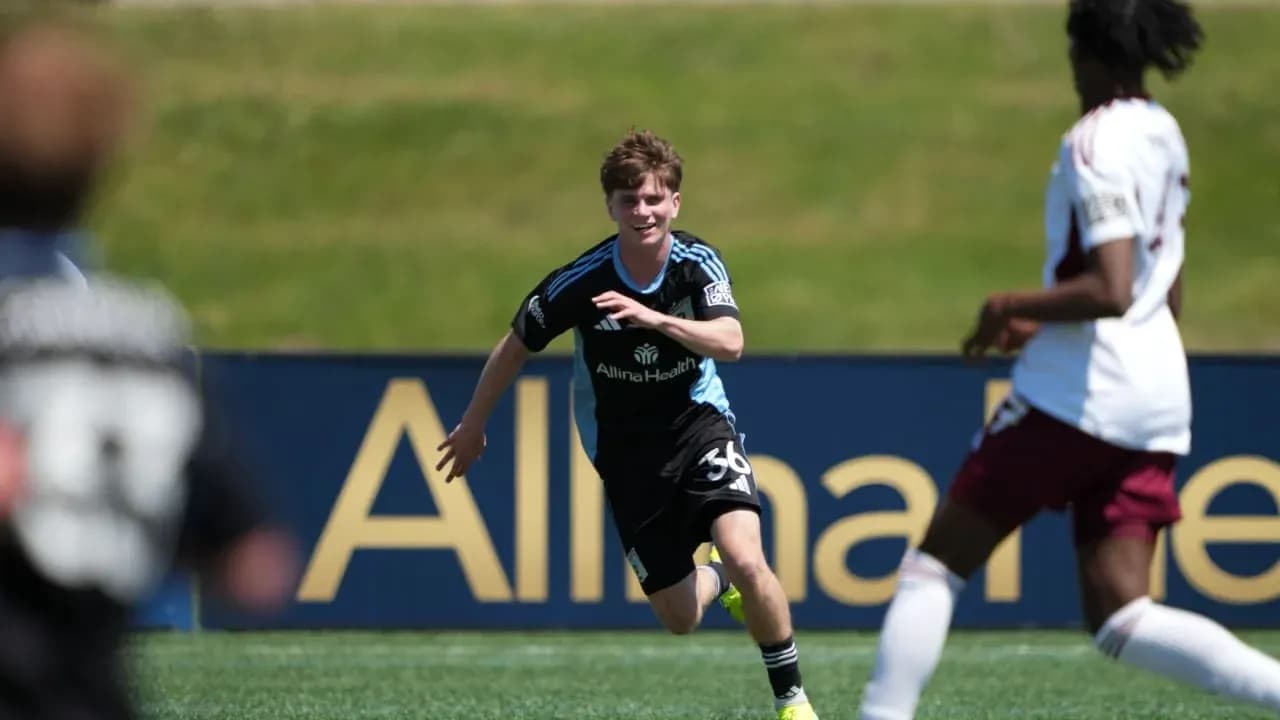
Minnesota United II Reasserts Dominance with 2–0 Win over Colorado Rapids II
Under the lights at Allianz Field, a developmental fixture in MLS Next Pro carried the weight of a statement game. Minnesota United II, sitting 8th in the Eastern Conference and 4th in the Frontier Division heading into this game with 18 points and a goal difference of -1 overall, hosted a Colorado Rapids II side rooted to 14th in the conference and 7th in the division, still searching for their first point after 12 defeats from 12. The 2–0 home win that followed felt less like routine business and more like a quiet reassertion of hierarchy in a league built on volatility.
Minnesota’s seasonal profile coming into this clash was one of extremes. Overall they had won 6 and lost 6 from 12, scoring 14 and conceding 15 in total, a balance that explained that narrow negative goal difference. At home, though, there was a sturdier spine: 3 wins and 2 defeats from 5, with 5 goals for and 4 against, an average of 1.0 goals scored and 0.8 conceded at Allianz Field. Colorado arrived as the league’s soft underbelly: 0 wins, 0 draws, 12 losses overall, with 10 goals scored and 31 conceded in total. On their travels they had lost all 6, scoring 4 and conceding 14, an away average of 0.7 goals for and 2.3 against. The numbers painted a simple picture: a home side learning to manage tight margins against a visiting group overwhelmed by defensive strain.
With no official formations listed, the tactical story had to be read through personnel and context. For Minnesota United II, the starting XI offered a blend of academy promise and functional structure. K. Perkins anchored the side from the back, with a defensive core built around figures like C. Harvey and N. Dang. In front of them, the likes of M. Harwood and S. Vigilante suggested a platform for progression, while A. Kabia, K. Chandler, J. Friedman, D. Randell and T. Putt formed an attacking ensemble tasked with turning Minnesota’s modest home scoring average into something more assertive.
Colorado Rapids II, under coach Erik Bushey, named a side that looked youthful but fragile. K. Starks took the gloves behind a back line including J. De Coteau, C. Harper, K. Sawadogo and J. Cameron, with B. Jamison and A. Fadal likely asked to stabilize central zones. Ahead of them, S. Wathuta, A. Harris, C. Aquino and M. Diop were charged with finding goals for a team averaging just 0.8 in total per match this campaign. The bench options—Z. Campagnolo, L. Strohmeyer, J. Copeland, L. Garcia, J. Chan Tack, G. Gilmore and N. Tchoumba—hinted at depth, but not necessarily at game-changing pedigree.
The disciplinary and psychological backdrop added another layer. Minnesota’s yellow card distribution this season showed a clear spike in the 31–45 and 76–90 minute ranges, each accounting for 27.27% of their cautions. That pattern speaks of a side that plays on the edge during momentum swings either side of half-time and in the closing stretch. Colorado’s own yellow profile was similarly volatile, with 27.59% of their bookings between 31–45 minutes and another 27.59% between 61–75 minutes, while their red cards were spread evenly across 16–30, 31–45, 46–60 and 61–75 minutes, each range representing 25.00% of their dismissals. For a team already conceding an overall average of 2.6 goals per game, those discipline patterns underline how often they are forced into desperate defending.
In that context, Minnesota’s clean-sheet record this season—4 overall, with 3 at home—became a central theme. Perkins, supported by a back line that has allowed an overall average of 1.3 goals against per match and just 0.8 at home, formed the “shield” that Colorado’s “hunters” had to break. Yet Rapids II’s attacking output on their travels, 4 goals in 6 games, rarely threatened to overwhelm that structure. Without a standout top scorer listed in the data, the Colorado attack felt more like a collective hope than a defined threat.
The “engine room” duel was more subtle. Minnesota’s midfield cluster—Harwood, Vigilante, Kabia and Randell—had to control tempo against a Colorado side whose season-long form line read as a relentless “LLLLLLLLLLLL”. With no draws and no wins, Rapids II’s best chance lay in turning the match into chaos, leaning into their late-card tendencies and trying to drag Minnesota into a scrap. Instead, the home side’s 2–0 win, built on a 1–0 half-time lead and a second-half clincher, suggested a level of control that aligned with their statistical identity: not explosive, but efficient and increasingly assured at Allianz Field.
From a statistical prognosis perspective, the outcome mirrored the underlying trends. Minnesota’s overall average of 1.2 goals scored per match and 1.3 conceded was nudged in a positive direction by a clean sheet and two goals on the night, while Colorado’s defensive frailty—31 conceded overall before this fixture, 17 at home and 14 away—again translated into multiple goals allowed. Their failure to keep a single clean sheet this season continued, as did the pattern of conceding at least once in every away outing.
Following this result, Minnesota United II’s campaign narrative tilts towards quiet momentum: a home record that increasingly resembles a foundation, a defensive unit that can lock games down, and an attacking group that, even without headline individual numbers in the data, is learning how to manage advantage. For Colorado Rapids II, the story remains one of survival and slow rebuilding—of finding, somewhere within this squad, the resilience to halt a streak defined by 12 straight losses, a goal difference of -18 overall, and a defensive line that has yet to discover what a clean sheet feels like.