Middlesbrough Coach Kim Hellberg's Heartbreak Over Spygate Controversy
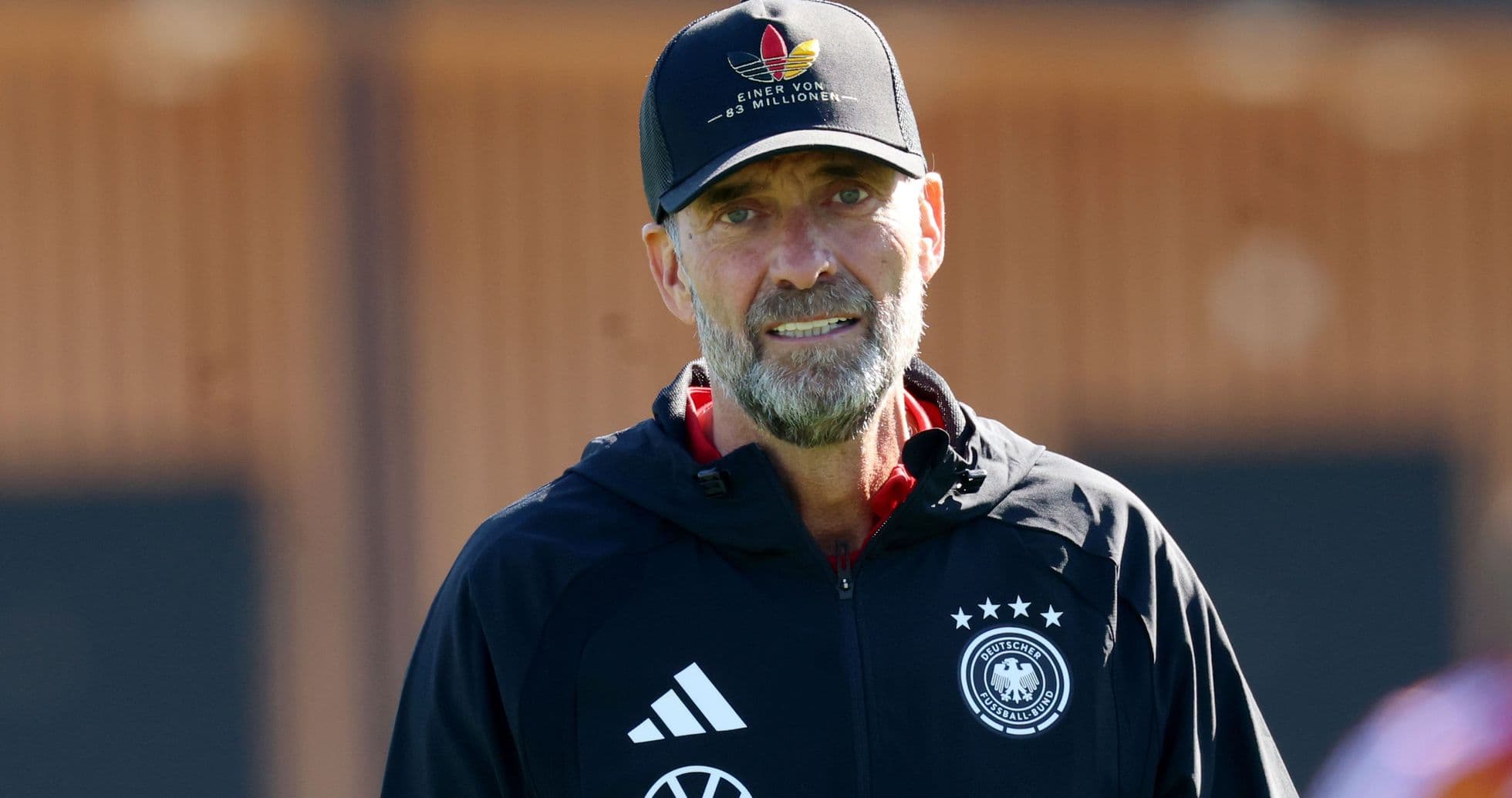
Kim Hellberg stood in the bowels of St Mary’s, his team emptied by 120 minutes of football and a season’s work gone in a 2-1 extra-time defeat. But it wasn’t the scoreline that cracked his voice.
“It breaks my heart,” the Middlesbrough head coach said. He wasn’t talking about Southampton’s winner. He was talking about Spygate.
Not the Marcelo Bielsa variety, either. This is the sequel with far higher stakes: a Championship play-off semi-final, a place at Wembley, the Premier League millions glinting on the horizon – and the accusation that one club tried to tilt the field before a ball was kicked.
A semi-final overshadowed
Southampton, charged by the English Football League with breaching rules by observing one of Boro’s final training sessions before the first leg at the Riverside, now stand one game from promotion. On paper, they should be preparing for Hull City at Wembley on 23 May.
In reality, they’re preparing for lawyers.
Hellberg’s anger is rooted in the sanctity of preparation, the hours poured into shaping a game plan behind closed doors at Rockliffe Park.
“If we hadn't caught that man that they sent up five hours to drive, you would sit there and say well done [to Southampton] in the tactical aspect of the game and I would go home and feel like I've failed,” he said.
When a coach talks like that, this stops being a quirky subplot. It becomes a question of sporting integrity.
Southampton have not denied the allegations. The EFL has charged them under two regulations: the long-standing requirement that clubs act in “utmost good faith” towards each other, and the newer, sharper rule – regulation 127 – brought in after Leeds’ spying mission to Derby in 2019, which explicitly bans observing another club’s training session in the 72 hours before a match.
This time, the alleged spying came before a play-off semi-final. Not a cold night in January. A season-defining tie.
Wembley on hold
Under normal circumstances, the narrative would already be rolling towards Wembley. Travel plans, ticket scrambles, tactical debates. Instead, the Championship’s showpiece occasion is stuck in limbo.
The final is 10 days away. Tickets have to be sold. Fans need trains, hotels, days off work. Yet an independent disciplinary commission, not the league table, will now decide how this season ends.
Southampton are trying to keep moving as if nothing has changed. On Wednesday morning, the club launched a play-off final merchandise range on their website. No fanfare on social media, but the message was clear enough: they expect to be there.
Tickets for the final go on sale Thursday morning. Supporters could end up buying seats for a match they never attend.
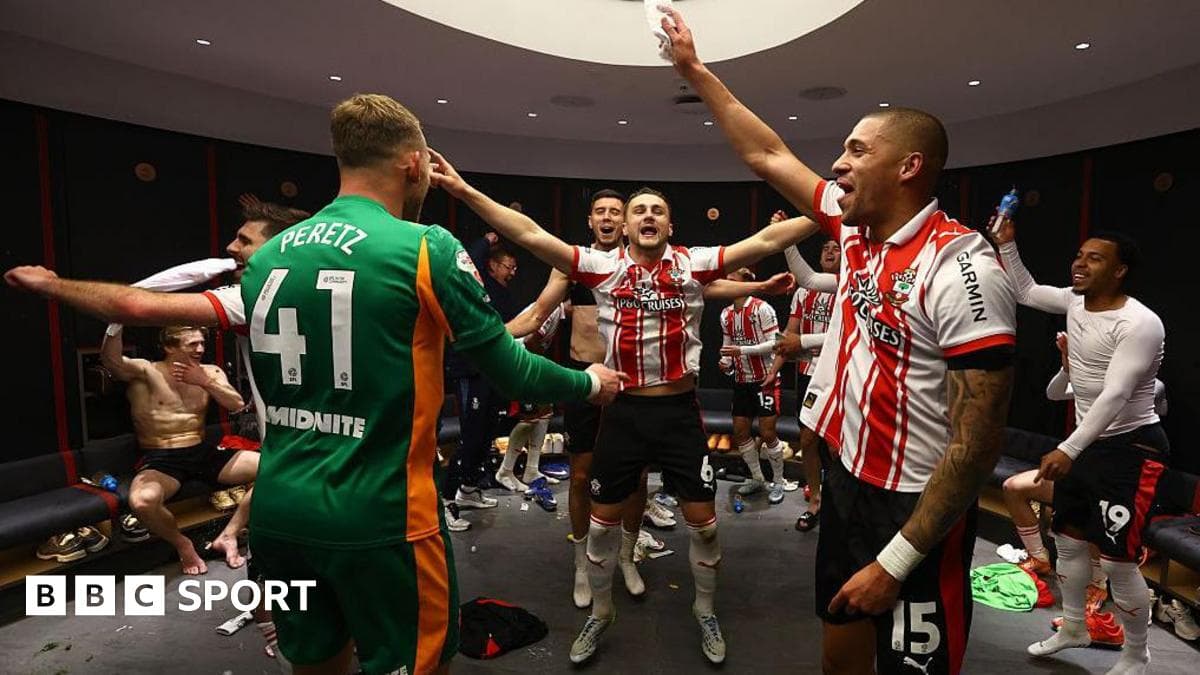
Head coach Tonda Eckert at least has a tangible task: prepare his team for Hull, until told otherwise. The celebrations after beating Boro were subdued, shaded by the knowledge that the real verdict lies elsewhere.
Middlesbrough, by contrast, are stuck in neutral. BBC Sport understands the players will be given a few days off, but they cannot scatter to Dubai, Ibiza or the usual off-season hideaways. They must stay ready, phones on, bags half-packed, just in case an independent panel decides their season is not over after all.
For Boro, there is only one acceptable outcome: walking out at Wembley a week on Saturday.
Lawyers, leverage and lingering anger
Steve Gibson has never been a passive chairman. He has already signalled that a fine will not come close to satisfying Middlesbrough. They want a sporting sanction. They want Southampton out of the play-offs.
To that end, Gibson has reportedly turned again to Nick De Marco, one of the game’s most formidable sports lawyers, a man with a track record of shaping disciplinary outcomes in English football.
De Marco recently helped ensure Sheffield Wednesday started this season on zero points, when a 15-point deduction had loomed. Then, he fought to remove a penalty. Now, he would be arguing to impose one.
If the independent disciplinary commission does not go as far as Boro demand, the fight may not stop there. Middlesbrough have been down this road before. In 2021, they launched legal proceedings against Derby County, arguing that the Rams’ financial breaches cost them a play-off place in 2018-19. That dispute ended in a “resolution” understood to have brought Boro around £2m.
If Southampton keep their place, Gibson pursuing compensation again would surprise nobody.
Inside the commission’s room
The EFL, desperate to end the uncertainty, has handed the process to Sport Resolutions, the independent mediation body that manages such hearings.
A three-person commission will sit in judgement. Typically, a KC or QC chairs the panel, flanked by two side members – sports lawyers, barristers or mediators. They are chosen on suitability and availability, especially when the clock is ticking as loudly as it is now.
The commission will set its own timetable. That timetable will not be made public. What is clear is that the decision has to land well before 23 May. Wembley is booked the following weekend. After that, players disappear on international duty. The calendar offers no safety net.
The EFL has requested an expedited hearing. Southampton have asked for more time to complete an internal review. Somewhere between urgency and due process, the panel must find room to operate.
The first hearing must come quickly, because any “interested party” – and that could include Middlesbrough – has the right to appeal. That appeal ruling will be final. EFL rules do not allow the case to be taken to the Court of Arbitration for Sport.
All the while, ticket departments and travel planners wait for a verdict that will decide whether they are selling for Southampton, Middlesbrough, or both.
What punishment fits a new kind of crime?
No one can say with certainty how this ends because there is no direct precedent. Leeds’ £200,000 fine in 2019 sits in the background, but it belongs to a different era and a different rulebook.
Back then, there was no specific regulation against watching another team train. Leeds were punished under the broad “utmost good faith” clause. The controversy from that case led to regulation 127, the very rule Southampton now stand accused of breaching.
This time, the alleged offence came before a play-off semi-final. The financial and sporting consequences are enormous. That changes the weight of any decision.
Boro’s position is clear: they want Southampton thrown out of the play-offs, and they want the tie effectively overturned. The most straightforward way to do that would be to award Middlesbrough a 3-0 default win for the first leg, which would flip the aggregate to 4-2 in their favour.
It would be dramatic, but not without precedent. In 2002, West Bromwich Albion were awarded a 3-0 victory after their match against Sheffield United was abandoned. United had three players sent off and two more injured who could not be replaced, dropping them below the minimum seven players required. The game could not continue. The result was imposed.
Here, the commission could take a similarly hard line, arguing that spying before a play-off semi-final is so corrosive to fair competition that only exclusion will do.
There is another path: a points deduction. That would allow the panel to sidestep the “nuclear option” of expelling Southampton from the play-offs while still delivering a sporting sanction with teeth.
If Saints go up, the EFL cannot apply a deduction in the Premier League itself, but it can recommend that the top-flight board carries the penalty over. That, in theory, could mean Southampton starting a Premier League season with a handicap.
The commission has to find a punishment that feels fair, yet also shouts loudly enough to deter any other club tempted to send a camera to a rival’s training ground before a game of this magnitude.
Silence from Saints, questions for coaches
Southampton have been almost entirely silent in public. The club’s media officer has shut down attempts to question Eckert. Behind that silence sit some awkward, unavoidable questions.
Who knew what, and when? Was there a live stream of the session? Was it recorded? Shared? Stored?
One possible line of defence is the “lone wolf” argument – that the individual who travelled up to Rockliffe Park, five hours on the road to watch Boro train 24 hours before Southampton flew north, acted alone and without instruction.
Hellberg does not buy that. After Tuesday’s game, he was unequivocal: “There’s someone who makes decisions to go and try to cheat.”
The commission will have to decide whether this was a rogue operative or a systematic attempt to gain an edge. That distinction could shape not only the club’s punishment, but the fate of individuals on Southampton’s staff.
World football has already seen a high-profile spying case this year. During the 2024 Olympics women’s tournament in Paris, Fifa deducted six points from Canada after they were found to have spied on New Zealand using a drone. Three members of Canada’s staff, including the head coach, received year-long bans from all football.
Could members of Southampton’s coaching staff face similar individual sanctions? The possibility cannot be ignored.
Fans, fairness and a looming Wild West
One argument rings out from the south coast: what about the fans? Southampton supporters have followed their team across 48 games this season. Across those months, their side earned a shot at promotion. Why should they pay for the actions of a few?
It is a powerful emotional appeal. But the counterpoint is just as stark. If there is no meaningful sporting sanction for spying, especially at this stage of the season, what message does that send?
If Southampton are in the Premier League next season and the punishment is little more than a fine, where is the deterrent? For a promoted club, the top-flight riches can swallow a financial penalty in a single TV payment.
That is the tightrope the independent disciplinary commission must walk. Lean too far towards leniency and you risk turning English football into a Wild West, where clubs gamble on the upside of illicit information against the downside of a cheque. Lean too far the other way and you risk detonating a promotion race and punishing thousands for the actions of a few.
Somewhere between those extremes, three people in a room will decide the fate of a season, the trajectory of two clubs and the boundaries of acceptable behaviour in the modern game.
The ball has stopped rolling. The lawyers have taken over. The only question now is this: when the dust settles, will the punishment make anyone think twice before sending the next spy to the training ground gate?