Michael O’Neill Commits to Northern Ireland Until 2032
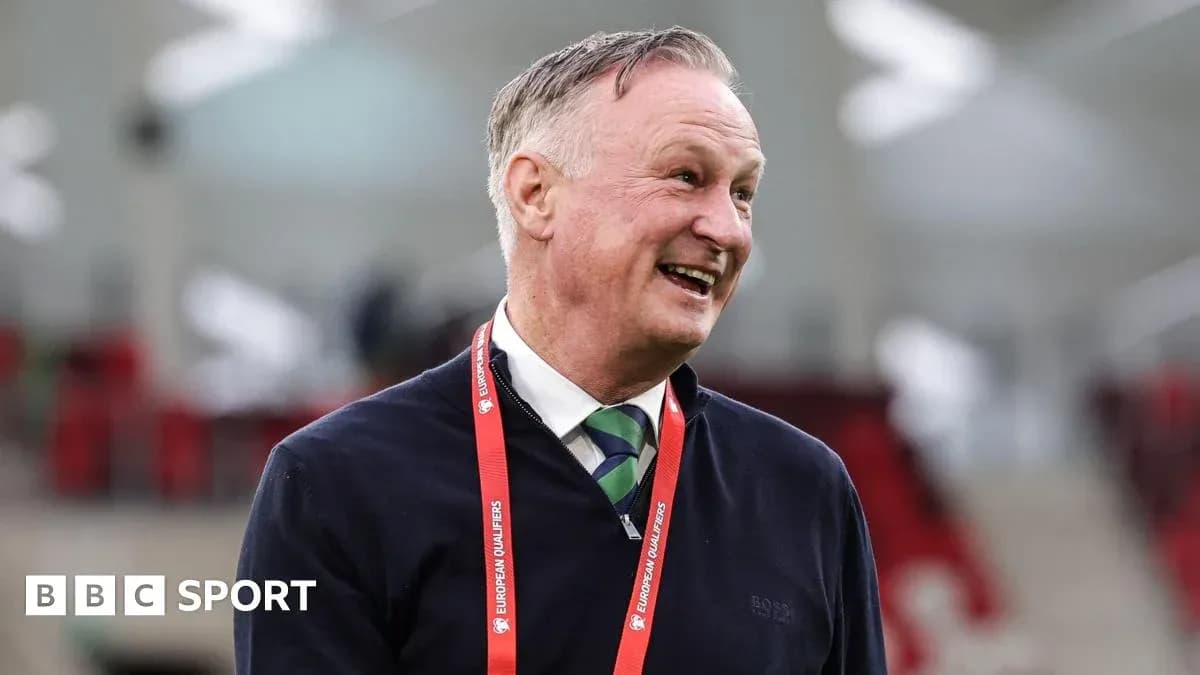
Michael O’Neill has tied his future to Northern Ireland for the long haul, signing a four-year contract extension that keeps him in charge until 2032 – a remarkable show of faith in the man who has already redefined what is possible for the national side.
The 56-year-old, already a record-breaker with 104 games at the helm across two spells, has chosen the international dugout over the day-to-day grind of club football. After stepping in as interim boss at Blackburn Rovers in February and juggling that role with his Northern Ireland duties, he was strongly considered for the job on a permanent basis. The answer, ultimately, was no. His future lies in green.
“This is a role that means a great deal to me,” O’Neill said, underlining the emotional pull that has twice brought him back to Windsor Park. “I continue to believe strongly in the potential of this group of players and the direction we are moving in. There is a lot of work ahead, but I am excited by the future.”
A Manager Woven Into Northern Ireland’s Modern History
O’Neill’s name is stitched into the fabric of Northern Ireland’s modern football story. First appointed in 2011, he dragged the team from the fringes to the European stage, guiding them to Euro 2016 – their first major tournament in 30 years. That summer in France altered expectations, not just results.
He stayed for eight years in his first spell before leaving to take over at Stoke City, initially combining the club role with his Northern Ireland job before finally stepping away from the international scene. The pull never really faded. By 2022, after his departure from Stoke, he was back, returning to a set-up he knew intimately but a squad that looked very different.
Across both stints, he has now been in charge for a combined 11 years. No one has stood on the touchline for Northern Ireland more often.
Rebuild After Heartbreak
The latest extension comes in the wake of disappointment. Northern Ireland’s play-off defeat by Italy ended their bid to reach the 2026 World Cup, a sharp reminder of the margins at this level. The task now is to turn that hurt into fuel.
O’Neill has already started reshaping the side. The old guard has gradually stepped aside and a younger core has emerged, with players like Conor Bradley, Shea Charles and Isaac Price moving from prospects to central figures. The manager has not just freshened the team; he has effectively rebuilt it.
Results have reflected a team in transition. Northern Ireland missed out on Euro 2024, but there were signs of momentum in the 2024/25 Nations League. O’Neill’s side topped League C3 with three wins, two draws and only one defeat, a quietly important step that restored some belief and rhythm.
Tests on the Horizon
The calendar offers no gentle easing into this new era of certainty. Northern Ireland face Guinea in a friendly on 4 June, a useful chance to experiment and refine combinations, before travelling to meet France four days later – as stern a test as any side can face away from home.
Those matches are more than warm-ups. They are the staging ground for a Nations League campaign that begins in September, where Northern Ireland have been drawn in Group B2 alongside Hungary, Georgia and Ukraine. It is a group that offers jeopardy and opportunity in equal measure: strong opponents, but a realistic platform to measure progress and push for promotion.
For O’Neill, these games will be another checkpoint in the evolution of his young squad, a chance to see how far they have come from the raw, disjointed side he inherited on his return.
Eyes on 2028
The long contract extension is not about the next window or even the next campaign. It is about Euro 2028. With the tournament being staged across the United Kingdom and the Republic of Ireland, qualification would carry a special weight for Northern Ireland, both sporting and symbolic.
O’Neill will now have the time and authority to build towards that target without the shadow of short-term uncertainty. The federation has nailed its colours to his mast; the project is his to shape.
He has the history, the trust of the dressing room, and now the years to see it through. The question that will define this era is simple: can the architect of 2016 lead Northern Ireland back to the big stage again, this time with a new generation in tow?