Mauricio Pochettino's Journey with the USMNT: From Heartbreak to Hope
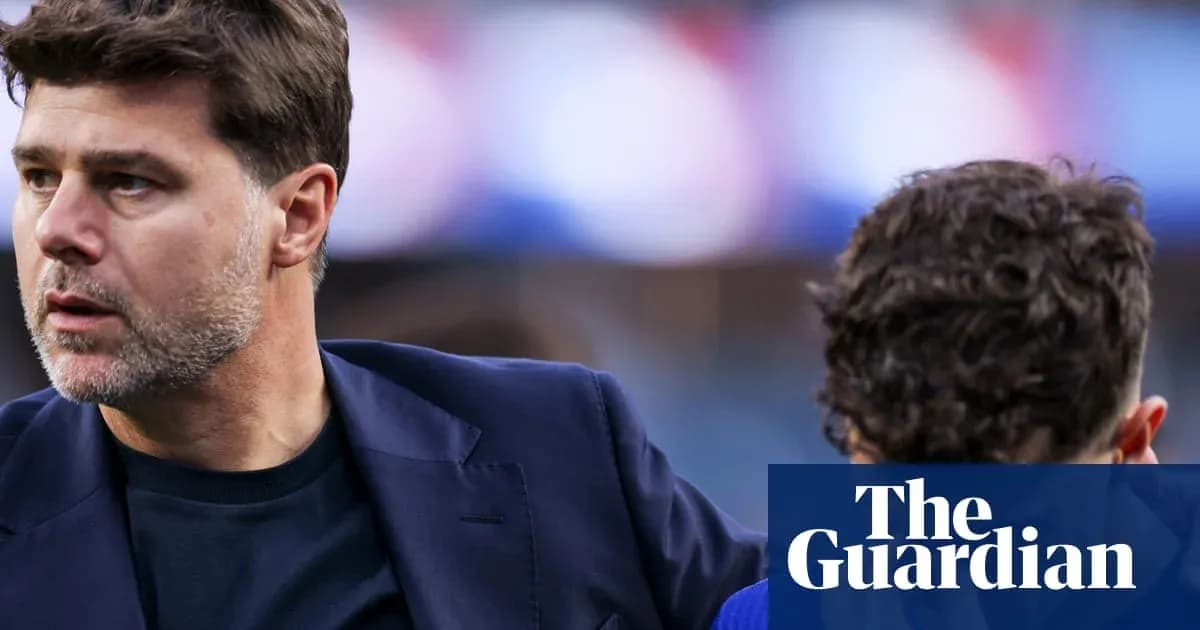
Mauricio Pochettino stood on the touchline in Houston with tears in his eyes and Mexico shirts all around him. His US team had just lost the 2025 Gold Cup final. A regional title gone, to their oldest rival, in their own country – and yet it felt like an away game.
The defeat hurt. The soundtrack hurt more.
In one of the largest metro areas in the United States, the noise poured down for Mexico. Whistles greeted the US. It was a jarring sight for a coach who had known the cauldron of Tottenham on derby day, who understood what it meant when a stadium wrapped itself around its own. This was something else. A reality check, one year out from a home World Cup.
He would later call it a “big bang, punch,” the kind that leaves you blinking and asking, as he did: “What the fuck?”
That punch, though, had landed months earlier.
A crash in an empty stadium
In March 2025, the Concacaf Nations League seemed like familiar terrain. Beat Panama in the semi-final, then another showdown with Mexico or Canada. The US had lifted the first three editions of the new competition. It had become a habit.
This time, they didn’t even make the final.
Panama arrived organized and hungry. The US looked blunt. The atmosphere matched their performance: flat. Pochettino remembers looking around and seeing stands that felt deserted, save for Mexican fans drifting in early for the later game.
“It was empty,” he recalled. Panama pounced on a lapse, scored with just their third shot and walked off with a place in the final – their fourth win over the US in six meetings, adding to a run that already included the 2023 Gold Cup semi-final and a 2024 Copa América group match.
For decades, this fixture had been one-way traffic in the other direction. Now Panama were the ones delivering the “good crash,” as Pochettino put it. A warning that the old regional order no longer applied, and that his team’s problems went deeper than tactics or team selection.
He saw a culture that had grown comfortable. Players picking and choosing. Edges dulled.
So when Christian Pulisic asked to skip the Gold Cup but still play the warm-up friendlies against Turkey and Switzerland, Pochettino drew a hard line. No. One camp, one group, one commitment. Be there from day one or stay home.
The decision lit a fuse. The US lost both pre-Gold Cup friendlies heavily, the noise around the team swelled, and the new coach was suddenly under scrutiny. But the standard was set: all-in, or out.
Gold Cup pain, Gold Cup discoveries
The Gold Cup, for all its eventual heartbreak, began to reveal the spine of the team that now lights up the 2026 World Cup.
Malik Tillman was handed the keys as chief playmaker and finally allowed to run a tournament from the middle of the pitch. Matt Freese stepped into goal and, in one of the defining moments of that summer, outlasted Keylor Navas in a penalty shootout. Alex Freeman emerged as a young full-back Pochettino simply could not drop. Sebastian Berhalter forced his way into the midfield rotation.
Pochettino changed too. Tournament football, with its daily training, fixed squad and rolling pressure, felt more like club life than the stop-start rhythm of international windows. Over a month, he could drill patterns, refine pressing triggers, and hard-wire ideas into a group that had nowhere else to be.
They reached the final. They lost to Mexico. The coach fought back tears, not just from the defeat but from the hostility that rained down on his players in their own country. In the dressing room, he told them to keep their heart, to keep their edge.
“Keep improving, but please don’t change,” he urged.
The environment gnawed at him. Days later, in Columbus, he watched Ohio State play Texas in front of 70,000 roaring college football fans and asked himself a simple question: why not us? If this country could pour such passion into one sport, why not into this team?
From that question came a mantra: “Why not us?” And from the mantra, a style.
Showtime takes shape
When Pulisic and the other mainstays returned in September, Pochettino unveiled the shape that now defines this US side. A fluid framework rather than a rigid formation. Players sliding between lines, full-backs stepping in and out, midfielders rotating, attackers drifting. Constant movement off the ball, rapid switches of play, a refusal to retreat when space opened up.
Showtime, in red, white and blue.
Results followed. A controlled 2-0 win over Japan in September. A draw with Ecuador and a victory over Australia in October. November brought a statement: a win over Paraguay and a 5-1 dismantling of Uruguay, a window that closed 2025 with a sense that something real was building.
Then came March. And the third hard lesson.
Two defeats. Seven goals conceded over two legs against Belgium and Portugal. Scorelines that stung less than the manner of the performances. The team looked unsure, the defensive structure buckled, and in a bid to spark his captain, Pochettino started Pulisic at center-forward against Portugal. The drought continued, the experiment misfired, and the old doubts resurfaced.
Pochettino did not sugarcoat the gap.
“Belgium and Portugal have, in the top 100 players, [a] few or some players in that top 100,” he said. “I think we don’t have [any].”
Inside the camp, belief held. Chris Richards spoke about that March window as a turning point, a moment when the group’s buy-in deepened even as results faltered. Outside, the familiar pessimism returned. This, many felt, was the USMNT they knew: capable of a big night, equally capable of collapsing against anyone, anywhere.
And still, Pochettino kept loading the schedule. Senegal. Germany. No soft landings, no easy confidence.
“Good for us,” he insisted. “It’s going to measure our level.”
A home World Cup, and a different noise
The measurements came back promising. A 3-2 win over Senegal, breathless and wild but deserved. A narrow 2-1 defeat to Germany that hinted at maturity rather than naivety. The team were rounding into form when it mattered most.
Then the World Cup started, and the US stopped hinting.
They bulldozed Paraguay 4-1 in their opener, ripping through with the kind of vertical, fearless football Pochettino had envisioned when he first spoke about “solutions” after Panama. Against Australia, they were colder, more controlled, a 2-0 win that suggested they could manage different types of games, different types of pressure.
By the time they walked out to face Turkey, Group D was already theirs. Two wins, a 6-1 aggregate scoreline, and the rare luxury – or trap – of a World Cup game without stakes. Only four teams in this tournament wrapped up top spot after two matches: Argentina, Germany, Mexico, and Pochettino’s US.
Argentina and Germany bring history. Mexico bring altitude, hostility, and a travelling army that turns neutral venues into green walls. The US bring something newer: a crowd that, at last, sounds like it belongs to them.
The same coach who once watched his team lose a continental final in a hostile Houston now talks about home atmospheres that are “massive,” “so powerful for the player.” The same program that stumbled through empty seats against Panama now feeds off raucous noise and banners in its own colors.
This is, without argument, the high point of Pochettino’s tenure so far. The path here ran through an empty stadium, a bitter final, and a humbling March. It ran through hard conversations with star players and harder decisions about who would be allowed inside the circle.
“It’s not going to be figured out overnight,” defender Mark McKenzie said this week. “Sometimes in six months, or 12 months, maybe not as fast as everybody wanted to. I think we’re showcasing that it’s a process.”
The process has delivered them a place among the early pacesetters of a home World Cup. The question Pochettino once asked in a college football cathedral now hangs over the knockout rounds, louder than ever.
Why not them?