Marcus Rashford's World Cup Struggles and Future Uncertainty
Marcus Rashford went to the 2026 World Cup needing a shop window. He came back with the shutters half down.
England’s campaign in North America was supposed to be his platform, a late-twenties reset in front of a global audience. Instead, the story of their left flank belonged to someone else.
Gordon takes the stage, Rashford fades
In the weeks before the tournament, Thomas Tuchel had a straight choice: Marcus Rashford or Anthony Gordon on the left. It looked like a duel that could define Rashford’s summer and maybe his future.
He struck first. A calm, clinical finish against Croatia in the opener hinted at the old certainty in front of goal. Gordon, by contrast, started slowly.
That was Rashford’s chance. He didn’t grab it.
As England laboured through flat, functional wins over Panama and DR Congo, Tuchel lost patience. The United forward, already on the fringes at Old Trafford, slipped to the fringes of his country too. Gordon, fresh from sealing a £69m move from Newcastle to Barcelona before the tournament, came in and stayed in. By the time England hit the knockouts, the new Barça signing was a central attacking figure; Rashford was reduced to a supporting act.
He finished the World Cup with one goal and one assist, the latter coming in a third-place play-off against a France defence that barely turned up. For a player trying to relaunch his career, it was nowhere near enough.
Barcelona door shuts, clauses lapse
The World Cup played out against a brutal backdrop for Rashford’s future. Barcelona, his loan club, had already made their choice. Gordon had arrived for big money, and with that, the buy option in Rashford’s loan deal became little more than paperwork.
The Catalans let that clause, reportedly worth around £26m, expire on June 15, four days into the tournament. Manchester United, for their part, refused to renegotiate or entertain another loan to Camp Nou. The bridge wasn’t burned, but it was certainly closed.
A month later, and a day after England’s semi-final defeat to Argentina, another key date passed. The £40m release clause in Rashford’s United contract expired. From that moment, any sale would rely on negotiation, not a fixed escape hatch.
The irony is clear. That £26m Barcelona option is now thought to be close to United’s realistic asking price. The timing, and the market, have worked against everyone.
Any faint hope that Barça might circle back later in the window dimmed further when Karim Adeyemi completed his move to Borussia Dortmund. Rashford, meanwhile, has turned down interest from Fenerbahce and Galatasaray as he waits for a Champions League-level club.
He is being picky. He can afford to be. For now.
United’s own plan falls apart
This isn’t just Rashford’s problem. It’s United’s.
They had been weighing up a move for West Ham winger Crysencio Summerville, only to see the Netherlands international head towards Al-Hilal in a £60m deal. A frugal summer, modest income from sales and a thin left side have left United short of both cash and options.
Selling Rashford inside the Premier League would, on paper, solve several issues at once. But United have drawn a line. According to The i Paper, they will not sell him to another English top-flight club, even though Tottenham were ready to activate his now-defunct £40m clause.
The reasoning is emotional as much as strategic. The club hierarchy are determined to avoid the spectacle of their academy graduate rediscovering his form at a domestic rival. Internally, that scenario is viewed as a potential humiliation, a public-relations own goal they are desperate to dodge.
Arsenal and Xabi Alonso’s Chelsea have monitored the situation, yet neither looks likely to move decisively, especially with Chelsea having already committed £117m to sign Morgan Rogers from Aston Villa.
So the market narrows, and Rashford stays stuck.
Wages, power and a stand-off
Strip everything back and one number dominates the story: £325,000 per week.
Rashford is among the highest earners at Old Trafford. That wage, once a reward for his status as the club’s attacking talisman, now hangs over every conversation about his future. It deters buyers. It complicates any idea of a fresh start back at United.
No realistic suitor is willing to come close to matching that salary. Offers that might have rivalled it, presumably from less glamorous destinations, have already been rejected. If money alone drove his decision, he would likely have moved by now.
United’s leadership, led by Sir Jim Ratcliffe and INEOS, want that salary off the books as part of a broader cost-cutting drive. Former head coach Ruben Amorim pushed for Rashford’s exit and the board backed him, sanctioning the January 2025 loan with a view to a permanent departure.
According to The Athletic, the final two years of Rashford’s contract will cost United around £39m in wages alone, before bonuses. For a player approaching 29 and far from a guaranteed starter, that is a heavy commitment.
Ratcliffe’s stance on the numbers is unlikely to have softened. The football reality, though, has shifted.
Carrick opens the door
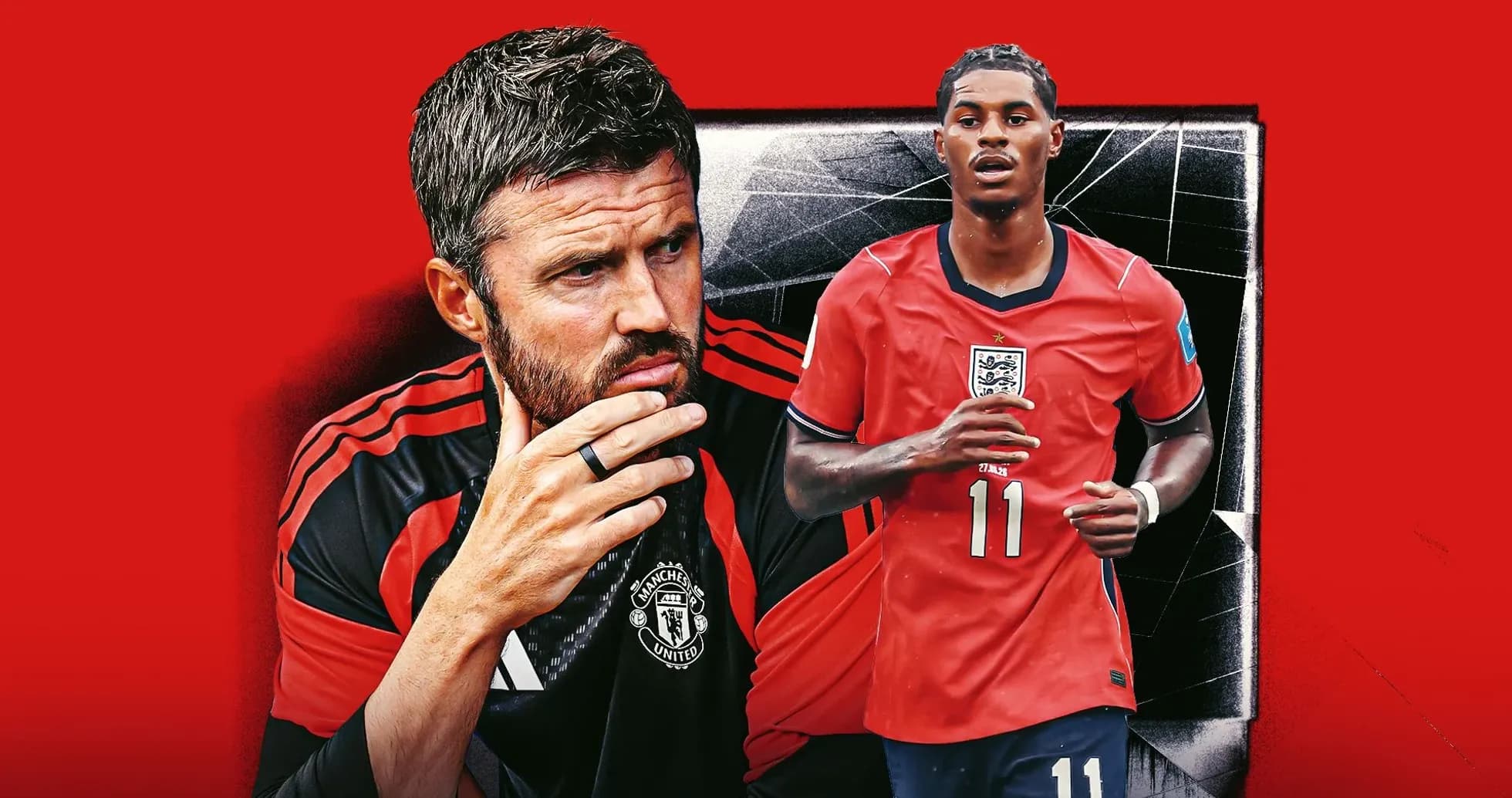
The mood around Rashford at Carrington has changed with Michael Carrick’s arrival. Where Amorim ostracised him and effectively banished him to the “bomb squad”, Carrick appears more open to a reset.
Rashford is expected to rejoin the squad in Dublin for the remainder of pre-season after his post-World Cup break. He is said to hold no grudge against the club, despite the way his exit was handled in January. The return of Champions League football only increases the temptation to use an experienced, if inconsistent, forward rather than discard him at any price.
“Rashford is really looking forward to the opportunity to work with Carrick,” reported transfer specialist Fabrizio Romano on his YouTube channel. “Carrick is also looking forward to working with Rashford. I am told that Carrick is genuinely excited about the opportunity to help revive Rashford's career at Man United.
“Rashford and the club are prepared to give each other another chance. After that, they will decide whether to continue together or whether the player will leave during the summer transfer window.”
Carrick himself struck a pragmatic note back in April: “There's decisions to be made in time on certain things, and obviously Marcus is in that situation. But at this point in time, nothing's been decided. From my perspective, whoever's here, I want to work with, make the best out of and help them improve.”
That leaves the door ajar. Not wide open, not bolted shut. Just enough space for a second act.
Can they really go back?
The cleanest solution on paper would be a compromise: a wage cut and a reintegration, Rashford accepting reduced terms to rebuild where he grew up. Inside the game, though, that kind of climbdown is rare, and reports suggest it remains unlikely.
The more realistic scenario, according to The i Paper, is that United give him the chance to resurrect his career at Old Trafford simply because they have run out of better options. Missing out on Summerville has only sharpened that logic.
Yet the boardroom calculation is not the only one that matters. There is also the dressing room and, crucially, the stands.
By the time Rashford left on loan in January 2025, his relationship with sections of the fanbase had curdled. He had become a lightning rod for criticism, his body language and work rate dissected and derided, his every misstep framed as evidence of a poor attitude. He was, in many ways, Amorim’s most high-profile scapegoat during a broader period of underperformance.
Winning those supporters back will not be easy. It will require visible fight, sharp early form and a sense that he is fully invested in the shirt again. If he stumbles out of the blocks, the atmosphere could turn quickly, especially if United as a whole start the season slowly.
The old warning echoes around this situation: you should never go back in football. Yet sometimes, circumstances leave you with no choice.
Loan, limbo or lifeline?
Right now, United are trapped in a problem of their own making. They want to sell Rashford, but his wages and their obvious eagerness to move him on drag down his market value. No club is going to meet a £26m asking price while also taking on a £325,000-per-week contract in full.
That points towards another loan as the most workable outcome. If United can replicate the Barcelona structure, a new club would cover his salary and potentially negotiate a reduction directly with the player, as Barça did. A more realistic version might involve a split – perhaps a 40/60 wage share – to get him out, keep him playing and ease the financial strain.
Even that is complicated. United’s desperation to clear the wage bill will embolden suitors to wait. The longer the window drags on, the more leverage they gain. Any club in the market for a winger knows that if United spend on a replacement, their need to move Rashford intensifies.
So the saga drifts towards deadline day. Rashford, selective about his next step, waits for the right badge and the right competition. United wait for a bid that makes financial sense. Carrick waits to see who actually walks into his dressing room on the final day of the window.
The question hangs over all of it: is Marcus Rashford’s future still at Old Trafford, or is this just the long, messy goodbye before he finally finds a club prepared to bet on his talent one more time?