Manchester United's Impressive 5-0 Victory Over Rosenborg
Manchester United hit five in Trondheim on Wednesday night, but the scoreline told only half the story. This was their first win of pre-season, a 5-0 dismantling of Rosenborg, and the clearest glimpse yet of what Michael Carrick’s United might look like when the real football starts.
Six days after losing to Wrexham, the response was ruthless. Sharper, braver on the ball, and with a very different feel to the breakneck, transition-obsessed side that finished last season.
Carrick-ball, upgraded
When Carrick first stepped in, United’s revival was built on the counter. They were devastating when the game broke open: wingers like Bryan Mbeumo and Patrick Dorgu tearing into space, Bruno Fernandes and Matheus Cunha threading passes into chaos.
The numbers backed it up. From his first game – that 2-0 win over Manchester City – to the end of the campaign, United ranked third in fast breaks per game. They were joint-top for goals from fast breaks and second for expected goals from those situations. It was their identity.
On the ball, it was a different story. Thirteenth in possession, 11th in average possession duration. Old problems resurfaced whenever an opponent sat deep and asked United to unpick a low block. Post-Sir Alex Ferguson, that has been a recurring fault line.
Rosenborg, 13 games into their own league season, should have been able to lean on superior fitness, use the ball, and drag a still-rusty United around. On paper, Carrick’s side might have needed those same transition punches just to get out of Norway with credit.
Instead, something else happened.
A United team without Fernandes or Cunha looked assured in possession. They took the ball, kept it, and stretched Rosenborg. Joshua Zirkzee became the hinge point, making the ball stick high up the pitch and allowing United to build, not just break.
The fast attacks haven’t disappeared. United’s second and fourth goals were classic examples of a side that can spring forward in a heartbeat. But there is a clear shift. With Carrick now permanent, the blueprint is evolving. You could see why the club moved for Youri Tielemans: a midfielder comfortable dictating, not just disrupting.
This wasn’t just about running harder. It was about thinking differently.
Zirkzee’s night of silk – but what does it change?
No one in Trondheim did more to change the mood around their name than Zirkzee.
Since arriving in 2024, United’s No 11 has lived in an awkward space. Not quite a No 9, not trusted over Fernandes as a No 10. Talented, yes. Flashes of Berbatov-like touch and vision, but too often a luxury in a league that doesn’t wait for you.
Against Rosenborg, he was everything Carrick needed him to be.
He dropped in, took hits, held the ball, spun on the half-turn and brought others into the game. In 60 minutes, he left with a goal and an assist. On another night, he might have left with the match ball and a standing ovation.
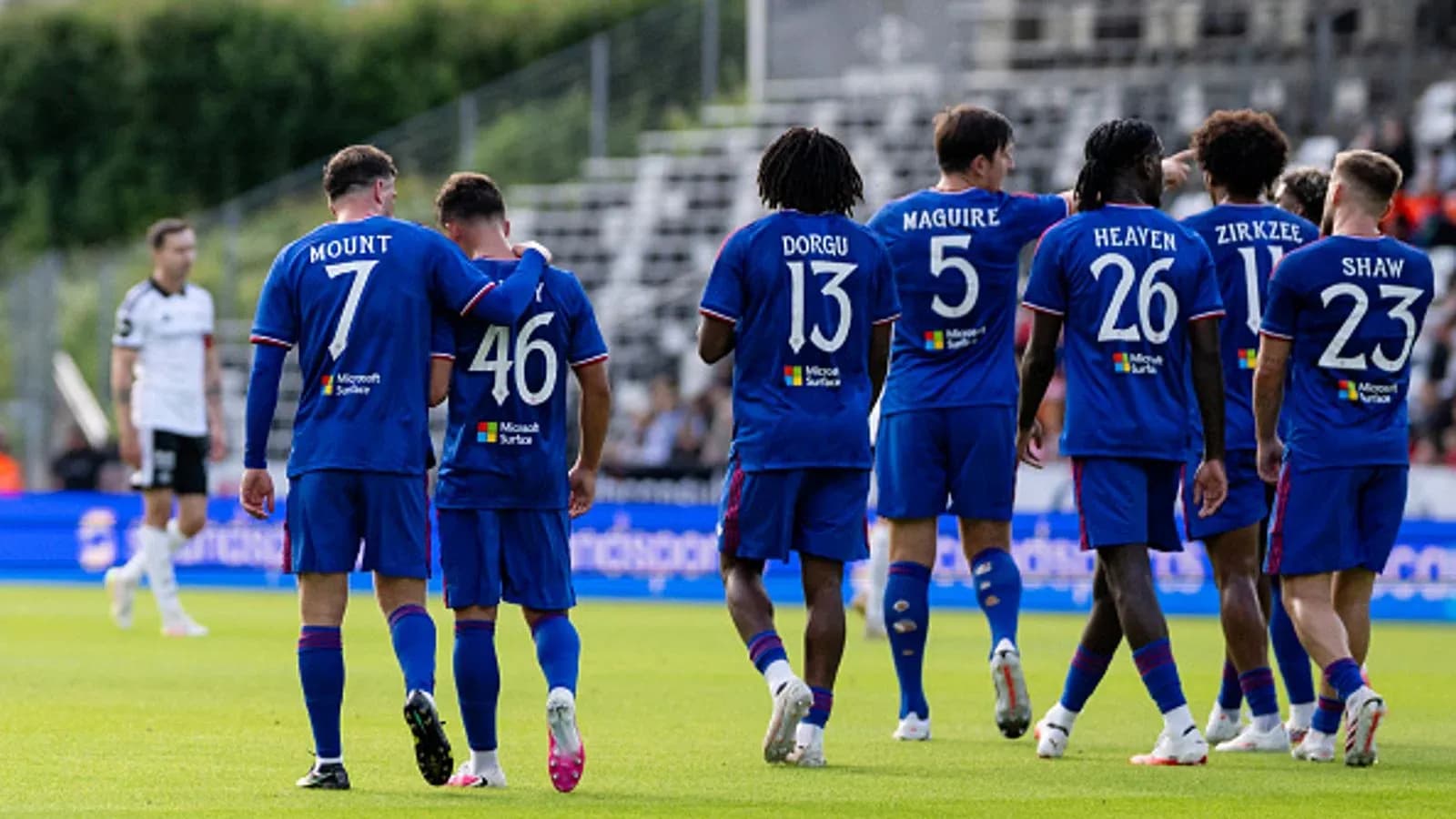
His goal was the kind of moment that lives in highlight reels. A give-and-go with substitute Harry Amass, a glide into the box, then a blur of footwork. Two defenders beaten, then the goalkeeper sent the same way, before Zirkzee rolled the ball into an empty net. Calm, arrogant, brilliant.
It crowned a performance that will have plenty of fans arguing he deserves a bigger role next season. Calls for him to start more regularly will grow louder.
But the context matters. The pace of the game suited him. Time on the ball. Gaps between the lines. This did not answer the question that has followed him since he arrived: can he cope with the relentless tempo and physicality of English football?
Benjamin Sesko still looks the more natural fit to lead the line in the Premier League. What Zirkzee showed here may actually be more revealing about how Carrick intends to use Sesko when the Slovenian is ready to return: a focal point who links play, not just a runner in behind.
For Zirkzee, this was a reminder of what he can do. Whether it becomes more than that is up to him – and to the level of opposition waiting in August.
Carrington’s kids take centre stage
The scoreline will be remembered. The names might be remembered longer.
United’s academy has built its reputation on nights like this, when the pathway from Carrington to the first team feels real, not just a slogan painted on a wall.
Shea Lacey, starting as the No 10, needed a little time to find his rhythm. Once he did, he looked like he belonged. The 19-year-old has already offered glimpses in the senior side – he was close to a spectacular goal in that 2-2 draw with Burnley – but this was his most prominent role yet.
He took it with maturity. His finish for the opener was composed, not rushed, and his overall game had a calm authority. United fans voted him player of the match, a reflection of both his impact and the quiet expectation that has surrounded him for years.
The noise around Lacey has dipped over the last 12 months. At one stage, he was the standout name in the youth ranks, the next big thing. Performances like this suggest the talent never went away. There is still a player here who could carve out a serious first-team career.
On the left, Harry Amass arrived at half-time and immediately looked like someone trying to make up for lost time. His progress last season stalled in the second half of the campaign after an impressive loan spell at Sheffield Wednesday, injuries halting what looked like a rapid climb.
Here, he showed why United rate him. His goal came from classic full-back instincts – timing his arrival into a dangerous area – but he also defended his flank well and used the ball with intelligence. United are in the market for another left-back, yet performances like this will only strengthen the argument that Amass deserves a proper shot as Luke Shaw’s long-term deputy.
Jacob Devaney and Ethan Williams both scored and will always be able to point to those goals as the night their names went up in lights. For any academy player, that first senior goal is a marker in time.
The less heralded star, though, was Jaydan Kamason.
The 19-year-old right-back did get caught out positionally at times. Off the ball, there is work to do. On it, he crackled. His two assists came from clever, low crosses, the kind of delivery you expect from a winger, not a defender. His footwork backed it up: quick, confident, unafraid to take people on.
Carrick trusted him with more minutes than most of the other youngsters. That, in itself, said plenty. This was not a token outing. It was a test he passed.
The missing wonderkid
One name dominated the pre-match chatter and yet never crossed the white line.
JJ Gabriel, 15 years old and already the subject of breathless headlines, travelled with the squad and took his place on the bench in a fluorescent bib. For many supporters, this was the chance to finally see what the fuss was about.
They waited. He waited. The debut never came.
He stayed seated as the changes rolled in, his first taste of senior football reduced to a front-row view. For some, that might feel like a letdown. For Gabriel, it will still have been an education: the pace, the noise, the demands of a first-team dressing room on the road.
Does his absence on the pitch mean expectations should be dialled down? Not necessarily. Carrick had already hinted before the game that Gabriel’s time would come across the pre-season schedule, not crammed into one night in Trondheim.
United left Norway with five goals, a clean sheet, and a clearer idea of what their future might look like. The bigger question now is how many of these glimpses – of a new style, of a reborn Zirkzee, of fearless academy talent – survive when the friendly banners come down and the Premier League kicks back into gear.