Lucas Herrington's Heartbreak in World Cup Knockout
Lucas Herrington did not deserve this.
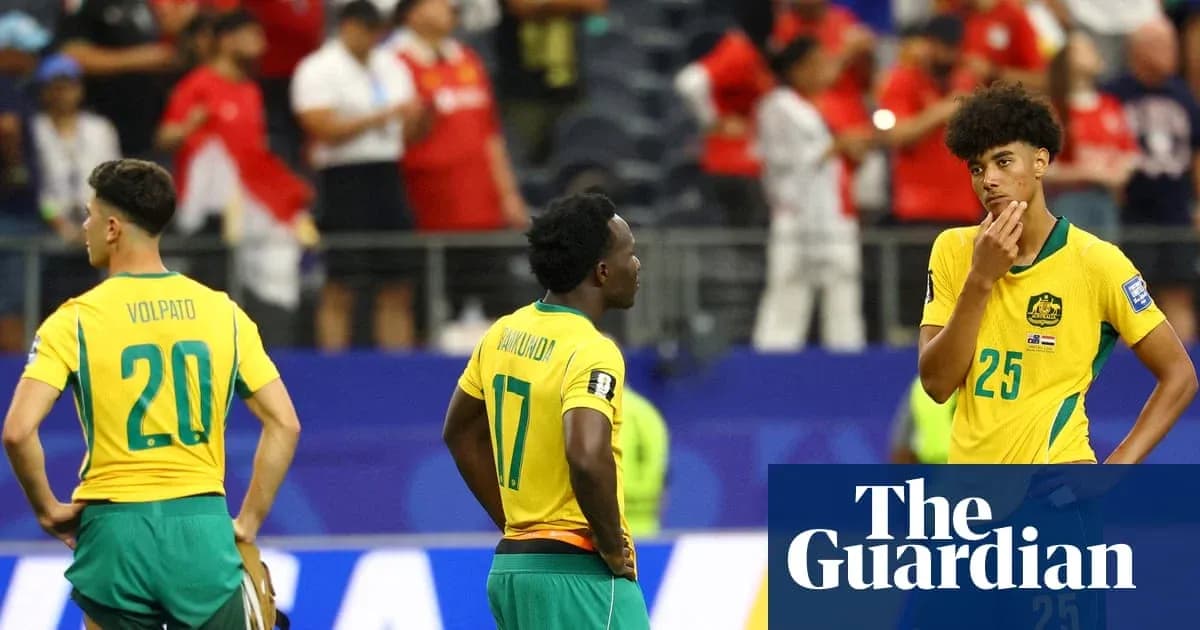
Eighteen years old. The youngest starter the Socceroos have ever sent into a World Cup match. A symbol of what might come next for Australian football. Instead, in Arlington, he became the face of one of its cruellest nights.
His run-up was calm enough. The technique looked right. Side-footed, aiming high. Too high. The ball crashed against the crossbar and flew away, and with it went Australia’s best chance in years to finally win a World Cup knockout tie.
Awer Mabil sprinted to him first, reading the devastation instantly. No words, just an arm around the teenager who knew, even before Egypt finished the job from the spot, that this moment would cling to him. When the final Egyptian penalty hit the net and the shootout ended at 4-2, Herrington turned his back on the bar that had betrayed him, one hand buried in his mop of curls, his body folding in on itself.
Jackson Irvine arrived, then Nestory Irakunda, a foot shorter but rising on his toes to wrap his arms around him. Two of the brightest lights in Australia’s future trying, and failing, to shield a teammate from a present that hurt too much.
Australia will wait at least four more years for that elusive step into the World Cup’s knockout winners’ circle. The nagging thought will linger: it may not get a better opening than this for a long time.
Herrington was not alone in his regret. Harry Souttar had walked to the spot first, shoulders heavy after 120 minutes of wrestling with Egypt’s attack. His penalty arced over the bar as well, gifting Egypt the early edge in the shootout and draining the air from Australian lungs.
Tony Popovic played his final card late, sending on captain Maty Ryan in the dying minutes, a specialist summoned for a moment that never came. Egypt were ruthless, perfect with their four kicks. They did not even need a fifth.
By then, the night already felt like a grind. Three hours of football at this tournament without a goal, then a 1-0 deficit, and the Socceroos trudged into half-time with belief running low. It sank further when Jordy Bos tested his left knee after a challenge, winced, and realised he could not continue. The first half had been stripped of rhythm, reduced to a tactical stalemate as both sides spent long stretches just trying to escape each other’s press.
Yet it had started with such optimism. Cristian Volpato whipped a vicious effort that grazed the crossbar. Bos tore into the box on a marauding run that hinted at chaos to come. Those early flashes vanished with one lapse down Australia’s right.
They surrendered ground too easily, their press splintering. On the edge of the area, Irvine was caught by Ziko and conceded a foul he did not see coming. Emam Ashour’s free-kick slammed into Irvine in the wall, but the danger did not end there. The second ball was recycled, Ashour drifted to the back post unmarked, and the Egypt No 8 buried his header. One chance, one cut, and Australia were behind.
Bos did not return after the interval. Kai Trewin came on at right-back for his World Cup debut and barely had time to adjust his socks before his man almost scored within 10 seconds of the restart. The second half threatened to unravel on the spot.
Australia steadied themselves and, finally, found something they had not managed all tournament: a goal from behind. Officially it will live in the record books as a Mohamed Hany own goal. In reality it belonged to Aiden O’Neill, whose looping delivery from the left side of the box dropped with wicked precision and forced the defender into the fatal touch.
The setting could not have felt more grand. A roofed arena in Arlington, ringed by 24,000 parking spaces, a modern cathedral to American sport now hosting a different kind of worship. Yet this was not the sort of spectacle to convert the undecided. The delays were constant, the tempo fractured. After 100 minutes, the two sides had managed just four shots on target between them.
For those in green and gold, and for Egypt’s travelling faithful, it did not matter. The tension tightened with every minute as the score stayed locked at 1-1. Crosses flew in. Bodies flew at them. Patrick Beach punched clear under pressure, the Egyptian back line held firm at the other end despite their lack of height, and the match narrowed into a test of nerve and concentration.
Then Mo Salah arrived.
For long stretches he had been on the fringe, feeling his way into the contest. In the final minutes of normal time, he snapped into life. One sweeping cross found Ramy Rabia, who looked certain to score until Beach flung up a hand and tipped the header over. Salah then took aim himself, before slipping in one last chance that Souttar hurled himself across to block, the ball otherwise destined for the far corner.
Any doubts about Salah’s fitness melted away in that burst, underlined by the grin he flashed at Souttar during the coin toss for extra time. Even he showed his human side in the added period, leaning back and sending a bouncing ricochet over the bar when the ball sat up kindly for him.
Egypt pressed hard as the clock bled out. Australia dug in, defending their box as the Pharaohs laid siege. Both teams could see the same prize: a first World Cup knockout victory, a line in the history books that would outlive them.
The game refused to give it up. The shootout did.