Los Angeles FC II Edges St. Louis City II in Penalty Shootout
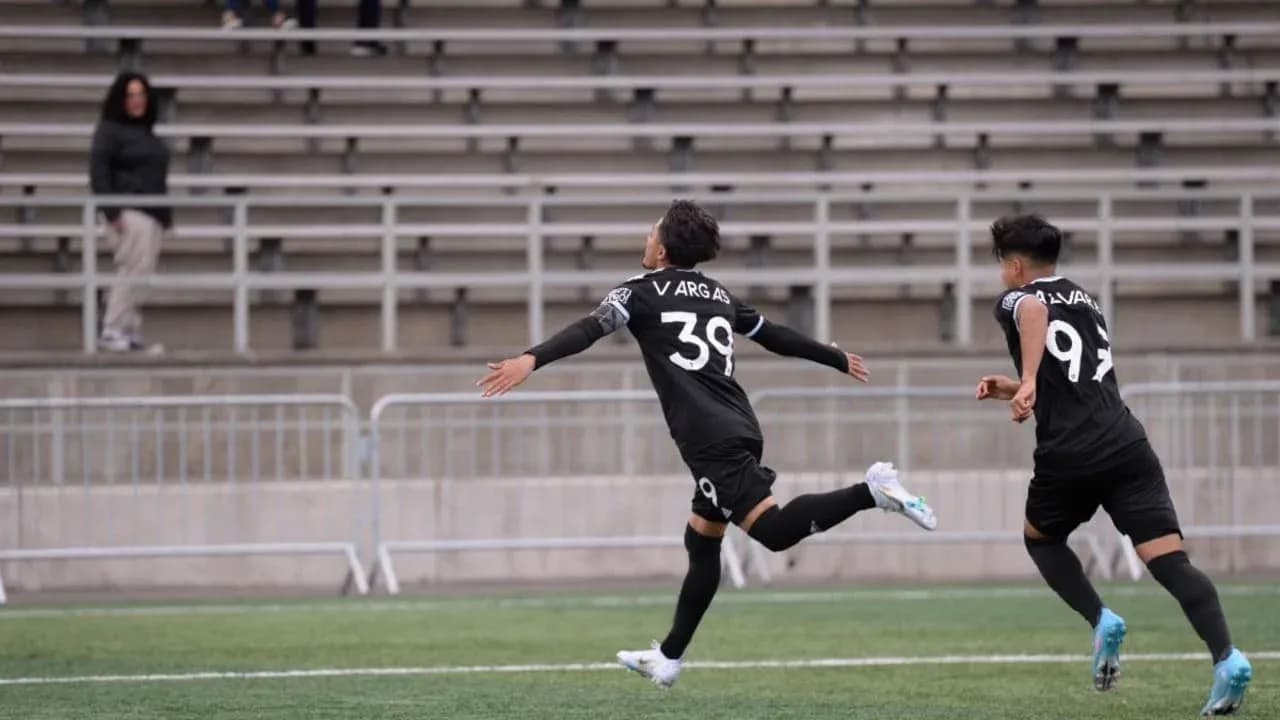
Under the lights of Titan Stadium, Los Angeles FC II and St. Louis City II went the full distance of group-stage tension, 120 minutes and beyond, before LA’s youngsters edged a 7–6 victory on penalties after a 1–1 draw. Following this result, the narrative of MLS Next Pro’s 2026 season gains a sharp new chapter: the Pacific Division leaders by group ranking, Los Angeles FC II, finding a way past a Frontier Division contender that has been one of the league’s most ruthless sides.
Heading into this game, the standings painted a tight, high‑octane clash. Los Angeles FC II sat 1st in the Pacific Division and 4th in the Eastern Conference table snapshot with 21 points from 12 matches, built on 7 wins and 5 defeats, goal difference officially logged at -1 despite 22 goals for and 23 against in the standings block. On their travels and at home combined, they were an all‑or‑nothing side: 7 wins, 0 draws, 5 losses. St. Louis City II arrived ranked 3rd in the Frontier Division and 3rd in the Eastern Conference snapshot with 24 points from 12 games, 8 wins and 4 losses, and a goal difference of 6 from 23 scored and 17 conceded overall.
The seasonal DNA of both teams is clear. Los Angeles FC II are chaos merchants: in total this campaign they average 2.0 goals for and 2.1 goals against per match, with no clean sheets and only 1 game where they have failed to score. St. Louis City II are more balanced but still aggressive: in total they average 2.1 goals scored and 1.6 conceded, with 3 clean sheets and just 1 match where they have failed to find the net. Over 120 minutes and a shootout, those profiles collided perfectly.
Tactical Voids and Discipline
No formal injury or absence list is provided, and both coaches leaned into deep but contrasting benches. Los Angeles FC II named 9 substitutes, a full complement for a long night, while St. Louis City II traveled lighter with 5 options. That discrepancy shaped the late‑game narrative: LA had more fresh legs to manage the tempo through extra time, a subtle but decisive edge once the match passed the 90‑minute mark.
From a disciplinary standpoint, the season data hinted at volatility. Heading into this game, Los Angeles FC II’s yellow cards clustered heavily in the 46–60 minute band, where 30.43% of their cautions arrive, and they had seen red in the 46–60 and 61–75 windows (50.00% of their reds in each of those ranges). St. Louis City II showed a similar spike after the break: 25.93% of their yellows between 46–60 minutes and another 25.93% between 61–75, plus reds spread across 46–60, 61–75 and 76–90 (33.33% each).
This shared tendency toward second‑half ill‑discipline meant the middle of the pitch was always likely to become fractured after the interval, with transitions and broken play suiting the more direct runners on both sides.
Key Matchups
Los Angeles FC II’s “attack by committee” is reflected in their minute distribution rather than in a single star name. In total this campaign they have scored 24 goals, split evenly: 12 at home and 12 on their travels, averaging 2.0 goals per game in both contexts. Their most dangerous offensive window is 16–30 minutes, where 27.27% of their goals arrive, followed by dual surges between 46–60 and 61–75 (18.18% each).
That pattern matched intriguingly against St. Louis City II’s defensive profile. In total, St. Louis have conceded 19 goals, with a pronounced vulnerability in the 61–75 minute range, where 41.18% of their goals against occur. Earlier in matches they are compact: only 5.88% conceded in each of the 0–15 and 46–60 bands. The critical intersection was clear: LA’s post‑half‑time push into the 46–75 minute window ran straight into St. Louis’s soft underbelly between 61–75.
In personnel terms, Los Angeles FC II’s front line of M. Evans, T. Mihalic and C. Kosakoff, supported by the creative presence of E. Rodriguez, offered constant vertical threats. On the other side, St. Louis City II leaned on L. Cornelius and P. Ault as central attacking presences, with E. Carlock and R. Lynch linking lines. The duel between LA’s multi‑channel attack and St. Louis’s late‑game concentration issues framed the rhythm of the night.
Engine Room
Without explicit positional data, the spine must be inferred from usage and shirt clusters. For Los Angeles FC II, S. Nava and J. Terry formed the heartbeat, flanked by the dual Diaz axis – C. Diaz and E. Diaz – to provide ball progression and cover. Their job: to manage transitions against a St. Louis side that, in total, scores 26.09% of their goals between 46–60 minutes and 21.74% between 76–90.
St. Louis City II’s engine room revolved around P. McDonald and A. Gbadehan, with C. Pearson and J. Wagoner likely tasked with stepping into midfield lanes from deeper starting points. Their season profile shows a side that loves to accelerate after half‑time; 46–60 is their single most productive attacking window. That put immense on‑ball and off‑ball responsibility on LA’s central unit to disrupt rhythm and deny clean entries into the final third.
Statistical Prognosis and xG‑Style Verdict
Even without explicit xG numbers, the season data offers a clear predictive arc. Heading into this game:
- Los Angeles FC II: in total 2.0 goals scored and 2.1 conceded per match, with 9 of 12 games finishing over 1.5 total goals, but only 4 over 2.5.
- St. Louis City II: in total 2.1 goals scored and 1.6 conceded, with 8 of 12 over 1.5 goals and 5 over 2.5.
That blend suggests a typical match scenario hovering between 2 and 3 goals, with both sides highly likely to score and neither profile pointing toward a cagey 0–0. The final 1–1 at Titan Stadium fits that expectation: enough attacking quality on both sides to trade blows, but defensive structures just solid enough to prevent the game from breaking open.
Los Angeles FC II’s lack of clean sheets in total this campaign underlines that conceding once was almost baked into the model. Conversely, St. Louis City II’s record of 3 clean sheets overall and an away average of 1.7 goals conceded hinted that they could hold the line for stretches but were unlikely to completely shut down a home side averaging 2.0 goals at home.
From an xG‑style lens, the shootout resolution feels like a natural extension of two aggressive but relatively evenly matched teams. St. Louis City II’s stronger overall record and better goal difference suggested a marginal pre‑match edge in sustained chance creation. Yet LA’s formidable home record – 5 wins from 6 in the standings snapshot, with 11 goals for and 7 against at home there, and 12 goals for and 7 against at home in the broader statistics block – pointed to a side that tends to generate enough volume in their own stadium to tilt tight matches.
In the end, the 7–6 penalty triumph is less an upset than the logical culmination of a finely balanced tactical duel: LA’s depth and home attacking rhythm against St. Louis’s structured, late‑surging offense. Over 120 minutes, the margins were razor thin. From the spot, Los Angeles FC II’s nerve matched their season‑long attacking intent, turning a statistical stalemate into a statement win.