Liverpool's Ambitious Future: A Billion-Pound Bet in New York
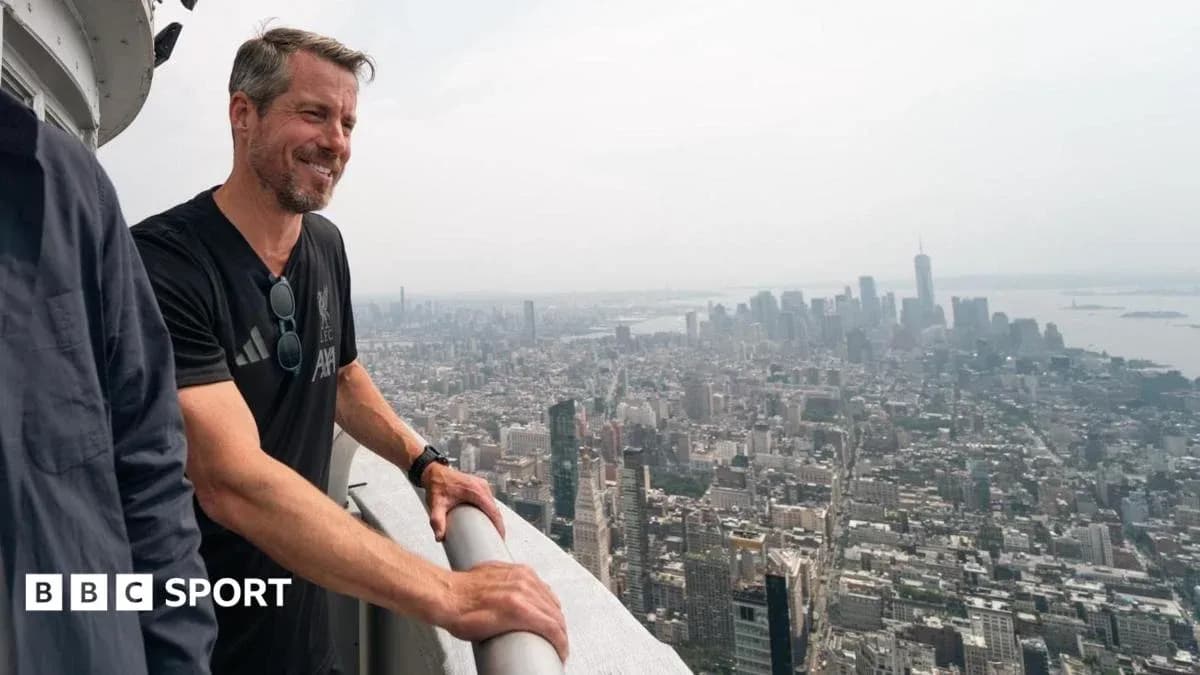
The Liverpool crest glows on giant digital boards above the streets of Manhattan. Taxi horns, steam rising from subway grates, and in the middle of it all, a club trying to reset itself after what its chief executive calls a “super difficult year”.
Billy Hogan sits in New York, talking about Liverpool’s future while the present feels anything but settled. On Wednesday night, Andoni Iraola’s side will walk out at Yankee Stadium to face Wrexham. A pre-season friendly on paper. A statement of intent in reality.
Liverpool say they have more than 26 million supporters in the United States. That number alone explains why the club has crossed the Atlantic again. But this tour is not just about shirts, selfies and open training sessions. It arrives at a moment when the club’s ownership, structure and identity are all under the microscope.
FSG Seek Fresh Money, Not an Exit
Last week, Fenway Sports Group, owners of Liverpool since 2010, confirmed they were in talks over a strategic minority investment. The consortium is led by Amit Bhatia, a British-Indian millionaire businessman. Negotiations are ongoing and there is growing confidence inside the club that a deal will be agreed.
“John Henry and FSG have always said that if there was an interest in an investment that would help the football club, then they would consider it,” Hogan tells BBC Sport. That stance, set out years ago, has not changed.
At this stage, Hogan keeps his language tight. A consortium “led, managed and represented” by Bhatia has come forward. They have expressed interest in a minority stake. Nothing more, officially.
But the numbers tell their own story. According to the Financial Times, any agreement would value Liverpool at more than £4.5bn. From a £300m purchase in 2010 to a multibillion-pound valuation now. From the brink of administration to one of the most coveted assets in world sport.
Hogan is keen to shut down any suggestion this is the start of an exit strategy. FSG also own the Boston Red Sox. They have been accused before of treating Liverpool as just another line on a balance sheet. He pushes back.
“There’s a huge opportunity still,” he says. Liverpool see themselves as one of the biggest clubs in the biggest league in the biggest sport on the planet. The Premier League’s global pull is central to their thinking. The message is clear: they believe the project has not peaked.
A Club Growing, A Team Stumbling
Financially, Liverpool look strong. Hogan points to their position in the Deloitte Football Money League: fifth overall, with the highest revenue in the Premier League at £702m. The club’s stated model remains unchanged. Grow revenues, reinvest in the team and infrastructure, keep the operation sustainable.
“All of that investment, as has always been the case since 2010, goes back into the club,” Hogan says. The aim on the pitch is simple: win trophies. Off it: drive revenue and expand the club’s reach.
The contrast with last season’s reality is stark. After a record £450m summer spend, Liverpool faltered. Performances sagged, results followed, and Arne Slot paid with his job at the end of the campaign. Mohamed Salah, Andy Robertson and Ibrahima Konate all walked away on free transfers. For a club that prides itself on smart trading, those departures cut deep.
It has not just been the dugout and dressing room in flux. Michael Edwards stepped down as FSG’s CEO of football after plans for a multi-club ownership model were shelved. Sporting director Richard Hughes is being linked with a move to Al Hilal in Saudi Arabia. Stability, for once, is not a given.
“Transition and change is inevitable in football,” Hogan insists. He leans on the excitement around Iraola, the new head coach, and his aggressive, front-foot philosophy. Liverpool believe supporters will buy into it. They also accept it will take time.
Hogan’s line is that the leadership remains “in a very steady place”. The club, he says, is healthy. The message is one of calm, even as the cast list changes.
Spending, Restraint and the Chiesa Summer
Liverpool’s approach to transfers under FSG has always been framed as pragmatic. Spend big when the squad needs it, hold back when it does not. Hogan returns to that point.
Last season’s huge outlay was partly offset, he notes, by player sales. This summer has been the opposite. Just one signing: Federico Chiesa for £12.5m. A bargain fee in today’s market, but a solitary addition after such a bruising campaign raises eyebrows.
Sometimes, Hogan says, investment means “significant expense”. Sometimes it does not, as in the summer of 2024. It depends on what the club believes is required. Ultimately, the key decisions sit with Mike Gordon, the managing owner inside FSG’s structure.
The logic is consistent with their stated model. The risk is obvious. A squad that has lost senior figures, a new coach, a fanbase demanding a response. Liverpool are betting that the problems of last season were not just about personnel.
Women’s Team Back in Focus
While the men’s side tours America, Hogan is candid about one area where Liverpool fell behind.
“To be self-critical, that is probably an area that we maybe took our eye off the ball several years ago,” he says of the women’s team. The numbers back him up. Liverpool finished 11th in the WSL last season and have not won the top-flight title since 2014.
The club has moved to correct that. AXA Melwood now houses one of the best training centres in the women’s game, according to Hogan. Investment in the squad is increasing. The commitment, he says, is to treat the women’s team with the same principles as the men’s: sustainable, but ambitious.
There is a clear sense of opportunity. The women’s game is growing fast, commercially and culturally. Liverpool do not want to miss the next wave.
From Brink of Bankruptcy to Billion-Pound Engine
To understand FSG’s confidence, you have to go back to 2010. When they arrived, Liverpool were close to collapse. Administration loomed. The club’s future at Anfield was not guaranteed.
Sixteen years on, the picture is transformed. Under FSG, two of Anfield’s four stands have been redeveloped. The stadium has grown, but the club argues it has not lost its soul. Hogan draws a parallel with the Boston Red Sox and Fenway Park: an iconic venue embedded in its community, modernised without being sanitised.
The work is not just inside the ground. Liverpool are now looking at the footprint around Anfield – infrastructure, transport, ways to bring people in on non-match days. The aim is to turn the area into a year-round hub, not just a place that wakes up every other weekend.
Hogan says the thing he is most proud of is the club’s financial health. From the brink of bankruptcy to solid foundations, improved infrastructure and the security of staying at Anfield long term. These are not the headlines that flood social media, but they underpin everything else.
Ticket prices remain a sore point. Earlier this year, Hogan wrote to fans after protests over planned increases. The club scaled back the rises. It was a reminder that financial strength and supporter sentiment do not always move in step.
Trophies, Memories and the Next Chapter
“Ultimately, it’s about winning trophies,” Hogan says. He admits he wishes Liverpool had won more. Yet he talks with genuine affection about the fan parks at Champions League finals, even the ones that ended in defeat. The joy, the memories, the sense of shared experience. The feeling that, for all the tension and heartbreak, this is supposed to be fun.
He believes everyone associated with Liverpool should be proud of what has been built under FSG. Not just the silverware, but the sense of a club that, in his eyes, still aspires to be the best in the world.
Now comes the hard part: proving it all over again.
After a torrid year on the pitch, Liverpool find themselves in New York, selling the future to a market that already adores them. A potential £4.5bn valuation, a new coach, a reshaped squad, a women’s team being rebuilt, an ownership group seeking fresh investment without surrendering control.
The club has survived crisis before. The question now is not whether Liverpool can endure. It is whether this next phase – born in boardrooms and played out under the lights at Yankee Stadium – will be enough to turn survival back into supremacy.