Lionel Messi's World Cup Legacy: A Mixed Tale of Triumphs and Trials
Lionel Messi’s last World Cup? If it was, he walked off without a trophy but with the ball still orbiting around him.
Across the tournament, the Argentinian’s numbers were absurd: eight goals, four assists and more progressive passes than anyone else, per Futi. Argentina built a system that stripped him of almost all defensive work. So he floated. He wandered into spaces that did not exist for anyone else and kept dragging his country back from the edge.
He scored in the 3-2 win over Cape Verde, then took control against Egypt, first assisting and then equalising. Against England, he turned creator again, stitching together both of Argentina’s late goals. For weeks it felt like the World Cup was bending to his rhythm.
Then came the final – and a void. Over 139 minutes including stoppage time, Messi completed just 28 of 39 passes, produced a single shot and barely laid a glove on the game. No Golden Ball, no Golden Boot, no winner’s medal. Yet the body of work he left behind in this tournament simply added another layer to a World Cup legacy that almost no one in history can touch.
Argentina’s engine room and the workers in the shadows
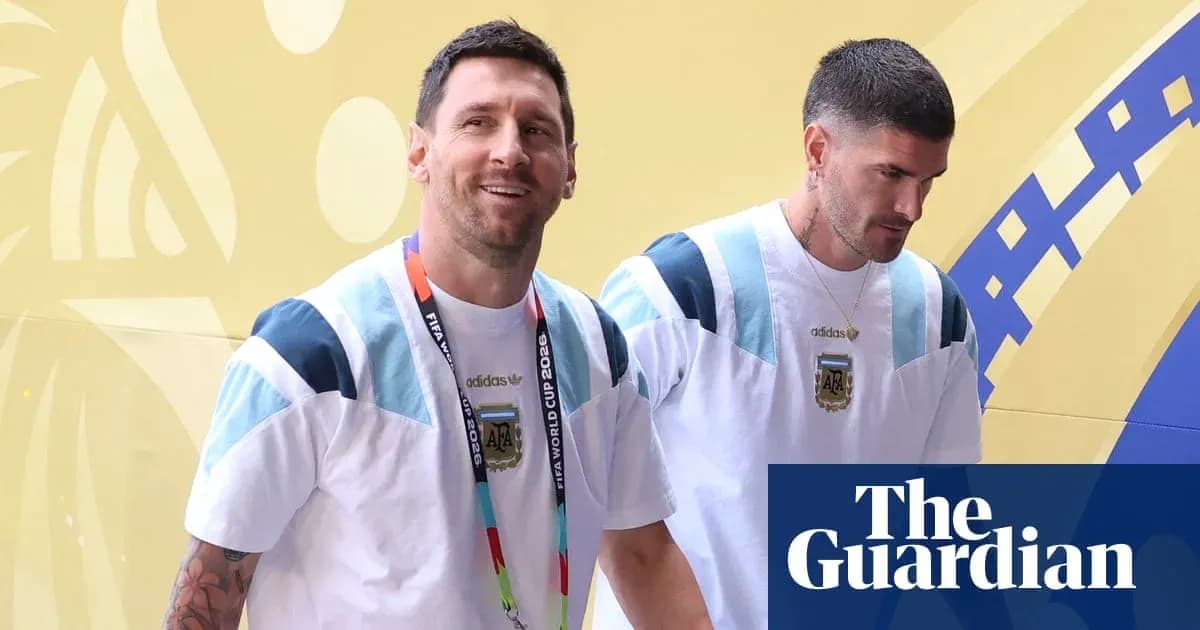
Rodrigo De Paul did not come to be a headliner, and he never tried to be one. The Inter Miami midfielder started all but two of Argentina’s matches on the run to the final and got through 70 minutes against Spain. He snapped into challenges, recycled possession and kept the ball moving. It was functional, not flashy, but Argentina do not reach back‑to‑back World Cup finals without players willing to carry that load.
Across the continent, James Rodríguez arrived in the United States as a ghost of his younger self. Twelve years on from his explosion in Brazil and two years removed from a brilliant Copa América, the Minnesota United loanee could still conjure moments of class. The problem was the end product. Colombia’s last-16 exit to Switzerland came without a single defining contribution from him, and his World Cup story, like his club career, faded out rather than burning bright.
New heroes, rising stocks
Few players changed their career trajectory quite like Mbekezeli Mbokazi. South Africa’s 20-year-old Chicago Fire defender, a former Orlando Pirates captain, walked into the tournament as the squad’s youngest call-up and played like its oldest head. Calm, aggressive, assured – his performances for Bafana Bafana sent his Transfermarkt valuation soaring from $4m to more than $9m. Those numbers only underline what scouts already saw: a defender who looked completely at home on the biggest stage.
Stephen Eustáquio did something even more profound. He rewrote a chapter of Canadian football history. As one of Canada’s primary creators, the Porto midfielder kept swinging crosses into the box and produced 2.76 chances and 0.36 expected assists per 90 minutes. His 46 progressive passes ranked sixth in the entire tournament. Then, with Canada chasing their first ever World Cup knockout win against South Africa, he read a clearance, cushioned the ball on his chest and lashed a half-volley into the bottom corner in the dying minutes. That goal will live far longer than any passing metric.
At the other end of the pitch, Finn Surman announced himself for New Zealand. The 22-year-old Portland Timbers centre-back spent his first two games throwing himself into last-ditch tackles and crucial clearances, looking every bit the defensive anchor the All Whites have been searching for. He even found time to score their only goal in a 3-1 defeat to Egypt, a rare bright flash in a difficult campaign.
South of the equator, Paraguay discovered a pair of midfielders who gave them identity. Matías Galarza, after sitting out the opener, started every remaining game. He scored the only goal against Turkey and set up Julio Enciso against Germany in the knockouts. Paraguay averaged just 29% possession – dead last in the tournament – which strangled his attacking influence, but the Atlanta United loanee (now back at River Plate) showed he could still hurt teams within those constraints.
Alongside him, Andrés Cubas became Paraguay’s heartbeat without the ball. The Vancouver Whitecaps midfielder played every minute of their five matches as the team’s destroyer. His work underpinned a run that saw Paraguay take Germany to penalties and limit France to a single goal. In the quarter-final, he won seven of 12 duels, made seven tackles, three interceptions and even found time to tangle with Kylian Mbappé. Paraguay left with credit; Cubas left with his reputation enhanced.
Australia, too, found something new. Lucas Herrington, an 18-year-old centre-back from the Colorado Rapids, arrived as the youngest player in their squad and forced his way into the side, starting each of the Socceroos’ final two games. Kai Trewin, from NYC FC, stepped in at half-time of the knockout tie with Egypt after Jordan Bos’s injury and helped drag the match all the way to penalties.
Aiden O’Neill, already a steady presence at New York City FC, simply transported his club role onto the international stage. Quiet, neat, always available, he knitted Australia’s play together and walked away with the Superior Player of the Match award against Paraguay before backing it up with another composed display against Egypt.
Americans under the microscope
For the United States, the World Cup became a harsh audit of depth and decision-making.
Sebastian Berhalter, a Vancouver Whitecaps midfielder and one of Mauricio Pochettino’s trusted substitutes, featured in every game. His only start came as a No 6, a role that exposed the US’s lack of specialist defensive midfielders more than any individual flaw of his own. Even so, he found ways to contribute, scoring once and assisting another goal.
Tim Ream’s story cut deeper. For a while, the 38-year-old Charlotte centre-back looked as if he had preserved the form that made him such a calming presence in Qatar. Then Belgium arrived. In a brutal 4-1 defeat, Ream became the symbol of the collapse. On the opener, he lost track of an in-form Charles De Ketelaere, who poached the goal with Ream nowhere in sight. Minutes after the US equalised, De Ketelaere climbed above him at the back post to restore Belgium’s lead. Two moments, both at Ream’s expense, and the game – and his tournament – were gone.
In goal, Matt Freese and Matt Turner lived opposite experiences. Freese, the 27-year-old NYC FC keeper, put together an otherwise strong tournament, making nine saves in four games and distributing the ball cleanly. Yet his World Cup will still be remembered for one costly performance, one decisive mistake. Turner, now back as New England Revolution’s No 1, was given a single start against Turkey and endured a nightmare: three goals conceded, no saves made.
Miles Robinson, the FC Cincinnati centre-back, barely featured at all. Pochettino’s reluctance to rotate in defence left Robinson with only a token outing in a meaningless final group game. Max Arfsten’s involvement was even more fleeting. The Columbus winger came on in the 90th minute of the 4-1 round-of-16 loss to Belgium and did not touch the ball before the final whistle.
Canada’s mixed bag
Canada’s World Cup became a study in contrasts.
Stephen Eustáquio and his late winner against South Africa will headline the memories, but the supporting cast told a different story. Richie Laryea, long a fixture at left-back, pushed the ball forward and posted 0.26 xA per 90 minutes, yet his defensive lapses hurt. Against Bosnia and Herzegovina, his man escaped to score from an in-swinging corner. Against Switzerland, he drifted out of position and failed to track runners, leaving gaps that better sides ruthlessly exploited.
Maxime Crépeau, Orlando City’s goalkeeper, finished with six goals conceded and only six saves across five games – numbers that speak to both Canada’s defensive fragility and his own subdued impact. Jacob Shaffelburg, on loan at LAFC, came off the bench in all five matches but never quite bent a game to his will. Mathieu Choinière managed just a single start, the 2-1 defeat to Switzerland. Jayden Nelson’s contribution was reduced to a late cameo, entering in the 87th minute of a 3-0 knockout loss to Morocco. Jonathan Osorio, Toronto’s captain, also arrived late in two matches and, like so many of Canada’s substitutes, could not tilt the balance.
And yet, for all that, Canada leave with something they have never had before: proof they can win a knockout tie on the world stage, and a core of players hardened by it.
Grit, frustration and quiet exits
Across the rest of the field, the World Cup left its usual trail of nearly-men, role players and those who simply ran into the ceiling of their teams.
Juan Manuel Sanabria’s job for Uruguay was brutally simple: deal with Lamine Yamal. The Real Salt Lake man started two group games, including the decisive one against Spain, and largely smothered the teenager. Yamal finished with just 0.03 xG, 0.10 xA and only five successful dribbles from 12 attempts – a small, vital victory in a tournament of fine margins.
For Panama, Carlos Harvey and Aníbal Godoy played bit parts in narrow defeats. Harvey, the 6ft 1in Minnesota midfielder, started all three group matches and threatened mainly from set pieces. Godoy stepped on the pitch for a single minute plus stoppage time against Ghana, completed all eight of his passes and still could not prevent a last-gasp winner at the other end.
Haiti’s Danley Jean Jacques and Louicius Deedson battled away in a team that arrived as the tournament’s lowest-ranked side. Jean Jacques, from Philadelphia, shared double-pivot duties with Jean-Ricner Bellegarde and spent most games firefighting. Deedson, the FC Dallas winger, played in all three group defeats, logging 112 minutes and 13 completed passes. Derrick Etienne Jr, now at Toronto, saw only nine minutes against Brazil, completing four passes in a brief cameo.
Petar Musa’s tournament for Croatia was brutally efficient and brutally sparse. Two starts, 110 minutes, one shot, one goal. Marco Pasalic, the Orlando City winger, at least found space in Croatia’s third group match but squandered his one clear chance to score.
Miguel Almirón’s World Cup will be remembered less for his play than for a moment of rule-book infamy. The Atlanta attacker managed just four shots and 0.11 xG in four starts for Paraguay, then saw red against Turkey after covering his mouth during an on-field altercation. It became the first enforcement of the International Football Association Board’s new mouth-covering ban, a bizarre way for a creative talent to leave his mark.
South Korea’s Son Heung-min endured a tournament that never really started. The 34-year-old LAFC forward failed to score in either of his two starts and sat on the bench when his country faced a must-win final group game. For a player who has carried so many teams for so long, the silence was jarring.
New Zealand’s Michael Boxall, one of the oldest players at the tournament, found himself half a step short on too many of the goals the All Whites conceded. Panama’s Carlos Harvey, Haiti’s Jean Jacques, Iraq’s Ahmed Qasem – who started against France and was sacrificed early in the final group match after Rebin Sulaka’s 13th-minute red card – all worked inside teams punching up every time they walked onto the pitch.
Qasem’s fellow fringe names tell the same story. Lucas Harvey’s quiet outings. Braian Ojeda’s 21-minute cameo for Paraguay against Germany, with just nine touches. Louicius Deedson’s limited time. Etienne’s nine minutes. Nelson’s late entrance. Osorio’s stoppage-time appearances. Max Arfsten’s single, untouched minute. Players who will look back and wonder what might have been with just a little more trust, a little more time.
This World Cup did not just belong to Messi’s fading light or Eustáquio’s rising star. It belonged to Mbokazi’s surge in value, to Cubas snarling at Mbappé, to Sanabria shadowing Yamal, to the veterans who stayed on a season too long and the kids who arrived a tournament too early.
The question now is simple: four years from this, who returns as a star, and who is remembered only as a name on a squad list that hinted at something more?