Kubo Takefusa's Injury: Japan's Unyielding Spirit Against Brazil
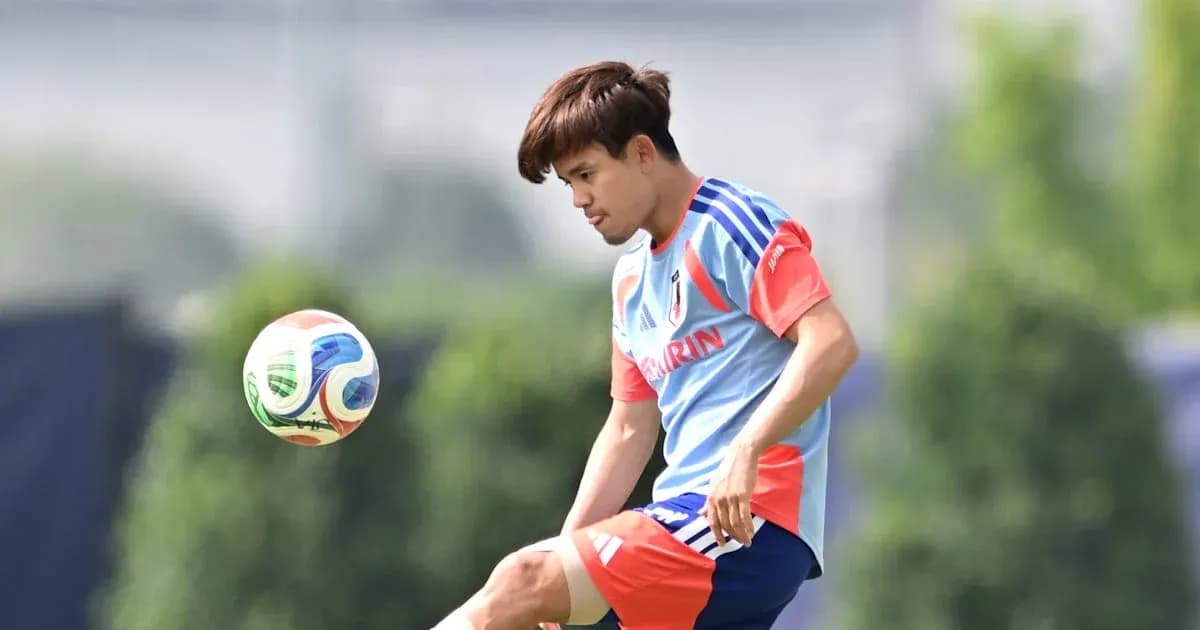
The tape on Kubo Takefusa’s left knee says one thing. His words say another.
“I’m good,” he insisted on the eve of Japan’s World Cup round of 32 showdown with Brazil, a line delivered with the casual confidence of a player who refuses to see himself as a doubt.
The reality is harsher. Since going down in Japan’s tournament-opening draw with the Netherlands, the Real Sociedad playmaker has barely kicked a ball. Rehab, isolated running, heavy strapping. No real football. No rhythm.
On Sunday, coach Moriyasu Hajime cut through the optimism.
Kubo will not play against Brazil.
For a country ready to stay up until 1 a.m. to watch, it’s the news that fuels a familiar, nagging thought: what if?
A star in the treatment room
Kubo is not just another name on the team sheet. At 25, he brings something no one else in this Japan squad quite replicates – that flash of left-footed invention, the ability to unpick a defence with a touch or a feint that doesn’t belong in the coaching manual.
He had begun to grow into a leadership role as Japan’s injury list lengthened. Mitoma Kaoru gone. Captain Endo Wataru out. Minamino Takumi sidelined. One after another, the established pillars fell, and Kubo’s influence within the camp swelled.
Moriyasu knows what he is losing.
“I’m hoping for a speedy recovery and he’s doing everything he can to pick up his conditioning,” the coach said at his pre-match press conference, careful to praise the effort even as he closed the door on any late miracle.
For most nations, losing that many headline names would rip the spine out of a campaign. Japan have chosen a different identity.
Depth as a weapon
This squad has lived off its collective strength. Moriyasu has used all but three of his 26 players so far – the only ones yet to see the pitch are the two backup goalkeepers and one outfielder. That is not rotation for its own sake; it’s a statement.
The “next man up” cliché that floats around dressing rooms is often just that. With Japan, it has become the organising principle.
The drop-off when Moriyasu turns to his bench has been minimal. Roles are clear, responsibilities shared. The absence of a star has not meant the absence of an idea.
So Kubo’s injury hurts, but it does not paralyse.
And that matters, because the opponent waiting on the other side is Brazil. At least, the Brazil of the badge and the memories.
Inside this Japanese squad, the aura has faded.
No fear, no deference
When Wolfsburg striker Shiogai Kento was asked to name the strongest teams at this World Cup, he went straight to the heavyweights.
France. Argentina.
Brazil? Not a mention.
“You don’t really hear about Brazil lately,” he said, almost offhand, as if discussing a club side between fixtures rather than a five-time world champion.
Then came Neymar’s name, the man who has scored nine goals in five previous matches against Japan, a figure that once haunted the national psyche.
“That’s Neymar of the old. I think we’re OK right now,” Shiogai replied.
A decade or two ago, such lines from a Japanese international would have sounded like provocation, or fantasy. Back then, Brazil were not just a team; they were the model.
When the J.League kicked off 33 years ago, Brazil set the standard for what Japanese football wanted to be. Brazilian imports lifted the league’s quality and glamour. The Selecao and Joga Bonito occupied a kind of cultural high ground. Japanese players looked up. The public stared in admiration.
Now, a new generation looks Brazil in the eye.
A different Japan, a different night
This is not a Japan cowed by history or reputation. It is a group that has openly declared its ambition not only to beat Brazil, but to win the World Cup. Bold? Absolutely. Delusional? The squad doesn’t seem to care.
They know they are better with Kubo on the pitch. His absence strips away a layer of guile, a certain unpredictability in the final third. But it does not strip away belief.
In his place stands a collective hardened by setbacks, driven by the knowledge that almost everyone in the squad has already been asked to contribute. There is no hiding place, but there is also no hierarchy so rigid that one injury collapses the structure.
As the country settles in for a long, anxious night in front of their screens, one storyline will run parallel to the match itself. Somewhere, Kubo will watch with his knee wrapped and his boots off, knowing this was supposed to be his stage.
Japan will walk out without him, shoulders squared, the old fear of Brazil replaced by something far more dangerous to a giant: a quiet, stubborn conviction.
The question now is not whether they miss Kubo. Of course they do. The question is whether this new, unafraid Japan can make Brazil miss the days when the result felt like a formality.