Korea's World Cup Hopes: A Coach Under Siege
Thirty days from a World Cup, a football nation is usually humming with anticipation. In Korea, the soundtrack is different: boos, skepticism and an uneasy silence where sold-out crowds used to be.
A Coach Under Siege, A Crowd Turning Away
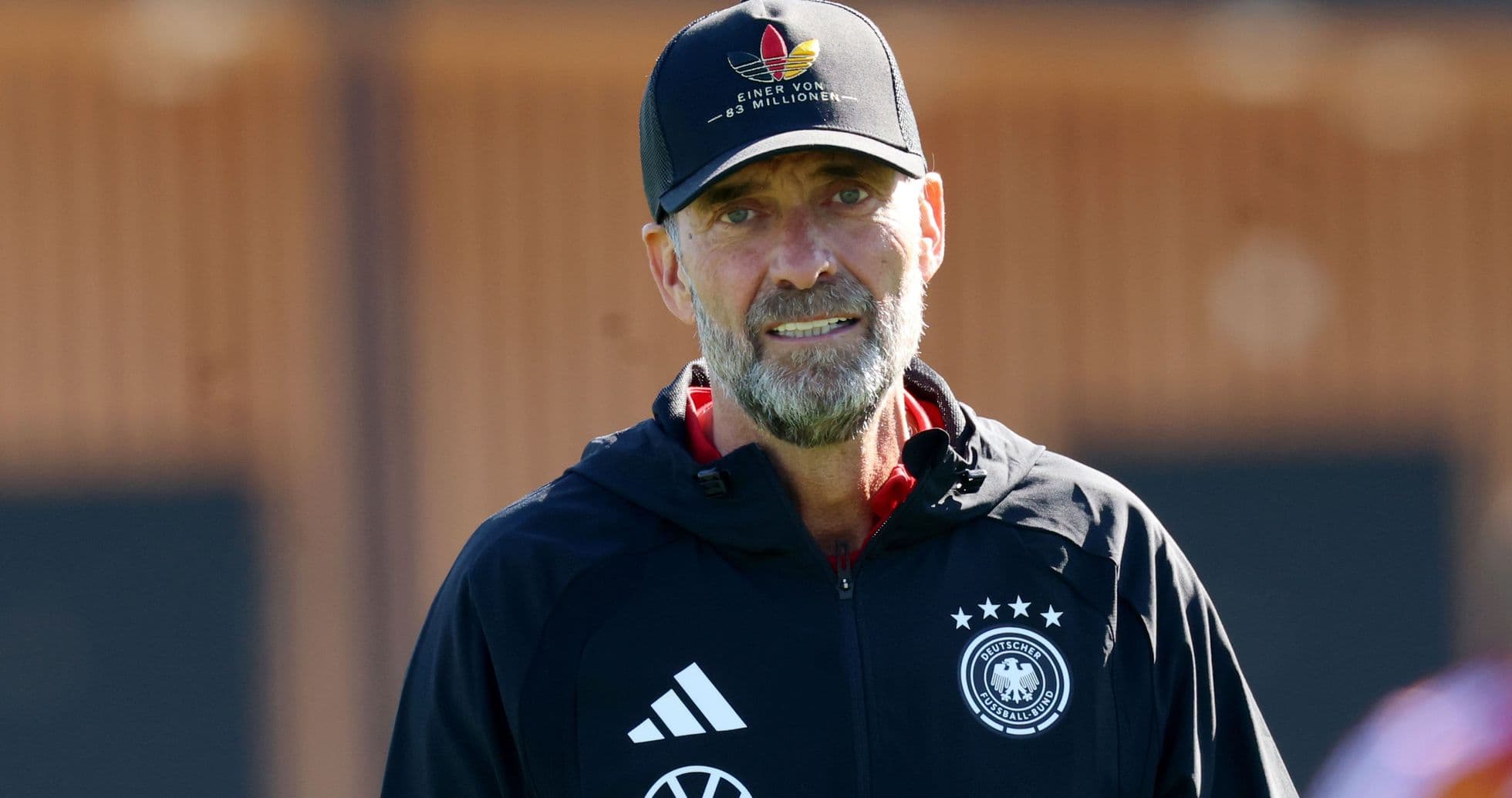
The mood soured the moment Hong Myung-bo took the job in the summer of 2024. His appointment was controversial, his approval rating among fans even worse. Stadiums that once wrapped the Taegeuk Warriors in noise turned on him instead.
They packed in as usual for men’s internationals, but the welcome was venomous. Hong was booed relentlessly. Banners went up demanding the resignation of Korea Football Association president Chung Mong-gyu. The anger wasn’t subtle; it was organized.
Then came something more damning than jeers: apathy.
On Oct. 14, only 22,206 fans walked through the gates of the 66,000-seat Seoul World Cup Stadium for a friendly against Paraguay – the smallest crowd for a men’s international in a decade. A month later against Ghana, the attendance crept up to 33,256, still a stark contrast to the packed stands that had long been a given.
Korea won both of those matches, with a victory over Bolivia in Daejeon in between. Three straight wins, roughly 33,000 in the stands in Daejeon, and yet almost no one left convinced. The performances felt flat, brittle, unworthy of a team heading into the biggest tournament on earth.
Then the World Cup year began, and the cracks widened.
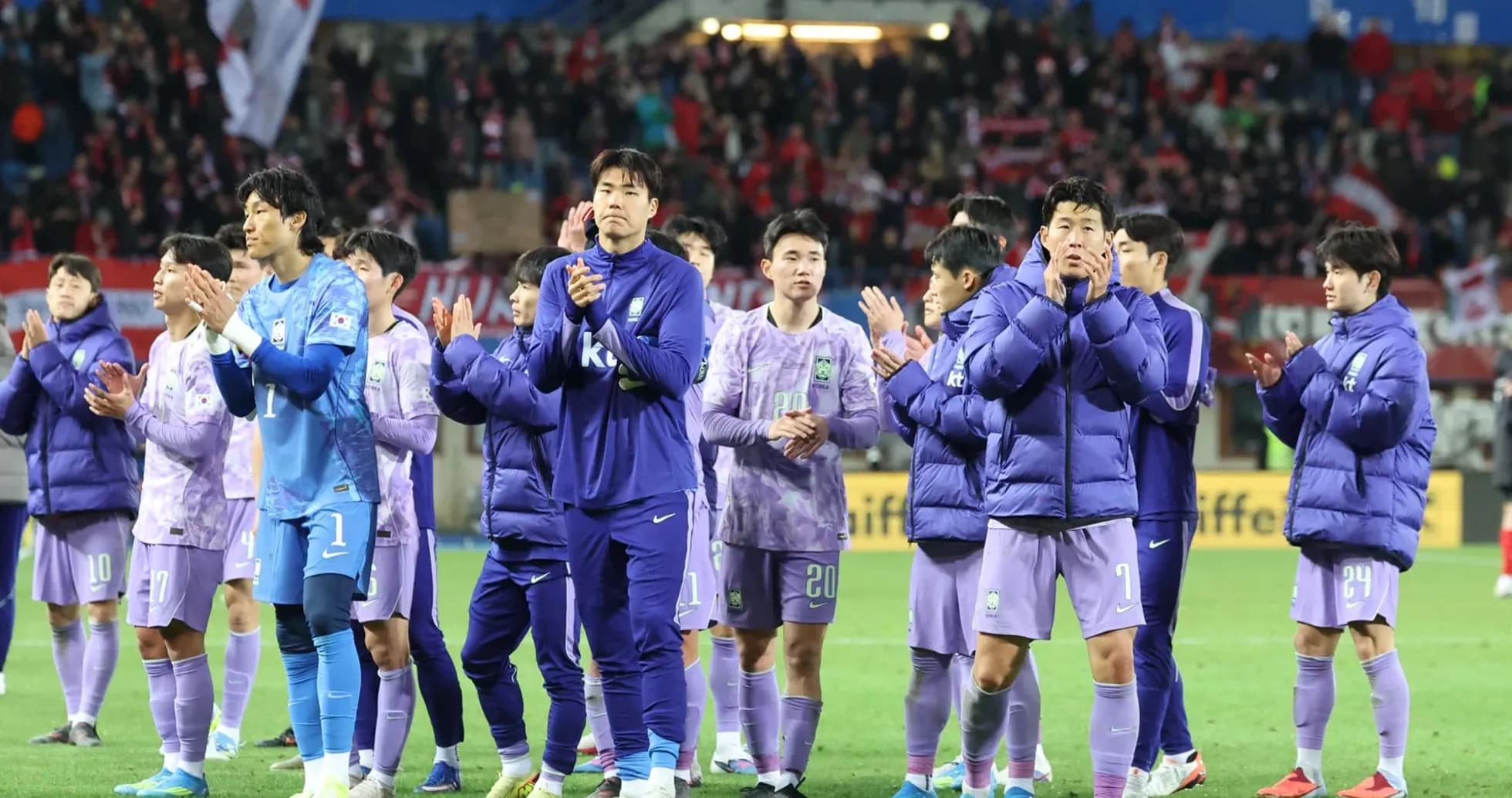
A 4-0 hammering by Ivory Coast on March 28. A 1-0 defeat to Austria three days later. Both away, both friendlies, both brutally exposing. The results didn’t just dent confidence; they hollowed it out.
A Soft Group, A Hard Mood
On paper, the draw handed Korea a lifeline.
Ranked 25th in the world, they landed in Group A with Mexico (15th), Czechia (41st) and South Africa (60th). Many pundits looked at that quartet and nodded approvingly. Not a group of death. Not even close. A navigable path, if not a golden one.
The schedule helps too. Korea open against Czechia in Guadalajara at 8 p.m. on June 11 (11 a.m. on June 12 in Korea), stay in Guadalajara to face Mexico at 7 p.m. on June 18 (10 a.m. on June 19 in Korea), then travel to Monterrey to meet South Africa at 7 p.m. on June 24 (10 a.m. on June 25 in Korea).
All three games in Mexico. Two in the same city. Minimal travel in a World Cup spread across Mexico, Canada and the United States. Logistically, it is as kind a hand as Korea could have hoped for.
This is also a different kind of World Cup: 48 nations, up from 32, and a knockout phase that starts with a round of 32. The top two teams from each of the 12 groups go through, along with the eight best third-place finishers.
Put those pieces together and the expectation from many experts is simple: Korea should get out of the group. Comfortably.
How far they can go after that? No one is willing to put a firm stamp on it.
What is certain is that Korea know this stage well. This will be their 11th consecutive World Cup. Away from home soil, they’ve reached the knockouts twice – in 2010 in South Africa and in 2022 in Qatar. The habit of qualifying is ingrained; the habit of going deep is not.
Star Power vs. Soft Underbelly
Television analyst Kim Dae-gil sits on the optimistic side of the fence.
“I think Korea will get to at least the round of 16,” he said, pointing straight at the group. Looking at Czechia and South Africa, Kim believes Korea win those matchups “six times out of 10.” Do that in June, he argued, and the path opens.
If Korea emerge as group winners or runners-up, the round of 32 should bring a “beatable opponent,” in his view. The format, the draw, the travel – it all lines up.
The core of his belief rests on two men: captain Son Heung-min of Los Angeles Football Club and Paris Saint-Germain playmaker Lee Kang-in. Kim sees them as true “game changers,” players who can conjure chances from nothing, who can tilt a tight World Cup match with a single touch or run.
But even he draws a hard line at the squad’s depth.
“The gap between the starters and backups is substantial,” he warned. To push beyond the round of 16, he argued, Korea will need more than just their headline acts. They will need the supporting cast to rise. And they will need Son, above all, to stay healthy.
Injuries, Form Slumps and Doubt
Others are not so bullish.
Analyst Seo Hyung-wook initially penciled Korea in for the round of 16. Then came the ankle injury to midfielder Hwang In-beom, and his forecast shifted back to the round of 32.
Hwang, a clever, two-way engine, is as close to irreplaceable as anyone in Hong’s squad. He damaged his right ankle in March while playing for Feyenoord and is now rehabbing with the help of the national team’s medical staff. His availability – or lack of it – hangs over every tactical discussion.
“Other mainstays have not been playing well,” Seo said. He pointed to Lee Kang-in and Bayern Munich defender Kim Min-jae, both short on minutes at their clubs.
Seo still sees a strength in the chemistry among Europe-based stars such as Son, Lee and Kim, who have shared countless camps and tournaments together. That understanding can carry a team through difficult spells.
But the pool is shallow.
“The problem is there just aren’t many of them,” he said. At this moment, in his eyes, Korea do not have a player who can be confidently labeled “world-class” in the context of this World Cup.
Analyst Park Chan-ha shares the gloom. He also predicts Korea’s journey will end in the round of 32.
A System That Stalls
“Hong Myung-bo’s team has some talented players,” Park admitted. The issue, as he sees it, is structural. Korea struggle to consistently create scoring chances. The attack often leans on individual brilliance rather than a reliable, repeatable pattern of play.
At a World Cup, that is a dangerous way to live.
“The team relies on players’ individual skills to try to capitalize on those few opportunities,” Park said. “But you can only do so much of that at the World Cup.” The heavy defeat to Ivory Coast and the loss to Austria in March felt, to him, like early warnings of a plan that breaks down under real pressure.
If Hwang In-beom cannot play, or if he is limited, Park expects those problems to grow even sharper. The link between midfield and attack already looks fragile. Remove one of its key architects and the whole structure risks sagging.
The Match That Sets the Tone
For Park, everything swings on the first game.
“I think the first match against Czechia will be the most important one,” he said. “This is the one Korea must win, and they will be in trouble if they don’t get it done.”
Czechia do not naturally pour forward. They are compact, disciplined, and difficult to break down. That profile worries Park. Korea, already laboring to carve open defenses, may find themselves trapped in a slow, tense contest where one mistake decides everything.
Seo agrees with the weight of the opener.
“In our World Cup history, the outcome of the first match often determined the fate for the rest of the tournament,” he said. With Mexico looming in the second game, he sees little margin for error. Fail to beat Czechia, and the pressure against Mexico could become suffocating.
Kim Dae-gil views the calendar slightly differently. For him, the showdown with Mexico will define the group.
“I think Korea and Mexico will battle for the top spot in the group,” he said. If that proves true, Guadalajara on June 18 will not just be another group match; it will be a test of whether this Korea side belongs among the tournament’s serious operators or merely its survivors.
The clock is ticking. The stadiums will fill again once the World Cup starts. The question is simple and unforgiving: when the whistle blows in Guadalajara, will this Korea team look like one that has turned a corner – or one still trapped in its own doubts?