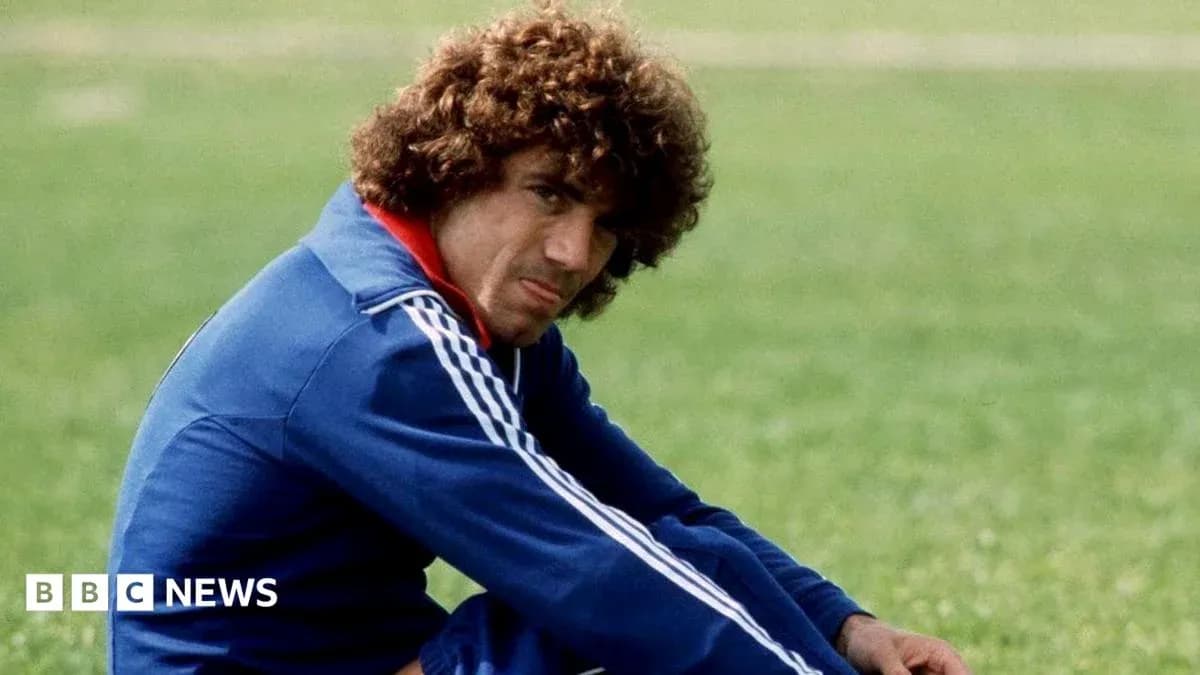
Kevin Keegan: The Scouser Who Connected Liverpool and Hamburg
On Merseyside, Kevin Keegan was always more than a footballer. This week, in the wake of his death at 75, he was given a new title by Liverpool City Region Mayor Steve Rotheram: a “bridge between two great cities.”
Rotheram used the phrase in a letter to the mayor of Hamburg, a city that adopted Keegan as fiercely as Liverpool once did. The note, written ahead of Hamburg’s annual Harbour festival, revealed that Keegan had been due to return to the German port alongside the mayor. Cancer stopped him making the trip. It did not stop the memories.
Keegan left Liverpool FC in 1977, departing a team he had helped drag to the summit of European football. His last act in red was to lift the club’s first European Cup, the crowning moment in a spell that brought seven major honours and turned him into one of the most decorated English players of his generation. Then he walked away from Anfield and into a different kind of spotlight at Hamburg SV.
That move, Rotheram argued, was never just about a transfer fee or a new league. “When Kevin left our shores for Germany in 1977, he did more than make a then-record transfer between two football clubs. He built a bridge between two great cities,” he wrote.
Liverpool felt it. Hamburg did too.
For one half of Liverpool, Keegan was the poster boy of a golden era, the relentless forward whose work rate matched the city’s own self-image. For the other half, he was something else entirely. “For one half of our football-mad city, Kevin was a footballing hero, for the other, a well-respected irritant on derby day,” Rotheram said.
That line captured him perfectly. Even Evertonians, who spent the 1970s watching him torment their defence, grudgingly respected him. You could boo the shirt. It was harder to boo the man.
Keegan’s career needed no embellishment. Twice a Ballon d’Or winner. A European champion. A forward who married industry with flair at a time when English football often chose one or the other. But Rotheram’s letter pushed beyond the medals and the numbers.
“He was not just a Liverpool FC legend and one of the most beloved figures our city has ever known,” he wrote, before widening the frame to include Hamburg, where Keegan became a cult figure and a symbol of the Bundesliga’s growing pull. The mayor stressed that Keegan’s success “belonged equally to Liverpool and Hamburg,” describing how he was “admired and loved” in both cities.
In an era before global branding and social media, Keegan did something that now feels almost routine: he exported the identity of an English club icon and plugged it straight into another football culture. Hamburg embraced the wild hair, the ceaseless running, the big-game temperament. Liverpool watched from afar as one of their own lit up another stage.
To Rotheram, that journey meant more than a career move. It was a statement about who the game is for. “To me, he embodied better than anyone else that famous maxim: football is the people’s game,” he wrote.
Two cities, one player, and a legacy that still stretches across the North Sea.