Jurgen Klopp: Germany's New Head Coach for a National Revival
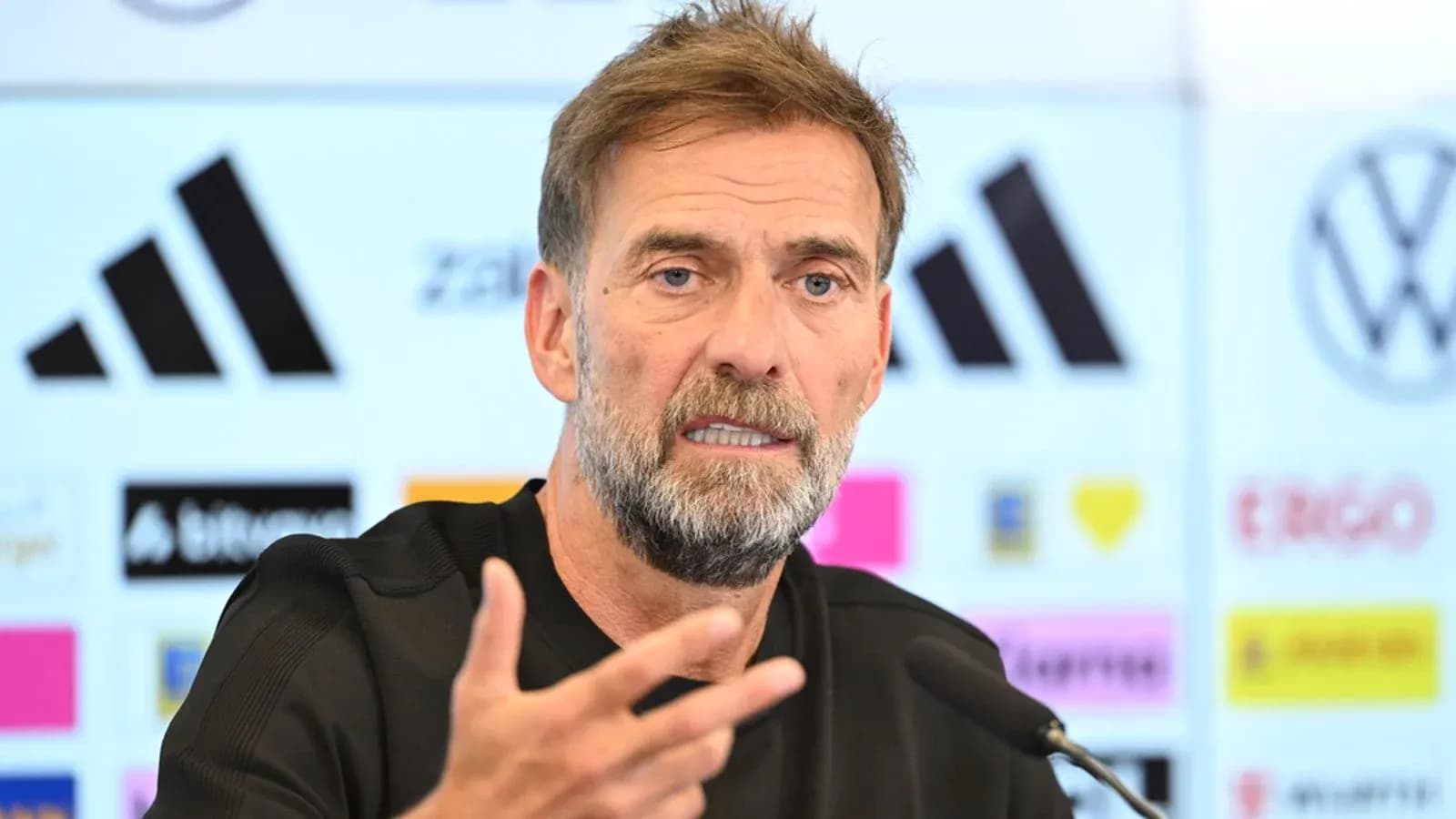
Jurgen Klopp strides back into the technical area – and this time, he carries a nation on his shoulders.
Germany have appointed the 59-year-old as their new head coach on a deal running to the end of the 2030 World Cup, handing one of world football’s most combustible, charismatic figures the job he has openly called the pinnacle of his career.
Six months after walking away from Liverpool exhausted but decorated, Klopp is back in the dugout. Not for a club, as many had assumed he eventually would, but for the DFB and a national team still searching for a clear identity after years of drift.
A coach at his peak, on his terms
Klopp left Anfield in 2024 saying he was “running out of energy” after nine ferocious years that yielded six major trophies, including the Champions League, Premier League, Club World Cup, FA Cup and two League Cups. He then resurfaced in a more distant role as Red Bull’s head of global soccer, and made it clear he had no appetite for the grind of club management again.
The DFB tested that resolve the moment Julian Nagelsmann resigned following a World Cup campaign that ended with a last-32 penalty shoot-out defeat to Paraguay. They went straight to Klopp. He said yes.
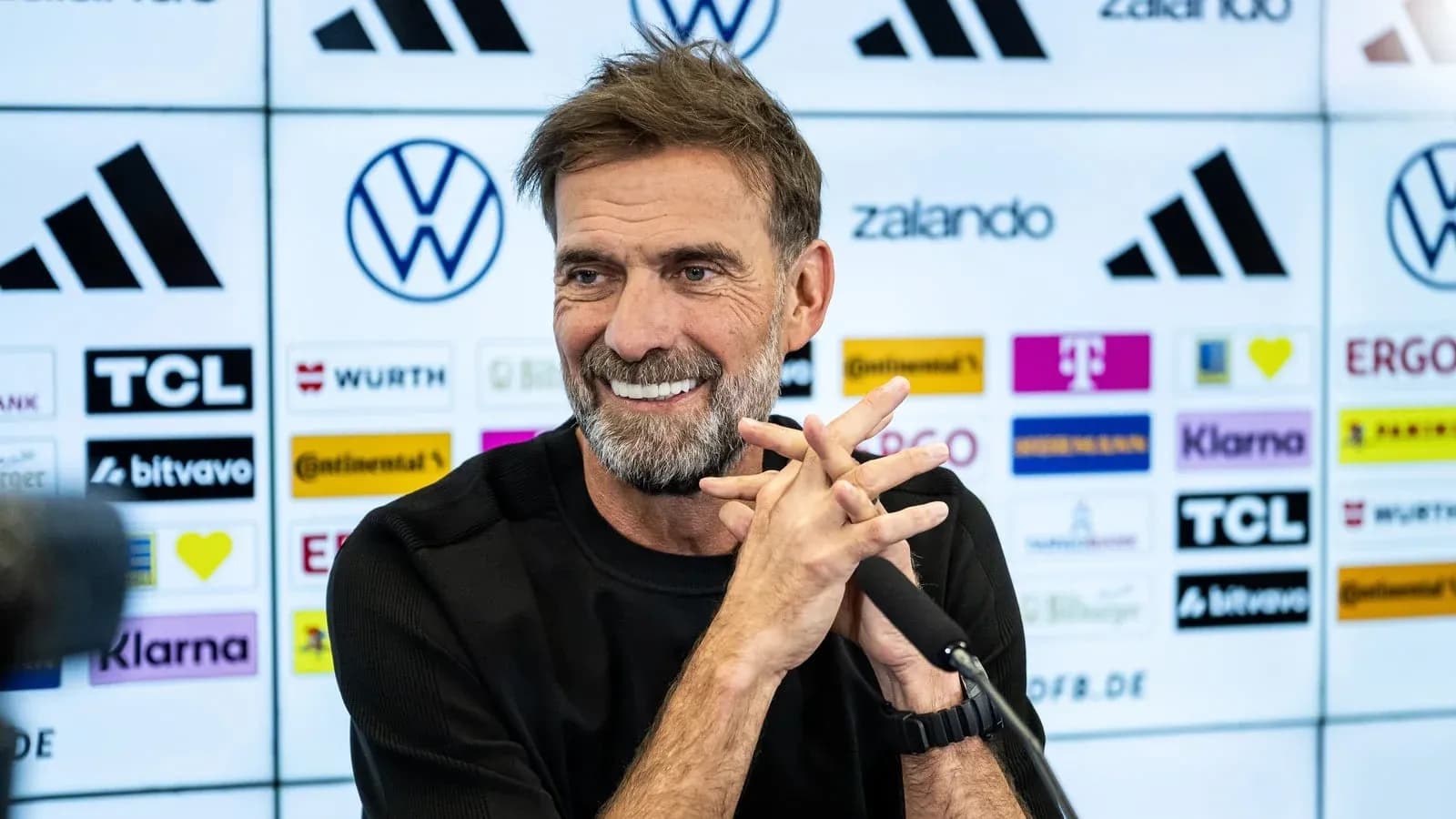
Unveiled on Friday, he wasted no time setting the tone. The job excites him. It also comes with a warning.
“It is my mission to make the national team squad a better team and hope the pool for me to choose from will be bigger, but it is not something I am doing against you, I am doing it for you. It is an honour,” he said.
Then the edge sharpened.
“I will be remunerated very graciously and if tomorrow Jurgen Klopp is s***, I will be gone. But if the DFB says let us discontinue the job, then that's it. And if you behave badly and don't let my family in peace, I'll be gone. I'll just turn away. I know there are other countries where national team head coaches are treated even worse. I love this job but I am also ready to call it quits if needs be.
“Jurgen Klopp is not going to have any ‘career’ after the national team. This is the pinnacle, the high point of my footballing career as a coach. I will give everything I've got, and I have the best possible assistant coaching team.”
This is Klopp: emotional, confrontational when he feels he must be, and utterly clear that this is his last great project.
Resetting the bar
The noise around his appointment was inevitable. A serial winner, a cultural figure at Liverpool and Borussia Dortmund, a coach whose football has often crackled with intensity. For many German fans, Klopp feels like a shortcut back to the top.
He refuses to sell that illusion.
“Jurgen Klopp being in the job doesn't automatically mean we're going to be world champions,” he said, cutting through the hype. He framed success in stark, simple terms: performance versus expectations.
“We need a new set of expectations. Many people have asked themselves, are we as good as France? If the answer is no, then that is not necessarily true. If the question is, do we have players like Dembele, Barcola, Mbappe? Then the answer is no, we don't, but we can still beat them.
“We don't want to play like Argentina, Spain, England or France. We want to play like Germany, do it the German way but very intense. Are we the number one team at the moment? No, we aren't; I accept that. Would we be happy to be the number two team? Then people would say we aren't number one.
“At the moment, we have 11 teams ahead of us. Yes, we can beat them, but for this to happen, you need to play very good, intense football.”
There it is: a ranking in his own mind, a gap he believes can be closed, and a demand that Germany rediscover a style that feels unmistakably theirs – only turbocharged.
Building his inner circle
Klopp has not come alone. The DFB have handed him the tools to shape the entire sporting structure around the national team.
On the touchline, familiar faces return. Former Liverpool assistants Pep Lijnders and Peter Krawietz join his staff, with Sven Bender – who played under Klopp at Borussia Dortmund – also part of the coaching team. The band, in large part, is back together.
Off the pitch, there is a significant move too. Per Mertesacker, who left his role as Arsenal’s academy manager at the end of last season after eight years in north London, will become Germany’s sporting director in January, replacing Andreas Rettig. A World Cup winner in 2014, Mertesacker will be tasked with helping align the country’s talent production with Klopp’s demands for intensity and identity.
This is not just a coaching appointment. It is a structural reset.
The first test
The honeymoon will not last long. Klopp’s first game in charge comes against the Netherlands in the Nations League on September 24, a fixture loaded with history, rivalry and scrutiny. Every selection, every tactical tweak, every gesture on the touchline will be dissected.
Germany have, in Klopp, a coach who has already climbed almost every mountain at club level. He conquered the Bundesliga with Dortmund, then dragged Liverpool back to the summit of English and European football. He has rebuilt teams, re-energised fanbases, and turned stadiums into pressure cookers.
Now he walks into a different kind of arena, one where the rhythm is slower, the spotlight more unforgiving and the margin for error brutally small.
He calls this the high point of his career. The last job. The final act.
If he can make Germany “play like Germany” again, and do it his way, how far can that act run?