Jose Mourinho's Near Deal with Manchester United
Jose Mourinho has revealed he once agreed to become Sir Alex Ferguson’s successor at Manchester United – only to tear up that future and run back to Chelsea instead.
The story, long whispered in football circles, is finally told in Mourinho’s own words in a new Netflix documentary about his career. And it confirms what many inside the game suspected: Manchester United thought they had their man.
“I signed to go to Manchester United”
In 2013, Ferguson walked away from Old Trafford after 26 years, 13 Premier League titles and an era that defined English football. His chosen heir, publicly at least, was David Moyes, then Everton manager, soon to be unveiled beneath a vast ‘The Chosen One’ banner at the Stretford End.
Behind the scenes, the picture was very different.
“When I left Real Madrid, I signed to go to Manchester United after Sir Alex,” Mourinho says in the documentary, lifting the lid on a deal that never came to pass but could have rewritten the modern history of both clubs.
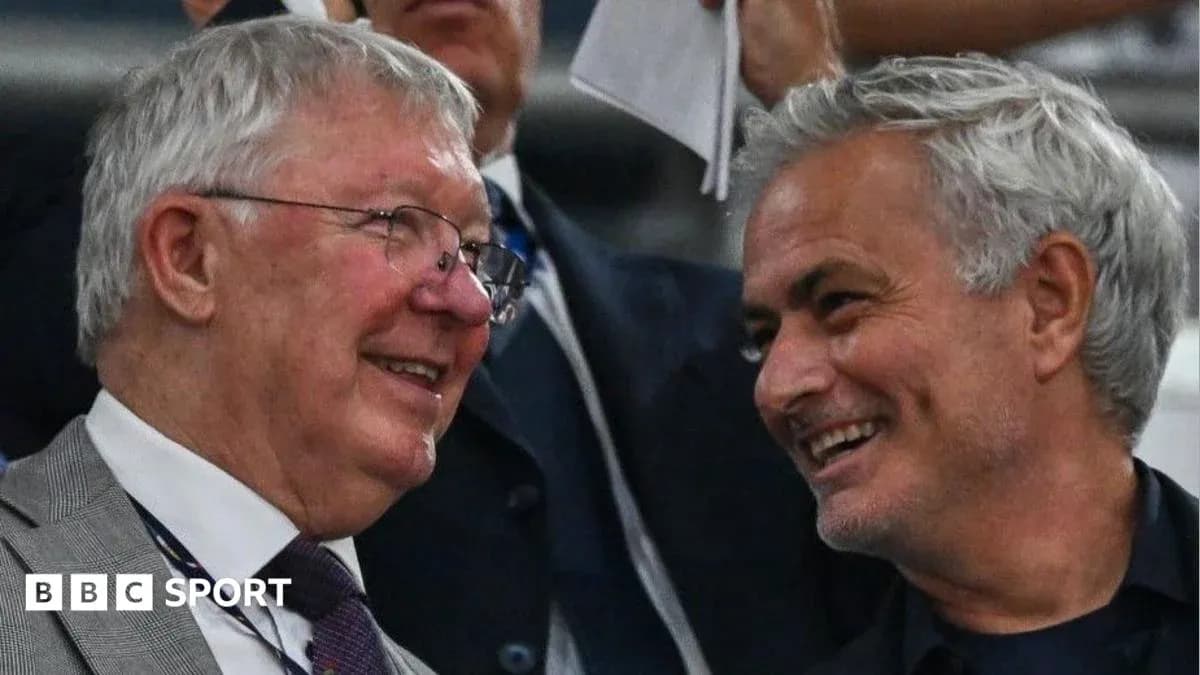
Ferguson backs up the account. The legendary United manager confirms Mourinho “was offered the job” and recalls the moment he believed the succession plan was settled.
“I sat him down and explained the situation,” Ferguson says. “As far as I was concerned, he was accepting. And then, within hours, it changed.”
Hours. Not weeks of negotiation, not a drawn-out saga. A done deal that suddenly wasn’t.
The phone call that changed everything
What changed was London. What changed was Stamford Bridge, and a promise.
By 2013, Mourinho had already carved his name into Chelsea’s modern identity. He had arrived in 2004 as the self‑proclaimed “Special One” and promptly delivered back‑to‑back Premier League titles in 2005 and 2006. The bond stuck. So did the pull.
Ferguson recalls the moment the agreement with United effectively died.
“One night, he phoned me and he was crying,” Ferguson says. “He said: ‘Alex, I can't take it. I've given my word to Chelsea and I'm not going to break my word.’”
For Ferguson, it was a rare defeat off the pitch.
“The reason he gave to me I could understand, but I was disappointed,” he admits.
Mourinho, for his part, describes the emotional tug-of-war. United’s offer flattered him deeply.
He calls the chance to replace Ferguson “very flattered” and speaks of the club’s “incredible appeal”. The lure of Old Trafford, the weight of the role, the chance to step into the most iconic managerial seat in English football – all of it was there.
But so was something else.
“One thing is love for football, another thing is love for a certain club,” Mourinho says. “I think this is more powerful than love for football and, fundamentally, after Real Madrid I needed to feel that I'm loved.”
Chelsea, in his mind, offered that feeling. United offered history. He chose emotion over legacy.
“For me to lose the chance to be the coach to succeed Sir Alex Ferguson was dramatic,” he admits. “But I don't regret it because it was a decision that I made with my heart.”
Two paths, two very different outcomes
The consequences were immediate and brutal.
Mourinho went back to Stamford Bridge in 2013 and quickly made it feel like home again. He won his third Premier League title with Chelsea and added another League Cup, restoring the swagger he had first brought to west London.
At Old Trafford, the post-Ferguson era began with Moyes and unravelled at alarming speed. Handpicked by Ferguson, labelled ‘The Chosen One’, Moyes lasted just 10 months before United sacked him. The banner came down. The search for a true successor began all over again.
United had passed on a manager who had already conquered England, Italy, Spain and Europe. They ended up in a spiral of short-term fixes and changing philosophies. Mourinho, the man they thought they had, was winning elsewhere.
Mourinho’s second chance at Old Trafford
The story did not end with that tearful phone call.
In 2016, after Louis van Gaal’s departure, United turned back to Mourinho. This time there was no late U-turn, no emotional pull from Chelsea. He walked through the doors at Carrington and finally took the job many felt he was destined to have three years earlier.
Across two and a half years, Mourinho delivered silverware and steel. He won the League Cup and the Europa League, adding trophies to a club that had started to drift from its old standards. The football often divided opinion, but the honours list did not.
By December 2018, with results deteriorating and tensions rising, United dismissed him. Another manager gone, another era closed, another chapter in a story that might have looked very different had that first agreement in 2013 held firm.
The revelation of just how close Mourinho came to being Ferguson’s immediate heir only sharpens the question that has hovered over Old Trafford for more than a decade: what would Manchester United have become if the “Special One” had walked into the job the first time, with Ferguson’s shadow still fresh on the touchline and his empire still warm?