Jeff Bezos Nears Landmark Stake in Liverpool FC
Liverpool, a club built on working‑class grit and European nights, is on the brink of welcoming one of the richest men on the planet into its boardroom.
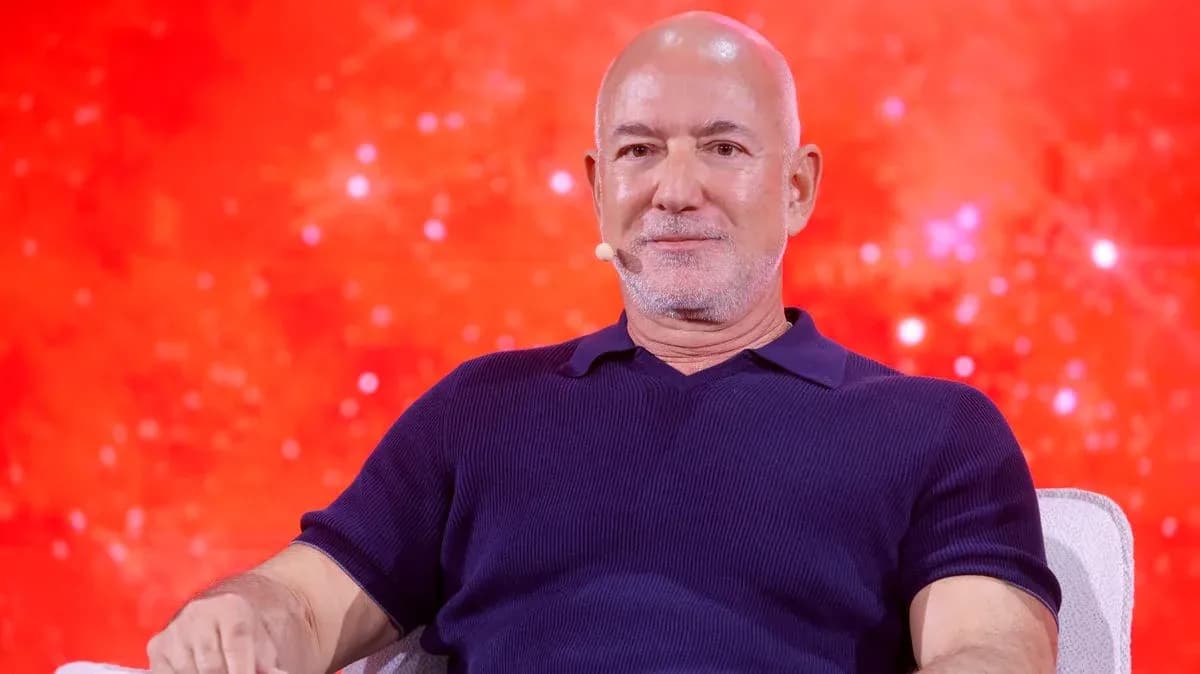
Jeff Bezos, the billionaire founder of Amazon, is in advanced talks to buy a significant minority stake in Liverpool FC as part of a heavyweight consortium led by businessman Amit Bhatia. The group, which also includes Facebook co‑founder Eduardo Saverin, is edging towards a deal that would hand it roughly one third of the club.
FSG ready for new money, not a new era
Fenway Sports Group, Liverpool’s owners since 2010, have confirmed that formal interest has been lodged. In a statement, FSG said that “an investment consortium led, managed, and represented by Amit Bhatia has expressed interest in making a strategic minority investment in Liverpool Football Club.”
This is not a sale. It is a cash injection.
FSG, who took control of Liverpool after the chaotic Tom Hicks and George Gillett era and steered the club back to the summit of English and European football, are preparing to announce a transaction “as soon as this week,” according to Sky News. Those close to the talks accept the announcement could slide into next week, but the direction of travel is clear: new capital is coming.
The proposed deal would see Liverpool valued at around $6bn (£4bn). That figure would place the club among the most valuable assets in world sport and make the agreement one of the richest minority investments the game has seen.
A consortium of extreme wealth
The numbers involved are staggering, even by modern football standards.
Forbes estimates Bezos’ fortune at more than $280bn (£207bn). Saverin is said to be worth north of $32bn (£23bn). Add Bhatia’s own financial muscle and the result is a trio of ultra‑high‑net‑worth investors stepping into one of English football’s most storied institutions.
Bhatia, son‑in‑law of steel magnate Lakshmi Mittal, is no stranger to the English game. He was, until recently, a shareholder in Championship side Queens Park Rangers and now fronts a syndicate that wants to park its money – and its ambitions – at Anfield.
If the agreement is signed, Bezos, Saverin and Bhatia will become co‑owners alongside FSG, not replacements. The structure is clear: FSG remain in control; the consortium buys a strategic minority stake and, in theory, helps Liverpool compete at the very top of an increasingly financialised sport.
American money tightens its grip on the Premier League
The move comes against the backdrop of a wider shift across English football. Half of the 20 Premier League clubs are now predominantly owned by US‑based investors. Liverpool were among the early adopters of American ownership; now they are about to deepen those ties with another powerful US‑anchored financial bloc.
Bezos has circled elite sport before. He explored major plays in the NFL, looking at the Seattle Seahawks and Washington Commanders, but stopped short of buying either franchise. This time, the move is different: a minority stake, a shared project, a global football brand rather than a closed‑league American giant.
Saverin, meanwhile, has already tried to break into English football at the very top. He was part of a consortium that attempted, unsuccessfully, to buy Chelsea during the 2022 auction triggered by sanctions on Roman Abramovich following Russia’s invasion of Ukraine.
Now, both men stand on the verge of entering the Premier League through a different door – one marked “Liverpool”.
FSG’s next chapter – from rescue act to super‑valuation
For FSG, this moment underlines the scale of the turnaround since 2010. They arrived as rescuers, taking over a club flirting with administration and weighed down by debt. They now sit on an asset potentially worth $6bn.
They have already overseen a Champions League triumph, a first league title in three decades and a modernisation of Anfield and the club’s training infrastructure. A fresh injection of capital would give them scope to push harder in the transfer market and accelerate off‑field projects, without relinquishing control.
Yet the timing is telling. Liverpool face one of their most delicate sporting transitions in years.
A giant in flux on the pitch
On the field, Liverpool last lifted the Premier League in 2024/25. That feels a long way off now. The club is entering a season defined by change and uncertainty.
Head coach Arne Slot has been sacked, his tenure cut short before he could build a legacy. Mohamed Salah, the defining forward of the Klopp era and one of the most prolific players in Liverpool’s history, has departed. Those two exits alone would reshape any club’s identity. At Liverpool, they rip through the core of what made the side so formidable.
Recruitment has begun, but it has not yet calmed the mood.
Jeremy Jacquet, Victor Munoz and Ronald Araujo have all arrived on loan, moves that suggest a desire to refresh key areas without committing to huge permanent fees in the middle of a structural reset. The club has also identified Bradley Barcola as a priority attacking target, with Paris Saint‑Germain open to a sale. Talks are ongoing, but no agreement has been reached.
Supporters are watching a squad in transition while the ownership prepares to usher in unprecedented wealth. The tension between short‑term football needs and long‑term financial planning has rarely been sharper.
Power, money and what comes next
Strip it back and the picture is stark. One of England’s most successful clubs, with a fanbase built on local identity and European glory, is about to welcome a consortium fronted by tech and finance billionaires, with FSG still at the wheel.
The promise is obvious: deeper pockets, greater resilience against state‑backed rivals, and the financial clout to keep Liverpool in the conversation for the biggest trophies and the biggest players.
The risk is equally clear: a club already wrestling with change on the touchline and in the dressing room now steps into a new financial era that will raise expectations even higher.
When the deal is finally announced – this week or next – the numbers will dominate the headlines. The real judgment will come later, when supporters see whether Bezos, Bhatia and Saverin’s billions translate into what matters most at Anfield: trophies, not balance sheets.