Jay-Z's Roc Nation Sports Dominates European Football Transfers
Jay-Z didn’t need a verse to win this one. Twenty-four hours after his voice finally resurfaced on Beyoncé’s extended remix of Morning Dew (Donk), his real power play came not in a studio, but in the boardrooms of European football.
The hip-hop mogul long ago stopped being just a rapper with business interests. He is the business. Tidal, streetwear, champagne, cognac – the portfolio is sprawling. Yet this summer, it is Roc Nation Sports, the sporting arm of his entertainment empire, that has muscled its way to the centre of the transfer window.
From courts and diamonds to the Bernabéu
Roc Nation Sports launched in 2013 in partnership with Creative Artists Agency, initially rooted in American sports. NBA, NFL, MLB – those were the hunting grounds, with stars such as Kevin Durant among the early headline names.
Football came later. Bayern Munich’s Jérôme Boateng became the first major client in 2015. Four years on, Roc Nation Sports International (RNSI) was created, with a clear brief: get a foothold in elite European football and stay there.
It worked. Based in London, RNSI now represents more than 100 players. The jewel in that crown is Vinícius Júnior, the Real Madrid forward who this week signed a new contract believed to be worth around €25m a year. Arsenal had circled, intrigued by the possibility of prising away a 26-year-old global star in his prime. The idea of a blockbuster move to north London was real enough to force Madrid’s hand.
The power play went deeper. In July 2023, RNSI absorbed Brazilian agency TFM – the group already looking after Vinícius, Gabriel Martinelli and Endrick – and rebranded it as Roc Nation Sports Brazil. With that move, Jay-Z’s operation didn’t just represent Brazil’s new generation. It owned a significant piece of their future.
Vinícius stays, the dominoes fall
The Vinícius negotiations dragged on for two years. RNSI pushed hard, aiming to haul his salary up to €30m a year, a figure that would have put him alongside Kylian Mbappé. To turn the screw, they let his deal run into its final 12 months, inviting interest from Europe’s heavyweights.
Arsenal were ready to talk serious money. They explored a big fee this summer, but those close to the situation believed the more realistic route lay in waiting and trying to land him on a free next year. That prospect alone applied pressure at the Bernabéu.
Real Madrid blinked first. They improved their offer, Vinícius signed, and a new six-year contract locked him into the Spanish capital. It was a win for the club and for RNSI’s leverage. Yet every victory has a cost. The size of that deal now threatens Madrid’s chances of signing Rodri from Manchester City, with Barcelona moving quickly to steal a march in that race.
On the same day Vinícius’s renewal was unveiled, another statement piece landed in Madrid.
Diomande, £115m and a private jet
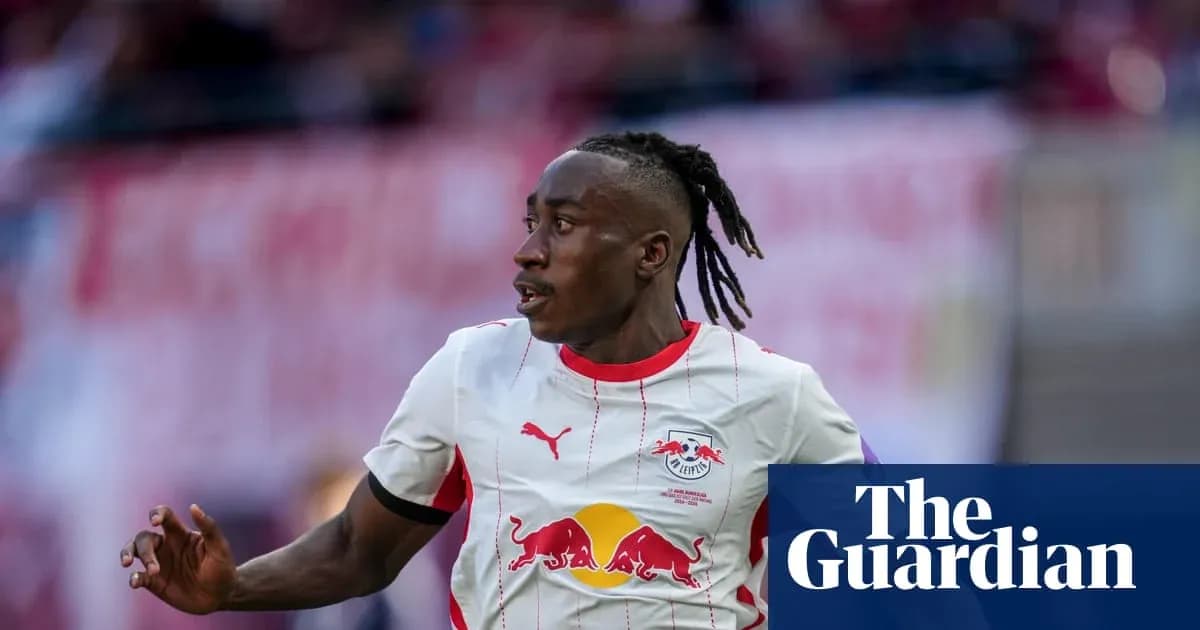
Yan Diomande stepped off a private jet into the eye of a storm. At 19, with just 46 senior appearances for RB Leipzig and Leganés, he became the most expensive African player in history, completing a £115m transfer to Real Madrid. Beside him on the flight: his agents Nathan Campbell and Kareem Gbaja, faces of RNSI’s aggressive new era.
The seven-year deal ended a saga that had run since June, when Liverpool saw a £70m bid rejected by Leipzig. Week after week, the price climbed, the tension rose, and the cast of suitors shifted. Once told they would need to go beyond £100m, Paris Saint-Germain walked away, issuing a pointed statement accusing unnamed agents of “inflationary and manipulative games”. The message was clear. PSG would not play.
Real Madrid did. The reward for RNSI’s role in the deal has been reported at up to £17m in commission and fees. For an agency still relatively new to football’s top tier, that is not just income. It is a declaration of power.
Legal battles in the shadows
Big money rarely travels alone. Diomande’s rise has dragged a string of disputes into public view, exposing the messy underbelly of modern talent management.
Max Gradel, the former Bournemouth winger, claims his company, Maxidel Management, already had an agreement with Diomande. He has taken his complaint to Fifa, arguing his rights were bypassed. World football’s governing body did not block the transfer, so the winger’s move to Madrid went through, but the case hangs in the background. RNSI has chosen not to comment.
Another row has erupted thousands of miles away. Rainbow World Group launched proceedings in the high court in London and in the British Virgin Islands in mid-June, seeking to enforce what it says are binding image rights and intellectual property agreements from Diomande’s early years. Rainbow says it invested heavily in the youngster, taking him on trials at Chelsea, Bournemouth, Crystal Palace and Newcastle before Leganés finally signed him.
Again, RNSI has stayed silent publicly. Dez Bamba, president of Diomande’s first club, AFI Sud Comoé in Côte d’Ivoire, has said the player joined RNSI after a call from Vinícius himself. One superstar, already embedded in the Roc Nation network, helping bring in the next. Quiet influence, loud results.
Africa, the new frontier
Diomande’s story is not just about one player. It is a signpost. Clubs have seen the trajectory – from African academies to Leganés to Leipzig to Madrid – and they want in at the ground floor.
Jeff Luhnow, the former Astros and St Louis Cardinals general manager who now owns Leganés through his Blue Crow network, spelled it out last year. He said Diomande was expected to be the first of many, after his group set up recruitment and development programmes in several African nations, including Ghana and Zambia. “We’ve got more players like that in our pipeline,” Luhnow said. That pipeline is now one of the most closely watched in European scouting.
RNSI has moved quickly to secure its own foothold. In November, it announced the signing of eight young African talents, among them Ghana Under-17 midfielder Joseph Narbi and Francis Gomez, a Gambian winger currently at AC Horsens in Denmark. Campbell framed it as part of a broader strategy: Africa as a “hotbed of untapped footballing potential” and a natural step in Roc Nation’s global push.
That is where the story loops back to Jay-Z. In a sport dominated for decades by established European agents and long-standing power brokers, his agency has arrived with the swagger of a headline act and the ruthlessness of a hedge fund.
Roc Nation Sports International is no longer the outsider trying to break into football’s inner circle. With contracts like Vinícius’s, transfers like Diomande’s, and a growing grip on emerging markets, Jay-Z’s operation has barged its way to the top table.
In the dog-eat-dog world of football agents, the new kids on the block are no longer knocking on the door. They’re already inside, rearranging the furniture – and the rest of the industry has to decide whether to fight them or follow them.