Jarrod Bowen's Commitment to West Ham: A Hard Road Ahead
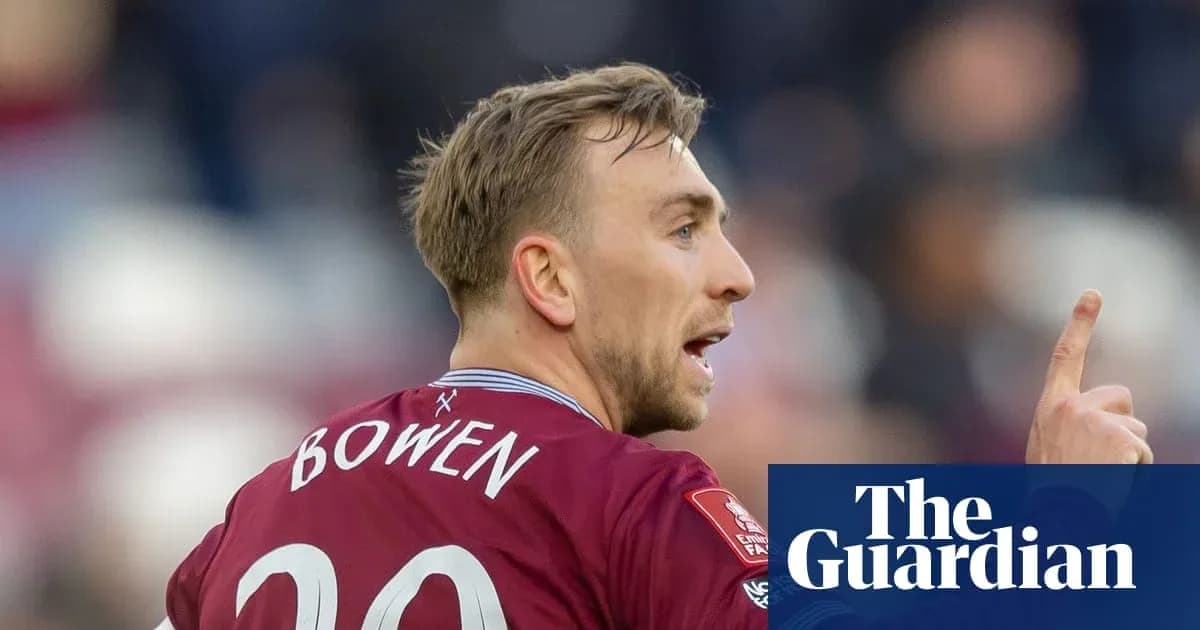
Jarrod Bowen has chosen the hard road. And he sounds absolutely sure of it.
Relegated with West Ham and courted by a string of Premier League clubs, the captain has nailed his colours to the mast: he wants to stay in east London and drag the club back up himself.
“I feel like we’re moving in the right direction as a club,” he told West Ham’s media channels, a line that lands differently when you remember they are heading into the Championship. “There’s a lot of thinking time over the summer and a lot of things that go in your head. But I look in years and years to come of when I retire, what’s going to bring me the most happiness. For me now that’s getting this club back into the Premier League.”
This is not the decision the market expected. Aston Villa, Everton, Liverpool, United and Chelsea have all been tracking him, sensing an opening after West Ham’s drop. A 29‑year‑old England international, in his prime, on a long contract at a relegated club: usually that story writes itself.
Bowen has ripped up the script.
The forward, who joined from Hull in January 2020 and has not played in the second tier since that move, knows what he is giving up. Any realistic hope of forcing his way back into Thomas Tuchel’s England plans will all but vanish outside the top flight. Yet he described staying as “a no-brainer for me to be here”, a phrase that speaks to something deeper than career management.
The turning point came in Prague. While most of the summer noise centred on potential exits and financial resets, Bowen boarded a plane to the Czech Republic for face‑to‑face talks with West Ham’s largest shareholder, Daniel Křetínský, and board member Jiří Svarc.
“I flew out to Prague in the Czech Republic to meet Daniel and Jiří and the ambition that I got from them, certainly in terms of the direction the club wants to move in, it interests me a lot,” he said. “It didn’t take a lot for me, because this club means a lot to me.”
That trip matters. Players hear promises all the time; few are invited to sit in front of the money and the power and help shape the next phase. Bowen came back convinced that West Ham, bruised and demoted, still have a project worth tying the peak years of his career to.
His contract, which runs to 2030, already gave the club a strong hand. This, though, is not about leverage. It is about identity. Bowen has grown from a January gamble out of Hull to the face of the team, the man the dressing room looks to. Walking away now, when the club is at its lowest point in years, would have been easy to justify. Staying is harder. And that is precisely why it carries weight.
For West Ham supporters, staring at a season of long trips and unfamiliar opponents, this is a rare jolt of optimism. Their captain is not just staying because he has to. He is staying because, in his words, this is what will bring him “the most happiness”.
The Premier League’s suitors will move on to the next target. Bowen, instead, will walk out at Championship grounds with a different kind of pressure on his shoulders: not just to score and create, but to prove that loyalty in modern football can still be a driving force, not a sentimental weakness.