Jared Dublin's Departure from Hull City: A Key Moment in Club's Premier League Journey
Jared Dublin’s exit from Hull City has landed like a bolt from a clear sky.
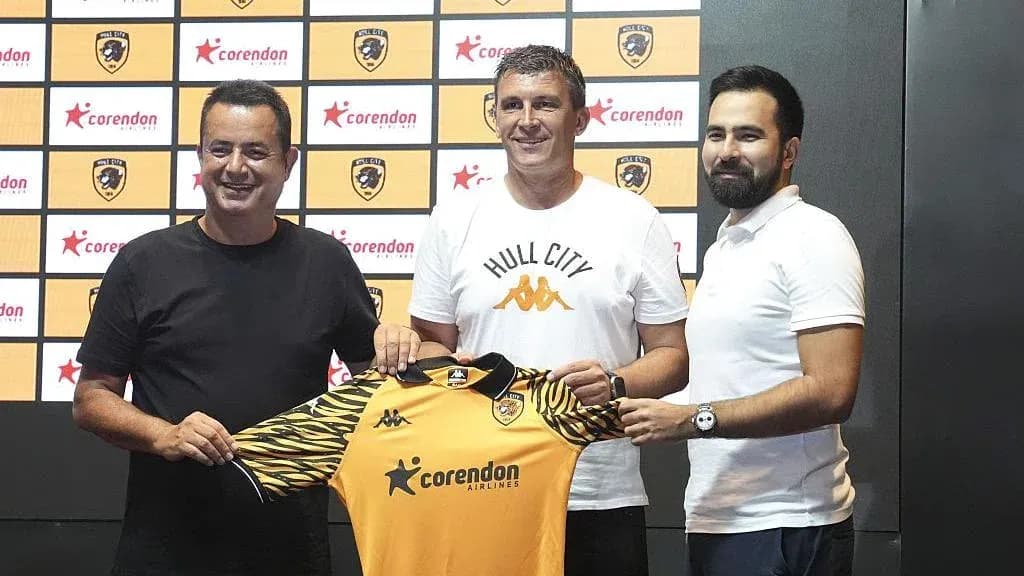
This is not a fringe figure quietly slipping away in pre-season. Dublin has been central to Hull’s modern rebuild – a key operator in management, squad construction and recruitment during the climb back to the Premier League. Inside the club, his fingerprints are all over the current project.
And yet, on Monday morning, after what is understood to have been a brief meeting with members of staff, he walked out of the building. Not on his terms.
A contract row at the heart of the split
Strip away the noise and this comes down to money, value and status.
The dispute, as understood by those close to the situation, was not about player recruitment contracts or transfer policy. It was personal. Dublin wanted his own contract to reflect the club’s new reality: Premier League football, bigger budgets, higher stakes, and heavier responsibility on his shoulders.
Hull, for their part, believed they had put a “very respectable” offer on the table. That is the line coming out of the club and being pursued by local reporters, including Baz Cooper of the Hull Daily Mail. From the other side of the table, the view was very different. People connected to Dublin are clear: he did not feel the proposal matched his contribution or his importance to the project.
The two valuations – club and executive – were some distance apart. That gap, in the end, proved decisive.
Sacked in all but name
The wording around the departure is delicate, but the reality is not. This is not a case of a sporting director calmly choosing to move on at the end of a negotiation cycle.
Talks were ongoing. Dublin, according to those familiar with the discussions, was unhappy with the numbers but willing to keep talking. There was no ultimatum, no public stand-off, no grand gesture.
Then came Monday.
A short meeting. A swift conclusion. Dublin left the club immediately. When you strip it back to “brass tacks”, as those close to the situation put it, he has effectively been sacked.
For a club on the brink of a Premier League return, the timing jars. This is the phase where structure and continuity are prized above almost everything else. Instead, Hull have lost the man who helped build the squad and the framework that got them here.
A blow at a delicate moment
Inside any club, a sporting director’s work is most visible in the transfer window and the dugout. But the true impact is felt in the seams – the alignment between owner, head coach, recruitment staff and analytics teams. Dublin has been a crucial link in those chains.
Losing that link, just as the club steps back into the glare of the Premier League, feels like a significant blow. Not fatal, but certainly disruptive.
Hull must now navigate a pivotal summer – contract renewals, new signings, long-term planning – without the architect who helped steer them to this point. The strategy does not vanish overnight, but the person who drove it out of the meeting room and into reality has gone.
What comes next for Hull
Attention now turns to the replacement. The role is not a simple plug-and-play position, even if some might be tempted to see it that way.
Former sporting director Darren Robinson has been speaking to BBC Radio Humberside about the job of shaping the next generation of sporting directors and the traits Hull should be targeting in Dublin’s successor. That is no academic exercise now. It is a live brief.
Hull need someone who can step into a Premier League environment already in motion, steady the internal dynamics after a jarring exit, and command the trust of both ownership and dressing room. That combination is not easy to find, and it is even harder to bed in quickly.
The owner’s perspective on this split has yet to be heard publicly, though requests have gone in to put that side of the story on record. Until then, the narrative is dominated by the sense of a breakdown that did not need to happen, at a time when stability should have been the watchword.
Dublin has gone. Hull are back in the Premier League. The question now is whether the club can find a new sporting director fast enough – and good enough – to keep this project moving forward, rather than looking over its shoulder before a ball has even been kicked.