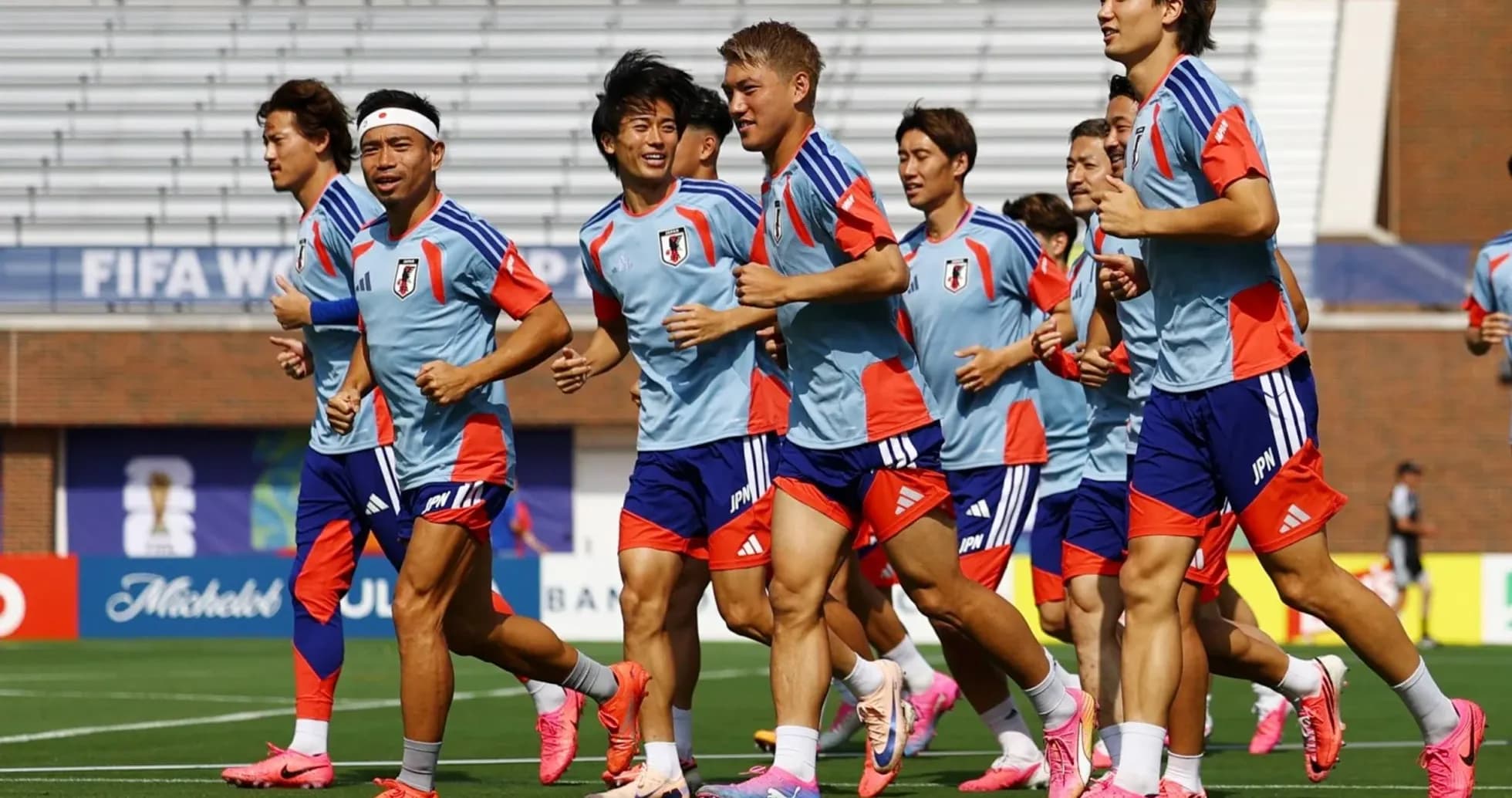
Japan's Adaptability Shines Ahead of Sweden Clash
Hajime Moriyasu stood on the brink of another World Cup knockout round and pointed not to a star, not to a system, but to something more prosaic and far harder to build: adaptability.
Japan arrive at their final Group F game against Sweden on Thursday battered by injuries yet buoyed by momentum, a team reshaped on the fly but still marching towards the last 32.
They have done it the hard way. Twice they fell behind against the Netherlands, twice they dragged themselves level to claim a 2-2 draw. Then came Tunisia, swept aside 4-0 on Saturday in a performance that crackled with confidence and clarity despite the absences that could have derailed their campaign.
Key names are missing. Takefusa Kubo, the creative livewire, is expected to sit out the Sweden clash after picking up a knee problem against the Dutch. Former captain Wataru Endo is not at the tournament. Neither is winger Kaoru Mitoma. Nor playmaker Takumi Minamino. On paper, that is the spine and the spark of this Japan side gone.
On the pitch, the structure has held.
“Anyone can play with anyone else, that’s the readiness we wanted to ensure,” Moriyasu said, underlining the foundation of this run. He knows that kind of plug‑and‑play chemistry does not just appear. “That’s easier said than done but when there’s a change over in the team, it’s not that simple or easy to play with different players and achieve good results or be successful.”
The results suggest Japan have solved that problem quicker than most. Four points from two games, eight goals scored across those matches, and a team that looks tactically coherent despite the constant reshuffles.
Moriyasu credits the work done long before this tournament kicked off. “I’m very grateful that the other coaches and the players have been developing themselves towards such a great achievement,” he said. “In the last two matches the team has functioned tactically and with the teamwork they are developing and increasing their readiness.”
That readiness now faces a very different examination.
Chasing top spot, not just survival
With four points in the bank, Japan are well placed. Even defeat to Sweden is unlikely to stop their progress to the last 32. Survival, though, is not the target being discussed inside the camp.
“We are basically thinking of winning, that’s what’s in our mind,” Moriyasu said. The aim is not just qualification, but control. “If possible we would like to advance on top of the group by scoring as many goals, but distorting the balance of the team is more of a risk. We will see.”
That last line tells its own story. Japan want first place, but not at any price. They have built this campaign on structure, on collective responsibility, on players stepping into unfamiliar roles without the team losing its shape. Moriyasu will not rip that up just to chase a statement scoreline.
The coach is already looking beyond the group, even as he insists his players focus on the immediate task. “We don’t know what kind of team we will come up against in the next round but what’s important is that we are solid and that we play against a team that we are able to deal with no matter what appears.”
Then he pulls the lens back to the present. “First we want to think about ourselves and how we play tomorrow. In terms of our target we would like to win and qualify for the knockout stage on top of the table.”
Japan, in other words, will not drift into the last 16. They intend to stride into it.
Sweden’s chaos, Sweden’s danger
If Japan have been steady, Sweden have been anything but. Their tournament so far reads like a misprint: a 5-1 win over Tunisia followed by a 5-1 defeat to the Netherlands. The same scoreline, flipped on its head, hinting at a side capable of explosive attacking spells and alarming defensive collapses.
That volatility makes them dangerous. It also makes them fascinating.
Moriyasu, though, does not flinch at the prospect. He leans into it. He wants his players to lean into it too, especially when it comes to the Swedish strike pairing that gives this fixture real edge.
“They’re world class, wonderful strikers so I would like us to enjoy facing these players,” he said of Alexander Isak and Viktor Gyokeres. For defenders, that is a stern examination. For a coach who has spoken so often about development, it is also a test he welcomes. “It’s going to be a good opportunity for our players to develop themselves further.”
That line sums up where Japan stand right now. Injuries have forced them to adapt. Tactical tweaks have forced them to think. A group that could have broken them has instead sharpened them.
One more game, one more hurdle, one more chance to prove that this version of Japan is not just surviving without its stars, but quietly building something tougher, deeper and far more dangerous for the knockout rounds to come.