Jamshedpur FC Withdraws from Indian Super League
Jamshedpur FC, the club that turned a steel town into one of Indian football’s loudest cauldrons, is walking away from the Indian Super League.
Nine years after Tata Steel won the rights to field a team in the ISL, the company has pulled its flagship football project out of the country’s top tier. The announcement ends a brief but vivid chapter that gave the league one of its most distinctive homes and, in 2021-22, one of its most compelling champions.
A Furnace Goes Cold
From 2017, when Jamshedpur FC entered the league, the JRD Tata Sports Complex quickly became a destination. Crowds poured in, week after week, turning “The Furnace” into a genuine home fortress and one of the most atmospheric venues in the ISL.
The club’s peak came under Owen Coyle in the 2021-22 season, when Jamshedpur stormed to the League Winners’ Shield. It felt then as if a new power had arrived from outside the traditional football hubs, backed by one of India’s biggest corporate houses and rooted in a city with a deep sporting culture.
Now, when the ISL returns in October, that champion will not be there.
“Jamshedpur FC would like to confirm that it will not be participating in ISL from 2026-27 season onwards,” the club said in a statement on Friday.
The words were clinical. The impact is anything but.
No Reasons Given, Plenty of Questions
The club’s statement stressed commitment to the sport, but avoided explaining why a project of this scale is being wound down at the top level.
“JFSPL remains committed, in other capacities, to the continued growth and development of football in India. We will continue in our endeavour to promote and develop the game of football, including at the grassroots level. We will continue to identify and develop young football talent across India to create a strong pathway for young players from grassroots to national and international football,” the statement read.
Behind the scenes, the picture is more troubling. Sources indicate growing concern over mounting financial losses and questions in some quarters about the long-term sustainability of the league’s model. Those concerns, long murmured in Indian football circles, now have a very public face.
Jamshedpur have already formally communicated their decision to the All India Football Federation (AIFF). Inside the club, the news landed with a thud. CEO Mukul Choudhari called a staff meeting and informed employees that the senior team would no longer continue, leaving around 50 administrative and technical staff members – across first team, youth, and grassroots – staring at an uncertain future.
A Blow to the ISL’s New Era
The timing could hardly be worse for the ISL. This is the first phase in which the league is operating under a club-led model, with teams collectively running the competition through a dedicated operating entity, while the AIFF retains a 10% stake.
On paper, that shift promised greater autonomy and shared responsibility. In reality, one of those very clubs has now decided it no longer sees a place for itself in the top division.
For a league still fighting to prove its long-term stability, the withdrawal of a Tata-backed team is more than a line in a press release. It is a warning shot.
Contracts, Commitments, and a Durand Cup Campaign
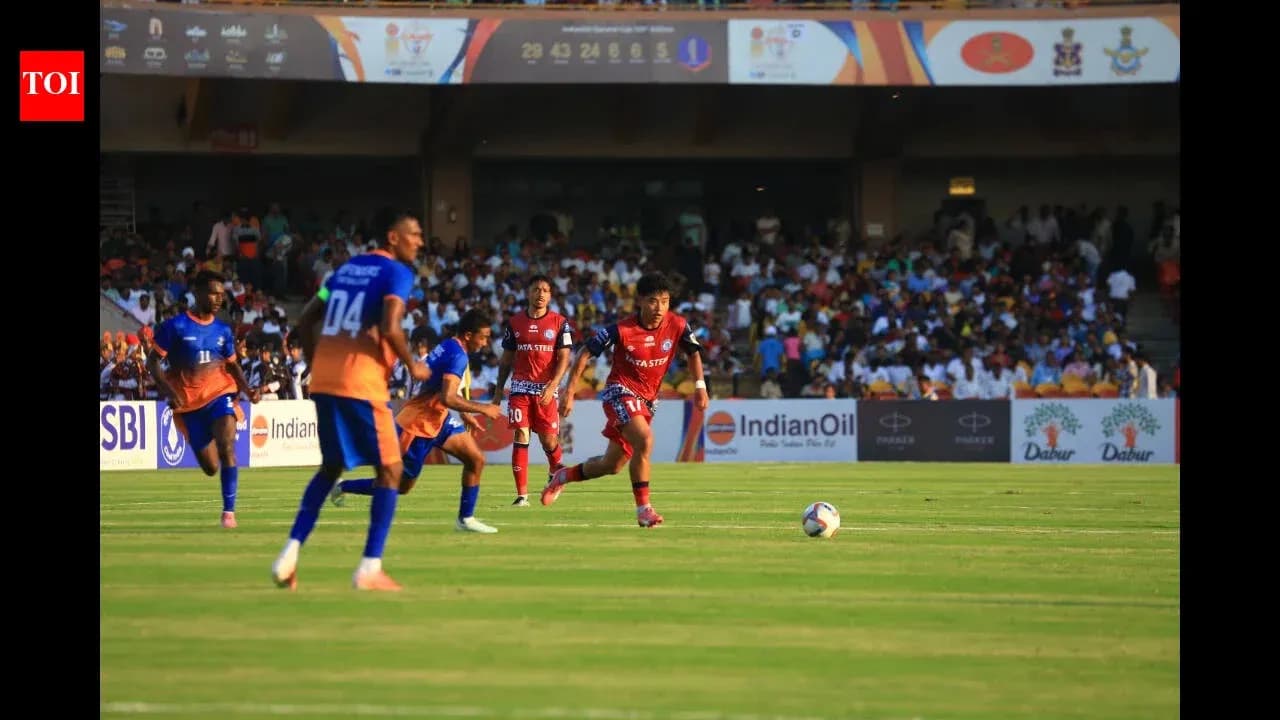
The football itself has not stopped yet. Jamshedpur’s senior team is still on the pitch, currently competing in the Durand Cup. Players and staff are trying to focus on the next game, even as the ground shifts beneath them.
The club has at least 12 senior players tied down on long-term deals. Owen Coyle, the coach who delivered the Shield, remains under contract as well. No clarity has been offered on how those contracts will be resolved or what comes next for those players and staff.
Six other signings made for this season are on short-term deals, recruited specifically for the Durand Cup: former India midfielder Raynier Fernandes, Abhishek Ambekar, Aman CK, Devendra Murgaokar, Leewan Castanha and Provat Lakra. For them, the horizon is even shorter. Their immediate task is clear; their longer-term future is anything but.
A Legacy Too Deep to Disappear
For Tata, this is not a casual exit from a passing interest. The group’s relationship with Indian football stretches back decades.
Its Mumbai-based team once dominated domestic competitions, lifting prestigious trophies like the Durand Cup, IFA Shield and Rovers Cup. Tata built one of the country’s first serious residential football academies, a conveyor belt that has produced close to 150 players for various Indian teams over nearly 30 years. Tata Steel has also been instrumental in bringing top foreign clubs to India, including PSV Eindhoven and Sao Paulo, to play friendlies against the national side.
That history underlines why Jamshedpur FC’s withdrawal feels so stark. This is not a newcomer losing patience. It is one of Indian football’s longest-standing patrons stepping back from the highest stage.
The academy will remain. Grassroots programmes will continue. Tata’s statement makes that clear. But the absence of a senior team in the ISL strips away the most visible symbol of that commitment.
The Furnace, for now, will burn only for cup ties and youth dreams. Whether Indian football can afford to lose a club like Jamshedpur FC from its top tier – and what that says about the road ahead for the ISL – is a question the game can no longer ignore.