Ireland's Mixed Emotions: Hallgrimsson Reflects on Canada Friendly
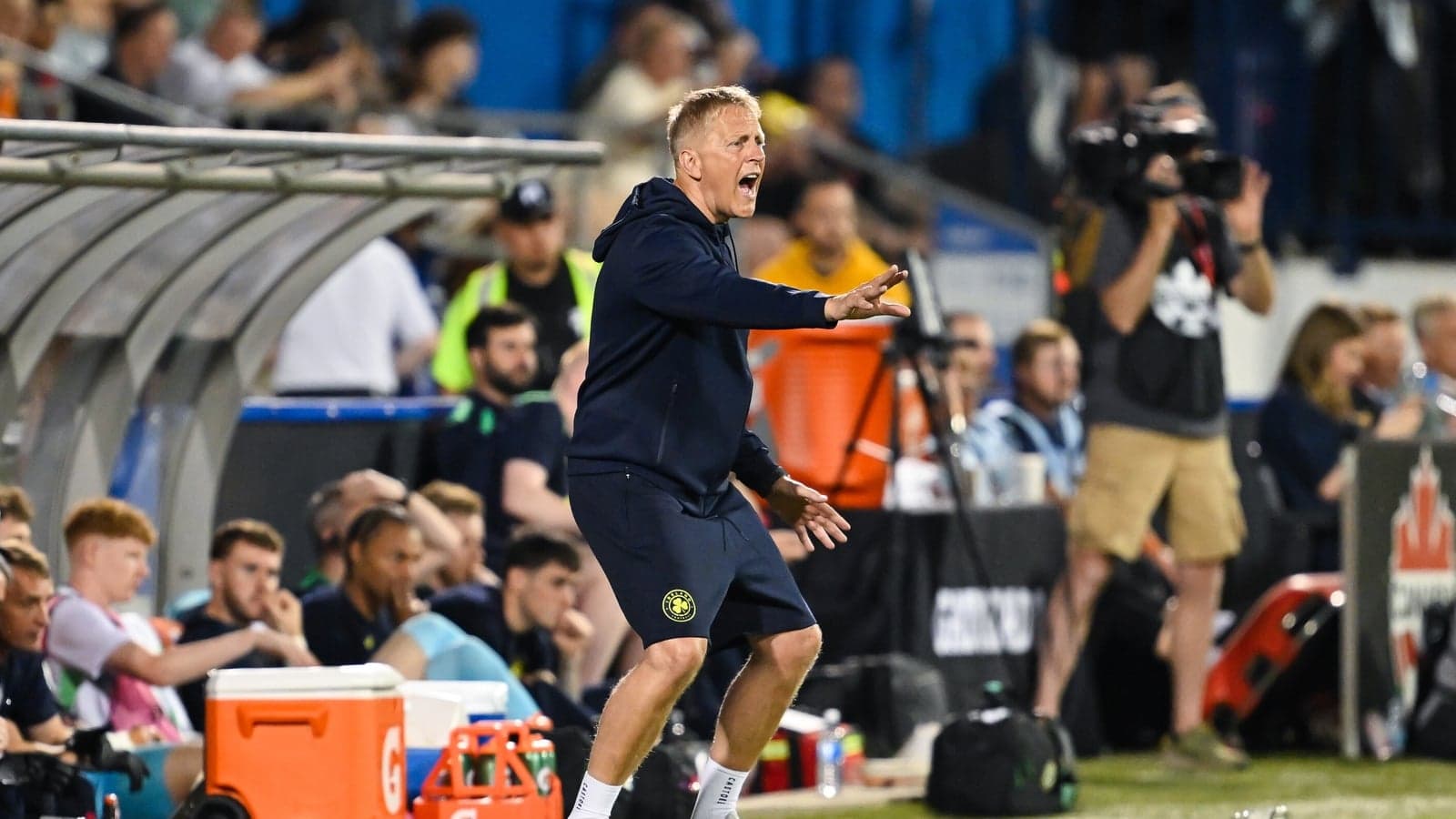
Heimir Hallgrimsson’s expression told the story long before his words did.
For the first time since he took the Republic of Ireland job, there was a hard edge to his post-match debrief. No gloss, no soft landing. That first half in Montreal against Canada had annoyed him.
Ireland’s experimental XI looked exactly that in the opening 45 minutes of the friendly. Disjointed. Passive. A Jake O'Brien own goal summed up a half in which the visitors sat back, reacted instead of dictated, and trailed 1-0 without much complaint from the scoreboard.
"It was unlike everything we have done in recent games," Hallgrimsson told RTÉ Sport’s Tony O'Donoghue, and it wasn’t a throwaway line. He drilled down on the basics: energy, decisions, intent. All missing.
Everything, he felt, was flat. Ireland waited for Canada to move, then followed. No spark, no aggression. Even the warm-up had bothered him; he had sensed a sluggishness that never really lifted before the interval.
Maybe it was the humidity. Maybe the heat. Maybe heavy legs from a long season and tough training. He floated the possibilities, but never as excuses. Canada, he said, "deserved to score" and Ireland were "lucky" to reach half-time only 1-0 down.
Then came the reset.
Inside the dressing room at the break, Hallgrimsson’s message was blunt: be braver, step higher, speed everything up. Press. Play forward. Decide, don’t drift. He called the contrast between both halves "black and white".
The players responded.
Ireland came out after the interval with a different posture. Liam Scales and Jamie McGrath entered and immediately helped stitch some structure into the performance. The team pushed up, passed quicker, took more risks. Suddenly Canada were the ones adjusting.
"As much as I was unhappy with the first half, I was much happier with the second, really happy," Hallgrimsson said. With Scales and McGrath on, he saw "a more balanced performance" and, crucially, players willing to take responsibility on the ball.
The equaliser captured that shift in mindset and sharpness.
Troy Parrott stepped up to take a penalty and missed, but Chiedozie Ogbene had read the moment before it happened. He had mirrored Parrott’s run-up from outside the box, ready for any spill. When the rebound dropped at his feet, he was already moving. One touch, 1-1.
"I had confidence that Troy was going to score," Ogbene admitted, but he stayed alive to the chance anyway. Optimism and opportunism combined. Ireland were still trailing when the penalty was taken, and Ogbene spoke about needing to believe "something is going to land for you". This time, it did.
From there, Ireland grew.
They finished the game with the two best chances to win it, through Dawson Devoy and Mason Melia. On another night, either could have turned a friendly into a heist. Hallgrimsson knew it.
"We could have stolen it but I think it would have been a theft," he said, content to call it "a good draw" after Canada’s own missed opportunities.
The night, though, was never just about the scoreline.
Devoy’s selection from the start carried its own significance. The Bohemians midfielder became the first League of Ireland player to be capped by the senior team since Jack Byrne in November 2020, a small but important marker in Hallgrimsson’s broader plan to widen the talent pool.
As the game moved into its final stretch, that theme only grew stronger. Joe Hodge, based in Portugal, came on. So did St Pat’s attacker Kian Leavy and Shamrock Rovers teenager Adam Brennan, both handed debuts with a clear nod to the domestic game. Jaden Umeh and Corrie Ndaba, recent newcomers to the squad, were trusted with first starts.
This wasn’t a token end-of-season run-out. Hallgrimsson treated the window as a 24-day laboratory.
"I'm really happy with the players that came with us; we had 21 involved in Spain, 27 in these camps," he said. It would have been easy, he admitted, to let the mood drift after a long club season, tired bodies and the defeat in Czechia. Instead, he doubled down.
He spoke about using the time to "think about the future and to deepen the squad". The benefit, in his view, will stretch well beyond a humid night in Montreal and into the Nations League campaign in the autumn.
Ogbene feels it too. He watched the new faces train, saw the energy they brought, and came away with a visceral reaction.
"All these guys deserve to be here," he said. The atmosphere in camp impressed him. The sense of something building. "I have goose bumps in my stomach for the future of Ireland. I'm just so excited."
Hallgrimsson left Canada with mixed emotions: irritation at that torpid first half, satisfaction at the response, and a clearer picture of who can help him when the games really start to matter.
The experiment wasn’t perfect. It rarely is at this stage of a project. But if this camp was about stretching the net and testing the depth, the real question now is simple: how many of these new names will still be on the teamsheet when the Nations League lights come on?