Ipswich's Bold Transformation: From Championship to Global Ambitions
Ipswich Town have crept back into the Premier League with the air of a club that has learned its lesson the hard way – and is now prepared to pay for the education.
Quietly, almost stealthily, the newly promoted side are the division’s fourth-biggest net spenders this summer. Only Chelsea, Tottenham and Arsenal have gone deeper into their pockets. Ten players, £106.6m. For a club that once treated the overseas market like a luxury, this is a full-scale change of identity.
The Tractor Boys are no longer shopping at the same old stalls. Under Gary O’Neil, they are walking a very different aisle.
From local comfort to global reach
Kieran McKenna built a minor miracle on familiarity. Three promotions in four full seasons, a climb from League One to the Premier League, all powered largely by players who knew English football inside out.
Of the 39 permanent first-team signings during his four-and-a-half-year reign, 32 were born or raised in Britain or Ireland. Only two arrived directly from European clubs. The rest were drawn from a market Ipswich understood: domestic, English-speaking, culturally aligned.
It was deliberate. After hauling Town out of League One in 2023, McKenna admitted the club had made a “conscious decision” to avoid overseas signings in the third tier’s frantic chaos. The reward was a tight, close-knit group that surged to second in the Championship in 2023-24, sealing back-to-back promotions and a romantic return to the top flight.
At that point, Ipswich could have pivoted. They could have cashed in on the momentum and gone global. They didn’t. They doubled down.
The summer of 2024 brought a £100m spree, but the profile barely changed. Omari Hutchinson, Jack Clarke, Liam Delap, Dara O’Shea, Jacob Greaves: players who had sparkled mainly in the Championship, judged to have the ceiling to become Premier League regulars. It was a bet on potential, not pedigree.
The logic was clear. Survival was a long shot, so Ipswich looked for players who would not flinch if the club went back down. The “Championship all-stars” were assembled with one eye on the future.
The future came quickly – and brutally. Ipswich finished second bottom with 22 points, 16 adrift of 17th-placed Tottenham. Relegation was comprehensive.
Yet McKenna insisted the recruitment had been in the club’s “best long-term interests”. On the balance sheet, he had a point.
Relegation, profit and a new starting point
For all the outlay, Ipswich’s £77m wage bill was the lowest in the Premier League in 2024-25. That financial restraint, combined with TV money and a swift profit on Delap’s move to Chelsea, allowed the club to post a £4m pre-tax profit for the year ending June 2025.
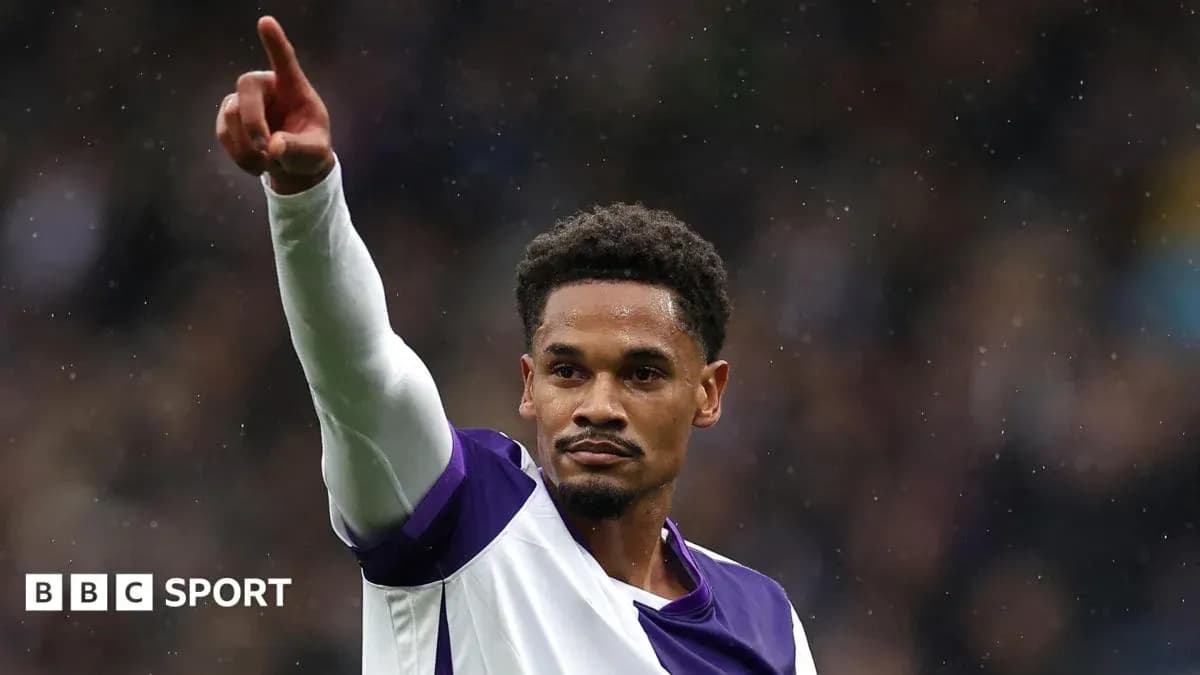
Hutchinson’s sale to Nottingham Forest delivered another injection of cash. Crucially, the core stayed put. O’Shea, Clarke, Greaves and January 2025 arrival Jaden Philogene remained and became central figures in an immediate promotion push. Ipswich bounced straight back.
So this is not a club lurching from one wild idea to the next. It is one that used relegation to reset its finances, then used the Championship to harden its squad again.
Now comes the bolder part.
First Brazilians, first Japanese, first Serbian
The numbers tell the story. Of the 10 players bought this summer, only one is British – Chuba Akpom from Ajax – and he was an obligation, a clause triggered by promotion after an underwhelming loan. Everyone else represents a step into new territory.
Emersonn and Florentino Luis are set to become the first Brazilians in Ipswich’s history. Sasa Lukic will be the first Serbian. Daizen Maeda, the first Japanese player to pull on the shirt.
This is not just evolution; it is a sharp turn.
Maeda and Morocco centre-back Issa Diop arrive with World Cup goals on their CVs from this summer’s tournament. They are not speculative punts from obscure leagues. They have felt the heat of the biggest stage.
And the net may stretch further still. Ipswich have been linked with Paraguayan forward Julio Enciso, who worked with O’Neil at Strasbourg and had an injury-hit loan spell at Portman Road in the second half of 2024-25. He knows the club. The manager knows him. If that deal happens, it will underline the new template: targeted, global, and anchored in relationships.
O’Neil does not have the luxury McKenna enjoyed. There is no long runway here.
“Two seasons ago, the club didn’t get anywhere near staying in the division and this time we need to do better,” he said last month. “That’s why we’re trying to add quality to the squad from different parts of the world and we’re trying to add some different attributes.”
The message is blunt. Sentiment belongs to the promotion story. Survival demands something sharper.
After a 3-0 win over Rayo Vallecano on Saturday, O’Neil hinted the churn is not done, saying the “plan is to do quite a bit more”. The squad that starts the season may not be the one that finishes it.
Power, presence and a record fee up front
One of the clearest lessons from 2024-25 was physical. Ashton has spoken about the need for more athleticism, for players with “a different set of physical attributes”.
The midfield, in particular, lacked power and ball-winning edge in the last Premier League campaign. That cannot happen again. Florentino Luis and Lukic, both with experience at the highest level, have been brought in to change the tone in the centre of the pitch. They will need to impose themselves immediately, especially with last season’s mainstays Azor Matusiwa and Jack Taylor doubtful for the opener after summer operations.
Up front, the problem was blunt. No Ipswich player scored more than 10 non-penalty goals in the Championship last season. For a promoted side hoping to stay up, that is a warning siren.
The response has been decisive. Ipswich have broken their transfer record for Emersonn, a 22-year-old Brazilian striker signed for an initial £24m. He fits the physical brief: powerful, mobile, a modern centre-forward. But he is still raw. Last season at Toulouse he scored seven goals in 31 appearances, 22 of them starts. Enough to intrigue, not enough to guarantee.
Maeda brings a different edge. A relentless runner who can play as a forward or winger, he scored 79 goals in 212 games for Celtic. The volume of chances he enjoyed there will not be replicated in a side fighting to avoid the drop, but his work rate and movement should drag Ipswich up the pitch and unsettle defences.
Behind them, the club have moved for size and presence. Two Dutch goalkeepers have arrived, including Kjell Scherpen, whose 6ft 9in (2.06m) frame will make him the tallest player ever to appear in the Premier League if and when he debuts. Set-pieces at Portman Road will look very different with that kind of reach in goal.
A defining summer – but is it enough?
All of this unfolds against a backdrop of structural change. A £30m redevelopment of the training ground is close to completion. A new manager is in place. The club that went up in 2024 as plucky romantics has returned as something else entirely: ambitious, outward-looking, financially armed.
History offers a sliver of comfort. Only three promoted clubs have spent more in a summer window – Sunderland in 2025, Nottingham Forest in 2022 and Aston Villa in 2019 – and all three survived.
But history also bites. Fulham, Southampton, Burnley and Ipswich themselves have thrown around similar sums in recent years, only to drop straight back down. In the modern Premier League, this level of investment is less a statement of intent than the entry fee. It narrows the gap; it does not close it.
Ipswich have chosen their path. They have moved away from the safe harbour of domestic familiarity and into a market that once felt too risky for them. The squad is more cosmopolitan, more athletic, more expensive.
The question is no longer whether they are brave enough. It is whether this version of bravery finally buys them a second consecutive season in the Premier League for the first time in a quarter of a century.