Héctor Bellerín Reflects on His Journey with Mikel Arteta
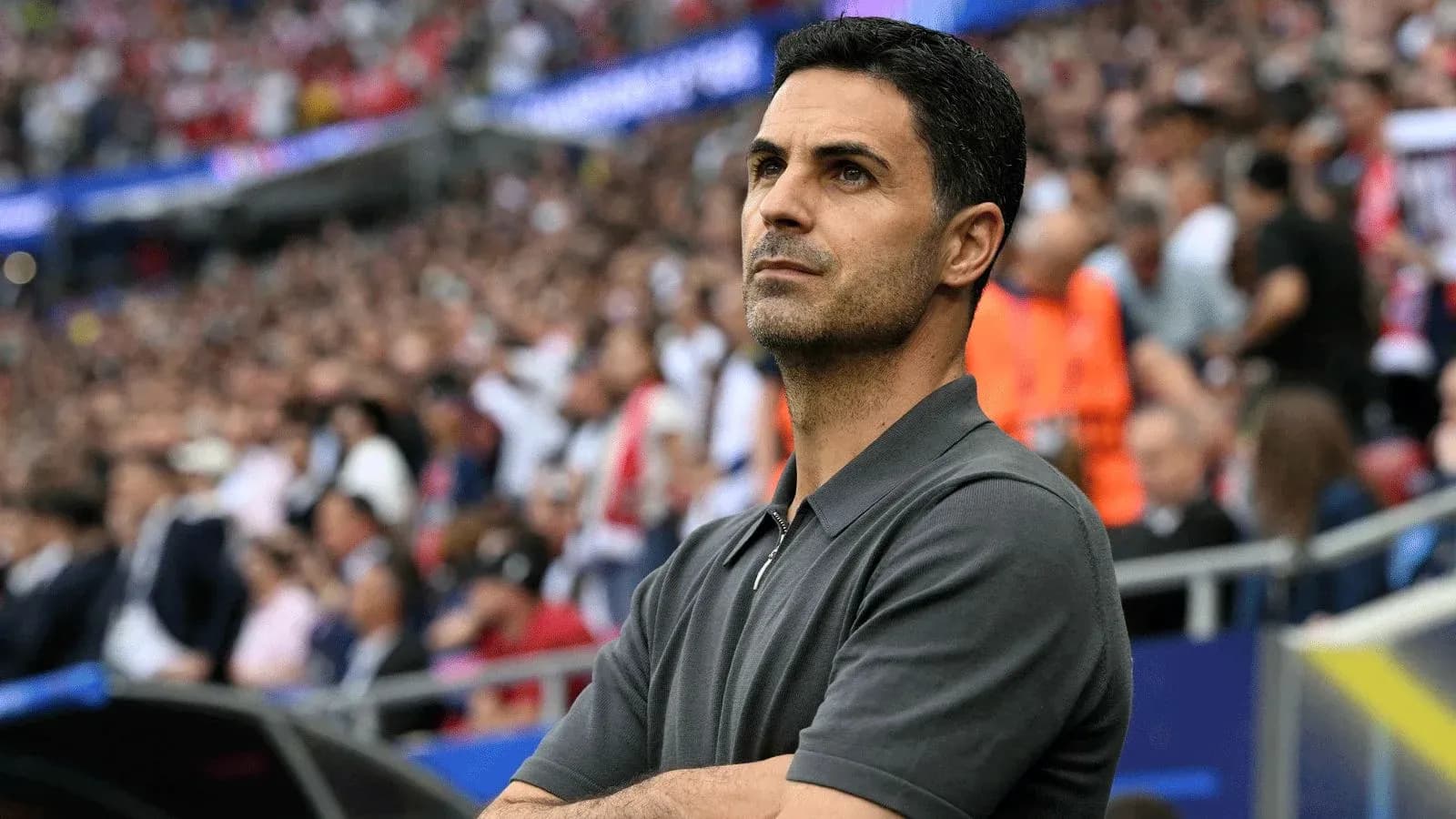
Héctor Bellerín still remembers the day Mikel Arteta called him over and changed the way he looked at his life.
He was 18 or 19, flush with his first real money, still more prospect than player. Arteta invited him round. Not for lunch, not for dinner. Just: come.
“When I arrived that afternoon, he was sitting with a financial adviser,” Bellerín recalls. Questions followed. How much do you spend on this? How much on that? Clothes. Cars. All the trappings a teenager reaches for when the direct debit of fame first lands.
“I was pitching low,” he admits. Embarrassed. Ashamed. But he walked away with something far more valuable than a spreadsheet.
“Mikel was the first player who showed me that I was important to him, that I mattered. He demonstrates real care, if not through a hug. I said: ‘Thank you.’ He said: ‘If you do the same for a teammate one day I’m happy.’”
That, Bellerín says now, is Arteta in one scene: demanding, protective, quietly paternal. And it is a legacy he has tried to pass on.
From London to Dublin, from boy to veteran
More than a decade has passed. Arteta is 42, a Premier League-winning manager. Bellerín is 31, a Real Betis full‑back, still wiry, still restless, now with a life that stretches far beyond the white lines.
On Wednesday, at the Aviva Stadium, they meet again. Not at the Emirates, not with points on the line, but in a pre-season friendly that carries a weight only they can fully feel. For Bellerín, it is his first time facing Arsenal.
He had one previous chance, on loan at Sporting. A knee injury arrived at precisely the wrong moment. So precisely that he still wonders if the body simply followed the mind.
This time there is no escape. Only the odd feeling of lining up against the club he still calls family, now crowned champions of England and led by the man who once invited him to sit and talk about money and meaning.
“I have an incredible feeling of love for the club,” he says, dropping into a sofa 30 miles west of Dublin, still in his training kit. The conversation runs easily: Serge Gnabry, Santi Cazorla, Nacho Monreal. The kindness of Tomas Rosicky, who once told a teenage right-back how to beat him in training. Now Bellerín does the same with José Antonio Morante, the 19‑year‑old winger who faces him every day at Betis.
He moves quickly from the light to the dark. From Sunday roasts to the parts of the sport that make his “blood boil”.
Football, he says, has become the “maximum exponent of greed”. The pressure. The abuse. The way the industry eats its own.
Yet he is still “addicted” to the game, still committed to it. For all the other facets – fashion, politics, environmentalism, his refusal to stay quiet – he remains what he always was: a footballer who believes he deserves his place on the pitch.
Arsenal, though, remains the emotional centre.
“There are still players I grew up with: Bukayo [Saka], Ben White, the manager, coaches, staff. It still feels like family for me. My appreciation and affection for them is immense. I became a footballer there.
“I’m sure that my life, my way of being, of thinking, my conscience, all the things that represent me, were latent in me but they needed a place where they could be expressed. London gave me that space where I could explore my world, mature. There are places that could constrain you, but London was somewhere I could expand, explore life.”
From Enfield buses to a 17th‑century farm
The story began in Enfield, on the Ridgeway, with the Twitching family: Donna, John and their children, Tia and Ben. A 16‑year‑old from Barcelona landed in north London and found roast dinners and bus routes instead of Camp Nou glamour.
He shared the house with Jon Toral, his teammate since they were eight, who would end up playing in India. Back then, they were just two kids with €400 a month and an Oyster card.
“The first thing Liam Brady, the academy director, gave me and Jon was an Oyster card,” Bellerín says. Toral would stick on Sky Sports and watch everything: football, darts, snooker. Bellerín went exploring.
“I would ask Donna: ‘Where can I go?’ Camden, Covent Garden … to Brixton to play pool. We didn’t feel either overprotected or abandoned. We had to catch two buses and the tube for training.”
He smiles at the memory of that first roast. “Roast dinner was a tradition. I didn’t understand that on Sunday you only ate once and then leftovers. That ‘journey’ was funny: last time I was in London I went to a pub to find a Sunday roast … but by then it’s vegan. Kentish Town. Elements of my personality totally come from England.”
Over 12 years in London, he moved around, collecting postcodes and experiences. When the pandemic hit, he ended up living on a 17th‑century farm in St Albans, the only way in down a sand track. A Premier League player, alone in the countryside, thinking about who he was and what came next.
Arsenal’s rebirth, and the manager who saw patterns
He left before the title came. He would have loved to be on the bus for the parade, but Betis still had games to play. Even so, when Arsenal finally ended their long wait to win the league again, his phone lit up.
“One of the lovely things when they won the league was lots of people sent messages and I felt part of it. There are so many people I talk to, we’re all Gunners, and it was like a liberation, a release after so long.”
He often speaks with Monreal and Cazorla, the old Spanish core who lived that first Arteta era from inside the dressing room.
“I was talking to Nacho and Santi: it would be great if the three of us could go for a game. We were the group with Mikel. We knew that with Mikel one day Arsenal would win the league.”
The clues were there early. On the training pitch, Arteta quizzed him constantly.
“In training he would ask: ‘What did you do at Barcelona? I would do this …’”
Later, when Arteta moved from the dressing room to the office and Bellerín became his player rather than his peer, the education accelerated.
“I was with him a year and a half [as coach] and I could say that 80% of my football came through Mikel’s mind. His is a totally different vision. There’s an understanding, an observation, he sees patterns, and has a very specific language.
“I’d go so far as to say that he has put extra years on my career. I play totally differently to how I did at 19. That’s about experience but also a lot about what I learnt from Mikel: how to help my teammate, create advantages in my space. Bloody hell, I owe Mikel so much.”
The transition, he admits, was not seamless.
“Our relationship going from teammates to coach and player was strange. I’m not sure we knew how to manage the transition. But face to face there was always that past there which meant we could talk honestly.”
Leaving home, finding Betis
Eventually, the conversations turned to his future. Not one talk, but many, stretched across a year. He knew he had to go. Arteta knew it too.
“I had decided that I had to go, but it wasn’t a conversation; it was lots of them going back a year. I feel huge admiration for him. And Betis arrived in the moment that I needed it.”
Why did he need it? He pauses.
“There’s not a specific reason. Something happened but it’s not a thing; it’s more that there’s a kind of disconnect in which I felt that I could no longer help the club and the club could no longer help me. We managed that in the most amicable way. Maybe I needed to be close to my roots, home. It had been a long time.”
Walking away from Arsenal, he says, is “scary, eh. Scary. It hurts, mate: look, however much you know that your moment is over, it was your home. You were there for 10 years, you leave friends behind, a life … you don’t know what you are going to find on the other side. I was lucky.”
Betis was not just a club. It was inheritance. His grandmother and father supported them. Seville offered him a city that matched his own contradictions: noisy, intense, but capable of gentleness.
He cycles to training. He takes writing classes. He designs fashion. He leans into veganism and environmental activism. He speaks openly about toxic masculinity and the greed he sees in football. He looks for ways to live a life that does not begin and end at the training ground gates.
“What most struck me was the dressing room,” he says of Betis. “There is something ‘horizontal’ in the relationship with other employees. At my other clubs that didn’t exist. That’s the essence of us, what sustains us. And it fits with my values. In Seville I have found a city that embraced me, allowed my existence beyond football.”
On Wednesday night in Dublin, the game will start like any other. A whistle, a pass, the usual pre-season rhythm. But for one right-back and one manager, it will feel like stepping into a shared past.
The kid who once sat across from Arteta and learned how to manage his money now faces the coach who helped reshape his football brain. The club that made him stands in the opposite tunnel.
He won’t be neutral. He never could be. The question now is how long this story between Bellerín, Arsenal and Arteta keeps writing new chapters.