Harry Kane's World Cup Brilliance Against DRC
Thierry Henry does not hand out compliments lightly. Not on finishing. Not on technique. So when the greatest goalscorer in Arsenal’s history leaned into the Fox cameras and dissected Harry Kane’s second goal against the Democratic Republic of the Congo, you listened.
Inside of the foot. Body leaning away. Balance on the brink. Power somehow increasing as the legs tire and the lungs burn.
“If I did that now, I’d break my back,” Henry said.
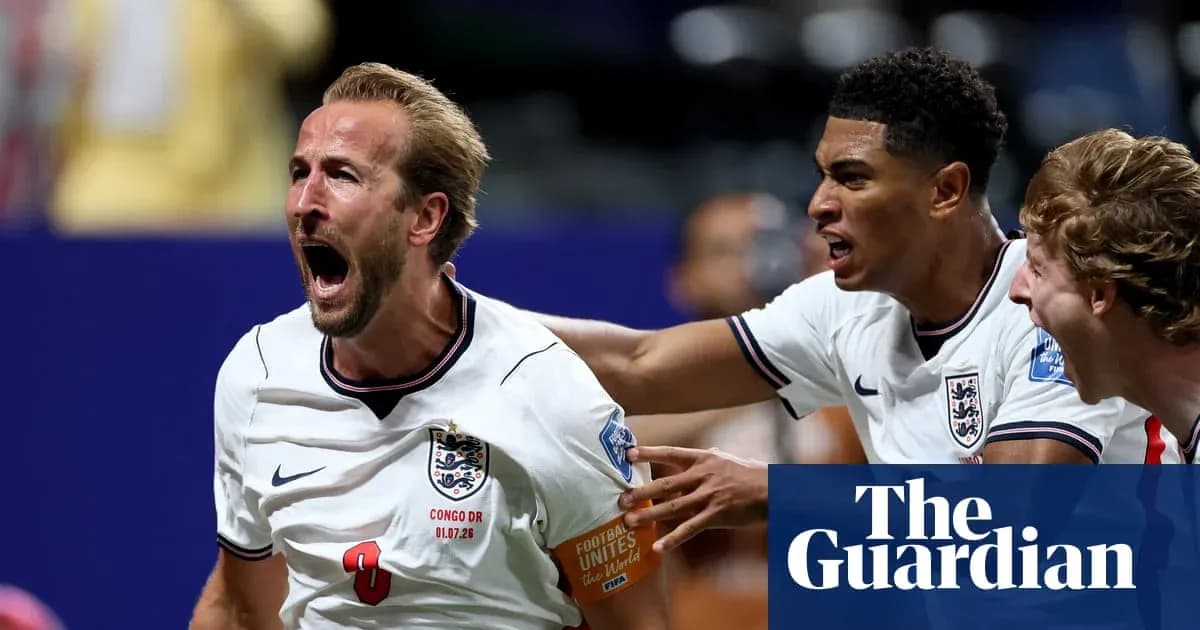
He wasn’t joking. Kane’s strike was outrageous. The timing, the body rotation, the way he whipped his arms through the shot to wring every last drop of power from a tired frame. He didn’t care about the landing, only the contact. The ball flew, the net shook, and England’s World Cup stayed alive.
Kane at full power
This is Kane in his purest form: an elite athlete at the peak of his physical powers, a centre-forward who has spent a decade shaving seconds and grams off his game and is now seeing the rewards.
He called it one of his favourite England goals. You can see why. The technique was a snapshot of the work behind the scenes – the conditioning, the core strength, the hours of repetition – all compressed into a split-second decision with England’s tournament on the line.
He had already dragged them back into it with a clever header, the kind of instinctive, near-post run he has made look routine. Then came the winner, lashed in with a violence that felt like a release, not just of a game, but of years of narrative.
England 2, DRC 1. A last-16 tie with Mexico secured. Thomas Tuchel still in a job at Bayern Munich. Kane, again, at the centre of everything.
A modern great, running out of arguments against him
The numbers are starting to feel surreal. Those two goals were his 83rd and 84th for England, in 118 caps. He has already passed Gary Lineker’s World Cup tally. He has five in England’s first four games at this tournament, right in the hunt for another Golden Boot.
This isn’t a good international career. It’s one of the great ones.
On the Stick to Football podcast this week, Gary Neville, Roy Keane, Ian Wright and Jill Scott batted around the inevitable question: where does Kane rank among England’s all-time players? When his name was placed alongside Bobby Moore and Sir Bobby Charlton, it didn’t feel like a reach. It felt like a conversation whose time had come.
He is, at the very least, firmly in England’s top 10. The more he plays, the higher he climbs.
And yet, the caveat remains
For all the goals, all the records, there is still a gap on the Kane CV. Moore lifted the World Cup in 1966. Charlton won the Ballon d’Or that same year. Their defining performances came when the stakes were at their highest.
Kane’s story at that level has been more complicated.
He drifted through the Euro 2020 final. In Qatar, he dragged England back against France, then smashed a late penalty over the bar when the chance came to make it 2-2 in the quarter-final. At Euro 2024, he was substituted in the final against Spain and written off in some corners as a fading force.
That verdict looks premature now.
This season alone he has 72 goals for club and country. Seventy-two. He is a serious Ballon d’Or contender. At this World Cup, no England player has covered more ground than his 43,433 metres. For a supposed static No 9, he is everywhere.
Kane is not just surviving at the top level. He is accelerating.
Rebuilt body, rebuilt game
The statistics only tell part of the story. The real shift is how he has layered his game.
The old Kane was a penalty-box assassin. The new Kane still scores at a frightening rate, but now drops off to thread passes through defensive lines. No striker in the world is better at drifting into midfield, drawing centre-backs out, and then slicing teams open with one pass.
The second goal against DRC, though, was a reminder of something more basic: he still hits the ball like a truck.
He puts that down to a decision made months ago.
“It’s probably the best I’ve felt in my career,” he said. At Bayern, the winter break helped. So did the luxury of being rested in a Bundesliga they often dominate. He made a “conscious effort” to be even fitter, to recover smarter, to stay on the pitch.
“I look at my stats after each game and it’s really pleasing,” he said. This is not a man drifting. This is a man obsessing.
Leadership, not just goals
The goals are one thing. The presence is another.
Kane has grown into the armband. Once a quiet captain, he has become more vocal, more visible. After the win over DRC in Atlanta, he pulled his teammates into a huddle on the pitch and spoke. It was unusual enough for him to admit he doesn’t normally like those public gestures. They can look staged. Forced.
This one wasn’t.
He wanted England to feel the moment. To celebrate it properly. After the Panama game at a previous World Cup, he felt they had just shrugged and moved on. Top of the group. Job done. Nothing special.
“But that’s not always been the case for England,” he said. He knows the scars. He has lived them.
This version of Kane is not just chasing records. He is trying to set a tone.
An imperfect England, carried by a ruthless core
Strip away the romance and this is not a flawless England side.
The wingers have flickered without ever catching fire. The midfield looks heavy-legged. The defence has wobbled more than Gareth Southgate would like, and right-back has turned into an injury headache.
What they do have is a spine. Kane and Jude Bellingham have become the axis around which this team turns. When the rest of the structure creaks, those two keep it upright.
The win over DRC was not pretty. Kyle Walker, watching on as a former England right-back, pointed out that sometimes there is nothing more satisfying than winning while playing badly.
Kane agreed. Tournament football rarely belongs to the teams who start at full throttle and never dip. It belongs to the ones who suffer, adjust, and still find a way.
“There’s not always a perfect way to win,” he said. Sometimes you grind. Sometimes you hang on. Sometimes your captain drags you there with a header and a thunderbolt.
Mexico, altitude and adversity
Next comes Mexico in Mexico City. The Azteca. Noise, colour, pressure, altitude. England have not had long to prepare for that last part.
“There is not much we could do with altitude training,” Kane admitted. They did 10 days of heat work in Florida to adjust to the conditions, but the thin air is another problem entirely. To prepare properly, they would have needed to base themselves in Mexico for days on end. That was never realistic in a World Cup schedule.
So they adapt. Hydration, recovery, small marginal gains. Then they get on with it.
“We’re professional athletes. We have to deal with adversity every now and then,” Kane said. If they come through it, he believes, the win will feel even sweeter.
The penalty that never was
His night against DRC could easily have unravelled. In the first half, he went through on goal, collided with goalkeeper Lionel Mpasi and expected the whistle. Nothing. No penalty, no VAR rescue.
He is still irritated.
“It’s a clear penalty,” he said. He talked about the speed of the run, the push in the back, the fact he got there first. The choice in that split second: try to jump the keeper and fall anyway, or brace for contact and protect himself.
“If I keep my leg planted in the floor you risk serious, serious injury,” he said. “It is a foul.” Had it been a defender rather than a goalkeeper, he argued, nobody would have hesitated.
In the end, it didn’t matter. England won. He scored twice. The injustice faded into the background, another grievance to fuel the next sprint, the next press, the next shot.
Peaking at the right time
Kane talks now about peaking when it matters, not in September, not in January, but here, in the sharp end of a World Cup. His body is tuned, his mind clear, his game as complete as it has ever been.
He has already rewritten England’s record books. He is now chasing something bigger, something that belongs not just in statistics but in memory.
The question is no longer whether Harry Kane is a great England player.
It is whether this World Cup, this form, this version of Kane, finally gives him the defining tournament that turns greatness into legend.