Harry Kane's Legacy: Can He Sustain Greatness Until Euro 2028?
Harry Kane has spent a decade bending English football to his will. Goals, records, landmarks – he has ticked them off with a ruthless regularity. But even for a striker of his stature, time does not stop.
By the summer of 2028, the expectation is that England’s captain will still be at the heart of it all, driving a home European Championship campaign after leading the Three Lions to third place at the 2026 World Cup. The stage is set for one last great act on home soil.
He should arrive there with even more history behind him. Kane is already England’s all-time leading scorer, sitting on 85 goals, and he is closing in on another towering figure. He is just four caps short of Peter Shilton’s long-standing record of 125 international appearances. Shilton’s mark once felt untouchable. Kane has made it look vulnerable.
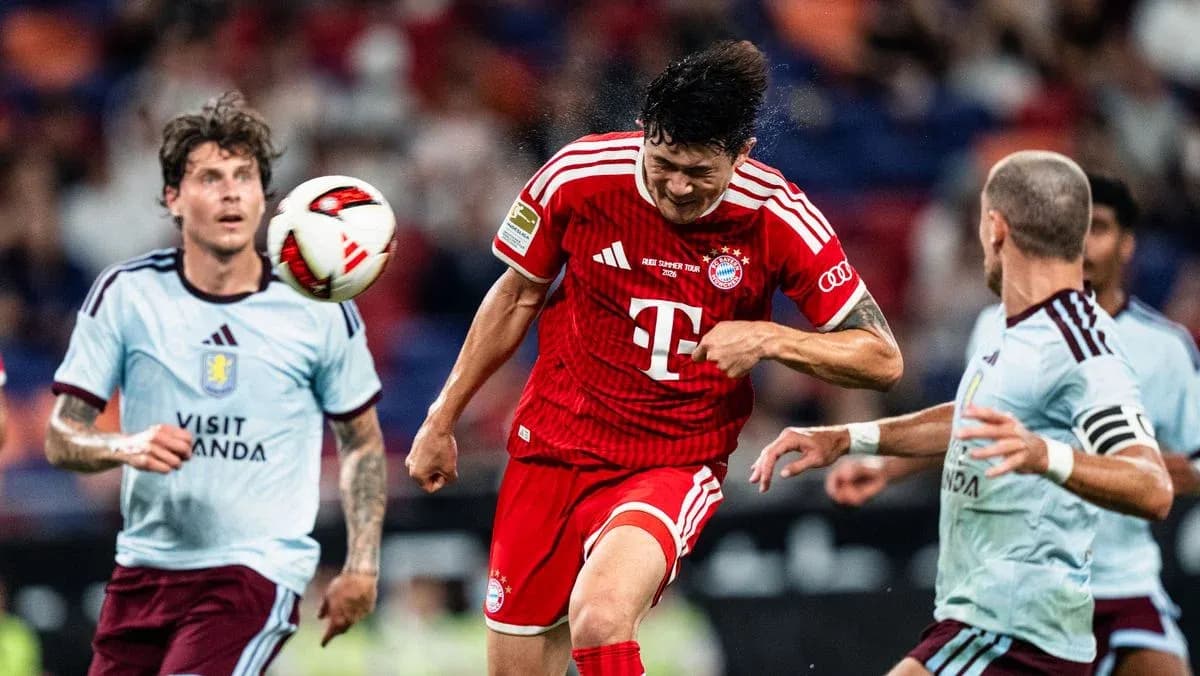
At club level, Thomas Tuchel continues to lean heavily on him at Bayern Munich. The No.9 role in Bavaria does not come with much rotation, and Bayern’s options behind him are thin. When Tuchel needs inspiration, he turns to Kane. When Bayern need a goal, the ball finds his feet.
But Kane recently turned 33. Even iron men have limits.
Cristiano Ronaldo and Lionel Messi stretched those limits on the global stage. Ronaldo played at a World Cup at 41, Messi at 39. They warped the normal rules of decline, carrying their genius deeper into their late thirties than almost anyone before them. The question now hangs over Kane: can he push his career into that rare air?
Chris Waddle is not convinced the answer is straightforward. Speaking to GOAL in association with BetBrain, the former England winger weighed up the next four-year cycle with a cool eye.
“Fitness is a great thing to have,” Waddle said. “Some players develop, get better as they get older. Some find it easier. Not easier, but easy.”
The next checkpoint comes quickly. Euro 2028, on home soil, will be a test not just of England’s ambitions, but of Kane’s legs. Waddle expects the debate to intensify long before then.
“We'll see how his legs are in two years' time, at the Euros even. People will be questioning that,” he said. “The thing with Harry's advantage is he's a fit lad, we know that. He doesn't rely on pace. He's got a great football brain.”
That brain has already helped Kane adjust his game, dropping deeper, linking play, dictating attacks as much as finishing them. Yet even the sharpest mind cannot completely hide a body starting to slow.
“Sometimes you see players in tournaments and you think, ‘His legs are going there’,” Waddle added. “I'm looking at Ronaldo as an example. I watched Portugal play in the World Cup and his legs were gone in my eyes for that level of football.”
Messi, in Waddle’s view, clung on for longer at the top. “Lionel Messi still had bits of brilliance until the rest of his team-mates decided to try and kick everybody out of the country,” he said, a pointed reference to the chaos that sometimes swirled around the Argentine.
Those two superstars have since found their level. Messi now sprinkles stardust in Miami. Ronaldo remains a box-office draw in Saudi Arabia. Neither operates at the relentless pace of the Bundesliga or Champions League any more, but both still command the stage.
“So I think there's a time and a place where you've actually got to think, ‘Yeah, he can still play, and he can still play like Messi does in Miami, a good level for him’,” Waddle said. “You know, Ronaldo in Saudi can still handle it. And Harry, eventually he'll come to a time where you think the Bundesliga is too quick. Where do you go from there?”
That “where” looms large when talk turns to the 2030 World Cup. Kane would be 37. Waddle does not dress it up.
“The next World Cup, it's a big ask for him, I think, to play in that tournament,” he admitted. The demands of international football at that stage, with younger forwards snapping at his heels, may prove too much even for England’s record scorer.
Waddle believes there comes a moment when elite players must be brutally honest with themselves.
“I think some of these players can think, ‘Yeah, I'm still playing football, but that level's out of me now, and I've enjoyed it’,” he said. “I think some of these players try and play too long and it doesn't look great on them.”
Kane has built a career on clarity of decision and cold-eyed professionalism. Choosing when to step away from England will be the hardest call of all.
“But I'm sure Harry will know when the time's right to say, ‘No, I can't play for England anymore’,” Waddle concluded.
The clock is ticking. The records keep falling. The question now is not whether Kane can still deliver, but how long he can hold this extraordinary standard before he decides, on his own terms, that the top level has had enough of him – or he has had enough of it.