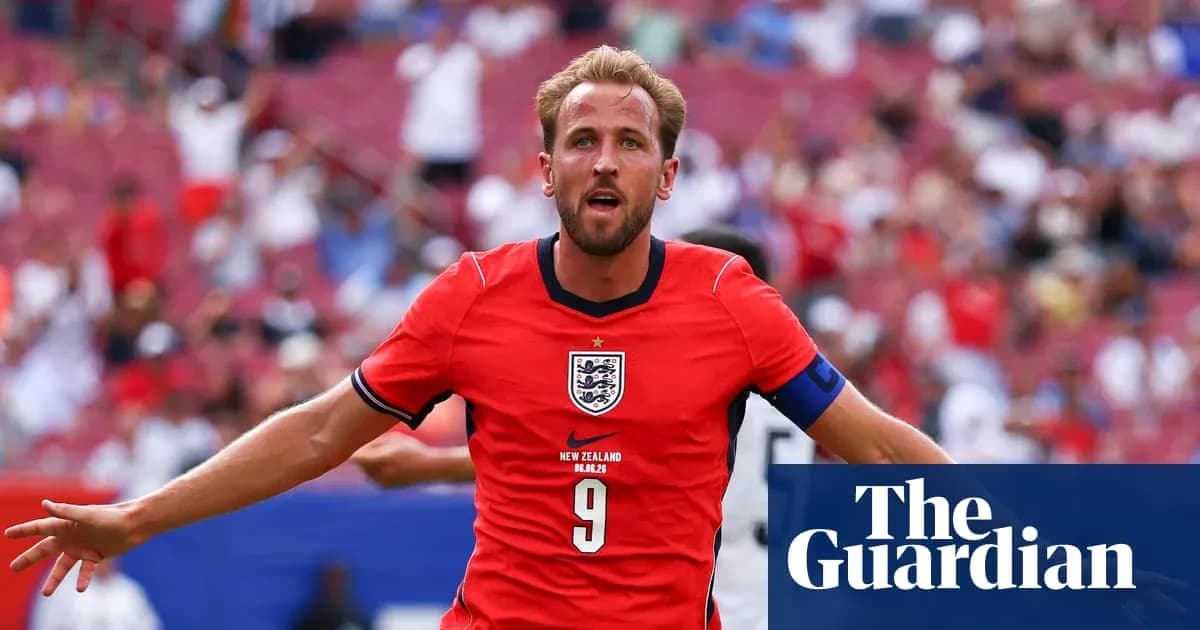
Harry Kane: Bayern Munich's Greatest Signing
Uli Hoeness has never been shy with a superlative. Bayern Munich’s president has called plenty of players “the best” over the years, so when he walked out of the DFB-Pokal final and declared Harry Kane the greatest signing the club had ever made, it sounded like another flourish from a man who deals in big statements.
A month later, with the confetti swept away and the adrenaline gone, the verdict inside Bayern has not softened. If anything, it has hardened. “He absolutely is the best we’ve had,” says one senior figure at the club. No hesitation. No caveats.
Kane has not so much silenced his doubters as rendered them irrelevant. The transformation in perception has been stark. During Euro 2024 he looked like a man dragging a reputation rather than enhancing it, still trophyless, still framed by near-misses. Outside England, many had long filed him under “nearly”. Even his Golden Boot at the 2018 World Cup was picked apart – “top goalscorer despite not having scored from the quarter-finals on,” sniffed Le Journal du Dimanche – as if his most prolific years at Tottenham were an admirable but ultimately futile grind.
Now he stands in very different company. When Time assembled the faces of this World Cup – Lionel Messi, Cristiano Ronaldo, Neymar, Kylian Mbappé, Lamine Yamal, Jude Bellingham – Kane was there too, no longer the outlier from the nearly-men, but a fully paid-up member of football’s top table.
Hoeness knows why. Bayern broke their own rules to get him, paying more than €100m in a move that felt like a step into the unknown for a club that prides itself on control. “When we bought him for more than €100m, that was new territory for us and a crazy risk,” he admitted. “But he’s paid back every single euro. Not just because he scores so many goals, but because he is a role model in the dressing room.”
The stories from inside Säbener Straße are consistent. Kane talking to academy kids. Kane putting an arm around those who have just been dropped. Kane, not yet fluent in German but still front and centre in a multilingual dressing room where English has become the default. Vincent Kompany runs most of his meetings in English; many of Bayern’s key players speak it as their first or second language. Communication has never been the problem.
The physical battle certainly has been. Hoeness, a World Cup winner in 1974 and no stranger to the darker arts of defending, marvels at what Kane endures in the Bundesliga. The kicks, the nudges, the constant contact. He doesn’t flinch. “I think you’d have to cut off his head or his arm to stop him playing,” Hoeness said, only half joking.
Inside the dressing room, the effect is measured against the club’s own giants. Those who see the day-to-day say only Manuel Neuer and Thomas Müller, in his later years, have wielded similar influence. Both are Bayern to the core, academy to Champions League. Kane arrived as an outsider and has ended up in that company.
The move to Germany always carried the ghost of the British player abroad. When his family initially delayed relocating fully to Munich, the old stereotypes resurfaced. Ian Rush never actually said that living in Turin with Juventus was “like living in a foreign country”, but the line has long served as shorthand for English discomfort on the continent.
Kane has torn that up as well. He and his wife, Kate, have settled into a rural home once owned by Lucas Hernández, tucked near the affluent suburb of Grünwald. Talk to Kane about life away from the training ground and the detail comes quickly: Kate and the children – Ivy, 9, Vivienne, 7, Louis, 5, and Henry, 4 – taking to Bavarian winters, skiing in the mountains while he watches from the sidelines, contractually barred from joining in. He still heads to Garmisch-Partenkirchen, soaking up the Alpine scenery even if he has to keep both feet firmly on the ground.
The bond with Bavaria has been carefully, almost symbolically, built. At a fan day in Kirchweidach, a village of barely 2,000 people near the Austrian border, Kane found himself stirring a giant pot of soup, as local wedding couples do to mark their union. The message was clear enough: he was marrying into Bavaria now. He played a village version of skittles using litre beer steins instead of bowling balls. Later he would call it “a bit crazy” with classic English understatement, but he never once stepped away from the madness. He leaned into it.
On the pitch, Bayern expected elite quality. What they did not fully anticipate was this level of dominance, this breadth of influence. Since finally ending his personal trophy drought with the Bundesliga title in 2025 – the first of back-to-back league crowns, with a DFB-Pokal thrown in – Kane has looked not like a player easing into his thirties, but one accelerating through them. Leaner. Sharper. More ruthless.
The goals have started to form their own highlight reel. His strike against Atalanta in the Champions League stands near the top: a drag-back and swivel that erased two defenders in a single movement, followed by the sort of clean, low finish that has become his signature. Yet the second goal in the DFB-Pokal final, the one that effectively killed the contest on 80 minutes, might tell the fuller story.
He collected the ball outside the box, whipped a vicious curling effort against the bar, and when it dropped back into the chaos, he didn’t snatch or snatch again. He reset. Another drag-back. Another turn. Space created from nothing, then the finish. Old Kane would have been boxed inside the six-yard area; this version owns the whole final third.
The numbers are now brushing shoulders with the untouchables. With 61 goals for Bayern, he is the only player in Europe’s major leagues consistently operating in the scoring stratosphere once reserved for Messi and Ronaldo, with only Erling Haaland even within hailing distance. Ronaldo once hit 66 goals in a season, in a year without a major tournament. Messi reached 73. Kane, after Saturday’s outing against New Zealand in Tampa, stands on 67.
He has not become a pure poacher to get there. At Bayern he often drops so deep that he resembles a No 6 out of possession, picking up the ball from his centre-backs, dictating tempo. His passing range bites almost as hard as his finishing. The assist for Luis Díaz in the Champions League semi-final first leg against Paris Saint-Germain – a disguised, raking ball that split the defence – underlined just how complete his game has become. It is little surprise Thomas Tuchel intends to mirror much of Bayern’s approach with Kane at the World Cup.
At Tottenham, the Ballon d’Or conversation always seemed to happen in another room. Kane’s numbers were there, but the medals weren’t, and in the modern game those two things rarely separate. Now he lives in the late rounds of the Champions League. Now he lifts trophies. Now his name is on the list.
So much of it feels like a slow-burn story reaching its climax. At 32, he is no prodigy crashing the party, no shooting star. He is the tortoise in football’s race, relentless rather than explosive, edging past the hares who once sprinted ahead of him.
Those who knew him as a teenager still sound slightly bewildered by where he has ended up. At Spurs’ academy he was, by the brutal standards of elite youth football, unremarkable. Slightly overweight. Not especially quick. Not the most naturally gifted. “You would never have thought that he would be what he is now,” one youth coach admitted. Then came the growth spurt at 14, the technical polish, the unmistakable thud of his striking. Every instruction, every tweak in the gym or in finishing drills, needed saying only once.
The early senior years were hardly a glide path. A loan at Norwich turned sour almost from the start. A glaring miss on his debut against West Ham became the clip that followed him around. His last game for the club, an FA Cup exit to non-league Luton, ended with him hooked at half-time. Between those low points he was dropped to the under-21s, where he wasn’t even allowed to take penalties. Not good enough, they decided.
At Leicester, during another loan, he began both legs of the 2013 Championship playoff semi-final against Watford on the bench. Jamie Vardy sat next to him. The future of English goalscoring, reduced to watching.
Even when he returned to Spurs, the scepticism lingered. In the summer of 2014, Mauricio Pochettino watched him labour through pre-season and remained unconvinced. Kane remembers the numbers that backed up the doubts. “We had our body fat test done and I was the highest in the team, something like 18%,” he recalled. He went to see his new manager. Pochettino didn’t sugarcoat it. Your body fat is too high. You’re not pushing yourself hard enough. Then came the line that sounded like flattery at the time, or perhaps motivational theatre: “You can be the best striker in the world.”
Like Hoeness years later, Pochettino leaned into hyperbole to lift a young player who needed belief. Both men thought they might be exaggerating for effect. Both now look like they were simply ahead of everyone else.