Haaland Leads Norway to Historic Quarterfinal Victory Over Brazil
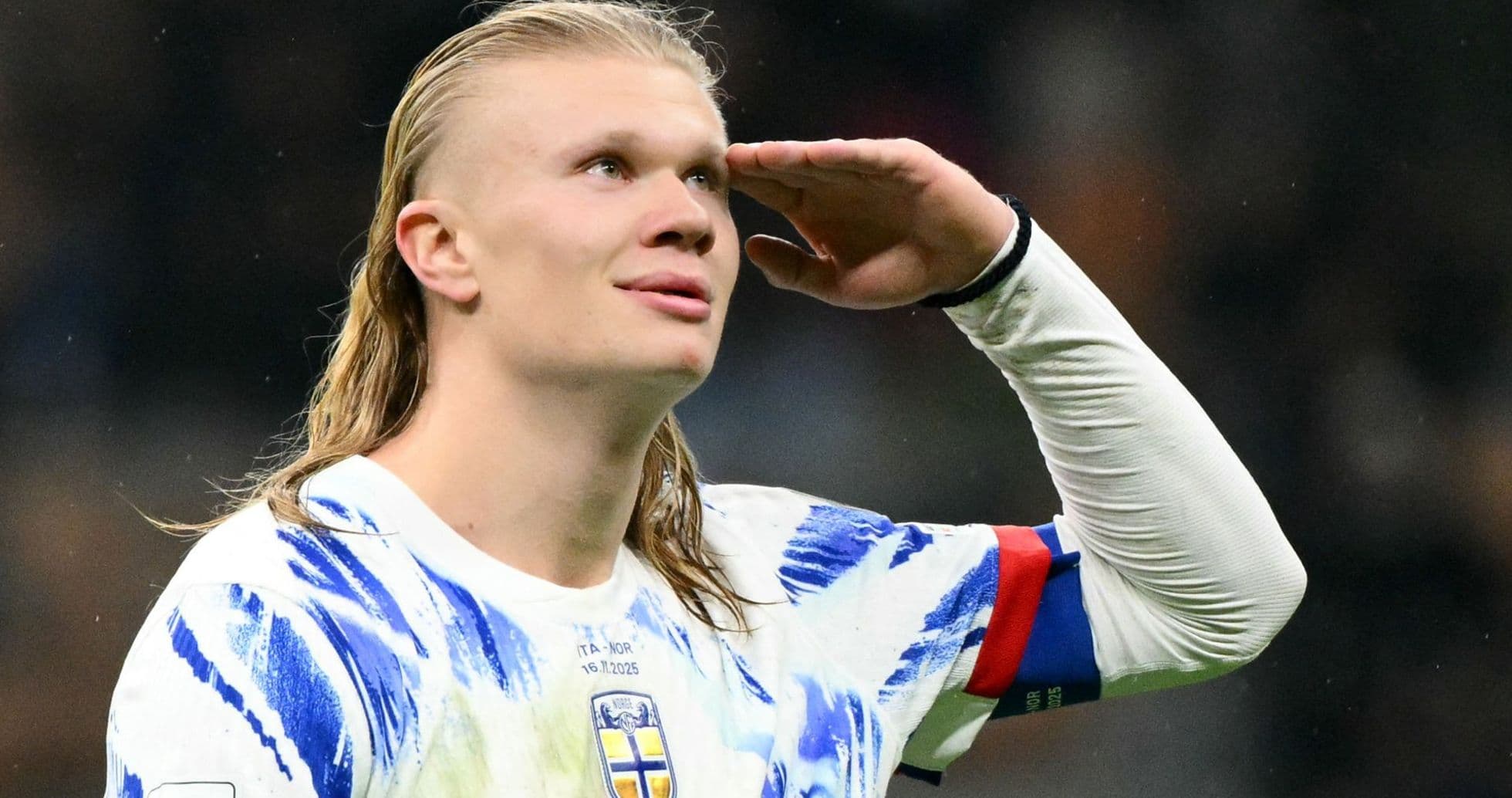
Erling Haaland didn’t sprint to the corner flag or rip off his shirt. He didn’t need to.
Just that familiar, almost mischievous curl of the lips, the glint in the eyes, the brief flash of teeth. A man who knows he has just bent a game, and perhaps a nation’s footballing story, to his will again.
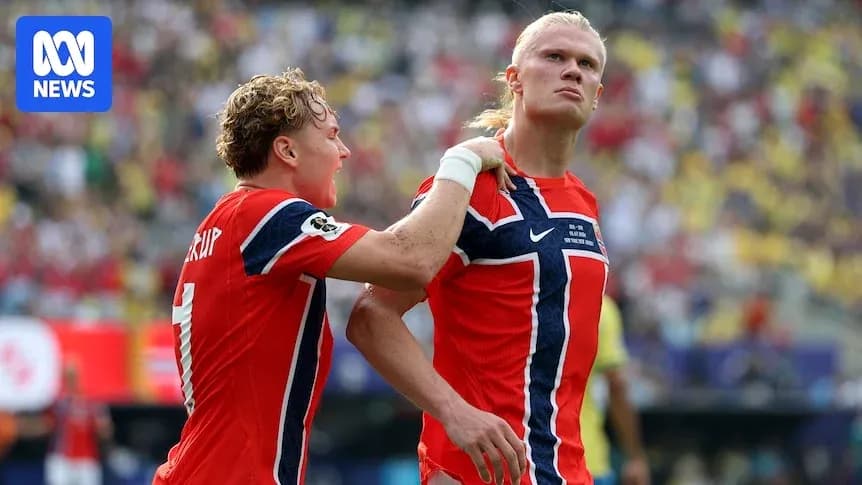
Around him, chaos. Ørjan Nyland howling into the New Jersey night, veins bulging after yet another huge save. Teammates tumbling over each other in wild embraces, piggybacks, limbs everywhere. In the stands, tears on painted faces, flags whipping in the air.
In the middle of it all, Haaland. Still. Composed. Owning the moment.
Two late goals from the striker turned a tense, tactical grind into a 2-1 win over Brazil and carried Norway into the quarterfinals for the first time. Once more, he dragged his country somewhere it has never been.
"I peaked a couple of times in this tournament, but every now and then I get a new peak," Haaland said afterwards. "If I get a chance or two, it usually turns into a goal. I don't know how I do it, but that's how I am. It's about being focused."
On nights like this, that sounds less like analysis and more like understatement.
Norway’s patience, Haaland’s punch
Norway did not come to New Jersey to trade punches in a shootout. They came with a plan, and they stuck to it with a kind of cold-blooded calm that mirrored their No. 9.
They controlled the ball for long stretches, but barely laid a glove on Brazil in the final third. For most of the match, the shot count was as underwhelming as their risk level. Yet there was no sign of panic. Why would there be, when the ultimate trump card was lurking up front?
Brazil, by contrast, looked built for the break. They sprang forward with pace, Vinicius Jr leading the charge with those whirring legs and sharp changes of direction. The surges were thrilling, the end product far less so. Attacks fizzled in the box, promising moves died on poor decisions or stout Norwegian defending.
Haaland, for a long time, barely existed as an attacking force. Brazil smothered him. At least two defenders shadowed him everywhere, sometimes three. He had just three touches in the box deep into the second half. The much-hyped personal duel with Gabriel seemed to be tilting the Brazilian’s way.
Then Norway finally found their moment.
In the 79th minute, Andreas Schjelderup drifted into space and whipped in a cross. Haaland rose, timing his leap and angle to perfection, and steered a header beyond the keeper. One half-chance, one ruthless finish. Norway’s Viking king had arrived.
Brazil staggered. Norway didn’t stop.
Ten minutes later, Haaland slipped into a rare pocket of space outside the area. No wrestling match with centre-backs this time, no crowded penalty box. Just him, a yard of grass, and the goal. He drove a low, precise shot past the despairing dive. Clinical. Inevitable. Seven goals for the tournament, level with Lionel Messi and Kylian Mbappé, despite sitting out Norway’s final group game against France.
Inside MetLife Stadium, the noise turned from hopeful to historic.
A new chapter in Norwegian football
This was not just another win. It felt like a threshold.
Captain Martin Ødegaard had led the now-familiar Viking row celebrations with the fans after previous victories. This time, the script changed. This night belonged to Haaland.
Drum in hand, he hammered away in front of the Norwegian supporters, that contained grin finally giving way to something rawer. The release said everything: this was not just a quarterfinal ticket, it was a line in the national story.
Norway had always viewed the last eight as a realistic target with this generation. With Haaland, Ødegaard and a well-drilled, tactically disciplined side, a quarterfinal wasn’t a fairy tale; it was a benchmark. Beyond that? That’s where fantasy starts to creep in.
Yet nothing about this team feels fanciful. They are organised, calm, and utterly unapologetic about building their game plan around one man’s extraordinary gifts. When you have a striker who turns “a chance or two” into a brace on a night like this, why wouldn’t you?
"It's one of the most insane days in Norwegian history," Haaland said. "I think this will inspire many young people, just as I was inspired when I was young."
Coach Ståle Solbakken did not bother to play it down.
"This is the greatest night in Norwegian football history," he said.
With that, the bar has moved. For a country that has often watched major tournaments from the outside, this is no longer just about participation. It is about seeing how far one generation — and one phenomenon up front — can push the limits of what Norway believes is possible.
Brazil’s fall and Neymar’s farewell
On the other side, a giant fell with a thud that has been years in the making.
Neymar, Brazil’s all-time leading goalscorer, chose this bruising exit as the moment to close his international chapter. The 34-year-old, who made his Brazil debut at this same MetLife Stadium, ended where he began — but in a very different light.
"I tried. It started here at MetLife Stadium, and I finished here. It is now over," he said.
A calf injury stalked him through the tournament, limiting him to scraps of minutes. The old magic never truly surfaced. His final act was a penalty deep into stoppage time, a consolation when the game had already slipped away. Yesterday’s hero stayed in the past.
Brazil’s problems, though, run far deeper than one fading superstar.
Bruno Guimarães’ first-half penalty, saved by Nyland, could have turned the whole evening. Instead, it became another symbol of a team out of rhythm, out of conviction. The warning signs had been there long before this knockout tie.
For the first time since 1990, the five-time champions will not see a World Cup quarterfinal. In recent years, they have started to resemble another fallen powerhouse, Germany — heavy with history, light on the ability to match it when it matters.
Carlo Ancelotti arrived a year ago as the supposed saviour, the serial winner tasked with restoring order and glory. His résumé glittered, but the team did not. He leaned on some of the old guard again here and throughout the tournament, yet their peak years are gone. Vinicius Jr played his part as the headline act, but the supporting cast never rose to his level.
"It’s inexplicable," defender Marquinhos said. "We have to take responsibility for this so that future generations can build on it."
It has been 24 years since Brazil last lifted the World Cup trophy. On nights like this, that drought feels less like an anomaly and more like a warning. Unless something fundamental shifts, the wait will stretch on — while countries like Norway, once mere spectators, start to write new stories of their own.