Guillermo Ochoa Retires from Elite Football: A Legendary Career Ends
Guillermo Ochoa has finally stepped away from elite football, and an era goes with him.
The Mexico great confirmed on Tuesday that he is retiring from the top level, ending a career that stretched across continents, generations and six World Cups. He had long pointed to the 2026 tournament as his last dance. Many still clung to the idea of one more short contract, one more season, one more improbable save.
There will be no epilogue.
On social media, Ochoa delivered the decision in his own words, stripped of drama but heavy with finality. He wrote that he had given everything “for my clubs and the national team” and that “today I hang up my gloves.” Then came the line that summed up his profession, and his career: being a goalkeeper, he said, means waiting 90 minutes for a single moment when everything rests on you — and when it comes, you cannot hesitate.
He rarely did.
A place among giants
Longevity became his calling card. Ochoa’s six World Cups place him in the rarest company, sharing that mark only with Ronaldo and Messi. At first he was just a kid on the plane, a promising understudy soaking in the experience. Eventually, the number 1 shirt became his, and he held it through three consecutive tournaments: Brazil 2014, Russia 2018 and Qatar 2022.
Those summers turned him from domestic idol into a global figure. The hair, the headband, the spring-loaded reflexes — they became part of the World Cup’s visual language. For Mexico, he became something else: a guarantee. A last line that refused to move.
His journey started a world away from that stage. A boy in Mexico City’s youth ranks, dreaming of the Estadio Azteca, not yet of the Maracanã or the arenas of Europe. Looking back now, he admitted he never imagined how far that dream would carry him. In his farewell message, he wrote that he could only look back “with pride” and say “Thank you,” adding that he leaves with “the affection of millions” and the calm that comes from knowing he gave everything for Mexico.
The final curtain at the Azteca
By 2026, Ochoa’s role had shifted. He went to that World Cup as a veteran presence, a backup to Raul Rangel, the mentor rather than the main act. But Mexico manager Javier Aguirre understood what Ochoa meant to a nation and to a stadium.
In Mexico’s final group game against Czechia, Aguirre handed him the ending he deserved. With 13 minutes left, the board went up and the roar rolled around the Azteca. One last walk to the penalty area that had defined his life.
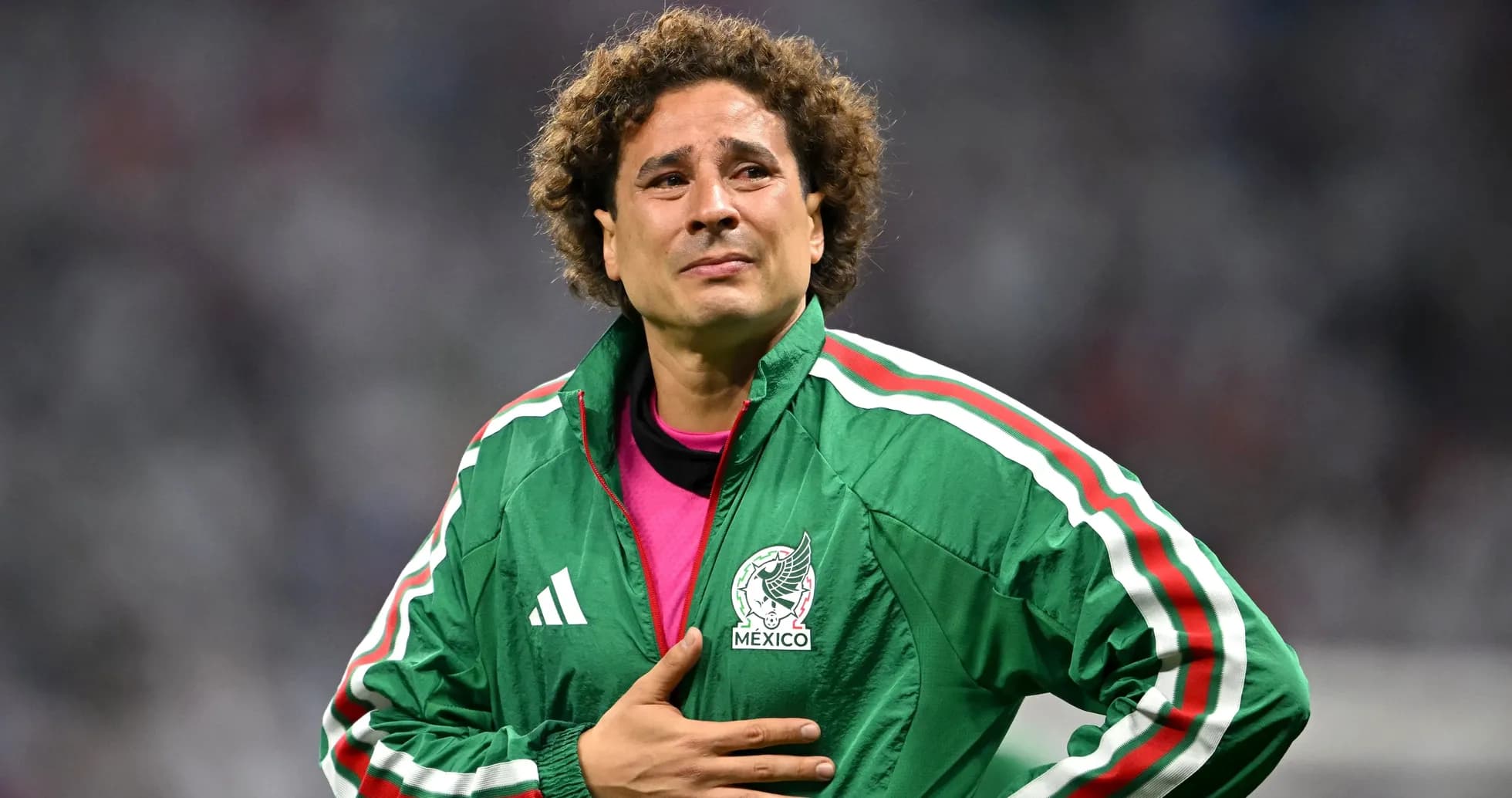
At the final whistle, emotion took over. Ochoa kissed the goalposts — the same posts that had framed his debut, his titles, his miracles — and then dropped to his knees as teammates wrapped him in an embrace that felt as much like gratitude as goodbye.
The crowd eventually drifted away, the noise fell, the lights began to soften. Ochoa stayed. He walked alone to the centre circle and stood there, taking in the empty stands, the grass, the silence. One last look at the pitch that had given him everything and demanded just as much in return.
From América to Europe and back again
The honours on his shelf back up the reputation. A league title with Club América in the 2005 Clausura. A Belgian Cup with Standard Liege. Not the heaviest trophy haul in world football, but each piece carried the weight of a pioneer.
He had burst into the top flight with América in February 2004, a teenager with sharp reflexes and a fearlessness that immediately marked him out. Over seven seasons, he grew into the club’s undisputed number one and one of Liga MX’s standout performers.
Then came the leap. In 2011, Ochoa joined Ajaccio and wrote a small but significant line in history: the first Mexico-born goalkeeper to play in Europe. It was not a move to a superclub, not a shortcut to glamour. It was harder than that — a fight against relegation, against anonymity, against the idea that Mexican goalkeepers should stay home.
He stayed the course.
His European route turned into a long, looping odyssey: Ajaccio, Malaga, Granada, Standard Liege, Salernitana, AVS Futebol, AEL Limassol. Different leagues, different languages, the same figure between the posts, still waiting for that one decisive moment every match.
In the middle of it all, he came home. From 2019 to 2022, Ochoa returned to Club América, a three-year spell that felt like a reunion tour and a reclamation. He did not come back to be a mascot. He came back to be the standard. By the time he left again, his status as a club legend was beyond debate.
Now the gloves are off for good. The question for Mexican football is simple and daunting: how do you replace not just a goalkeeper, but a presence that spanned six World Cups and a generation’s worth of memories?