Gianni Infantino Must Resign for Football's Future
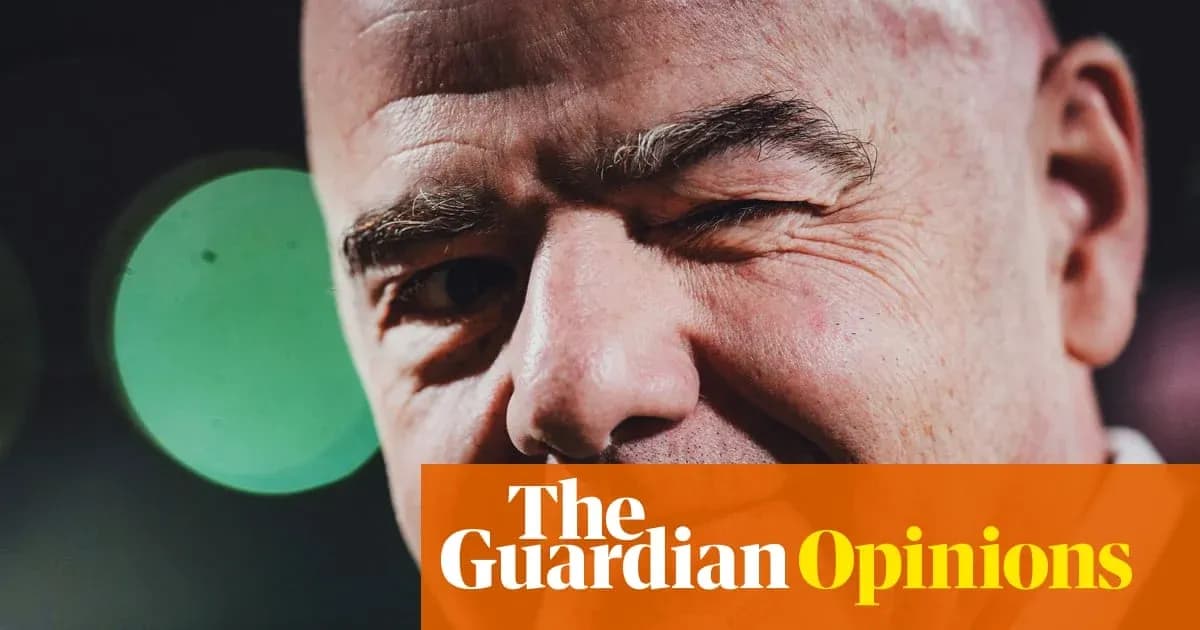
There is no polite way to dress this up. Gianni Infantino has to go – either by resignation or by force of law. The Fifa president has burned through the last reserves of trust in football’s governance, dragging the game’s ruling body to a place where its credibility barely exists.
His climbdown on Saturday morning only underlined the scale of the crisis. Having driven ahead with his Fifa Forward Enterprise (FFE) project – a scheme designed to carve up chunks of the World Cup for private investors – Infantino was compelled to accept defeat. He spoke of resuming talks about football’s growth “in the spirit of shared interest in our game”. The words were conciliatory. The motive was survival.
That is precisely the problem. Every extra day Infantino remains in office deepens the stain on an institution whose reputation is already on the floor.
A presidency at war with its own rulebook
The FFE scheme, with its plan to hand huge leverage over football’s future to venture capital, would be enough on its own to topple most leaders. Infantino’s record stretches far beyond that. He has treated Fifa’s own statutes and governance rules as optional extras, so the sudden loss of patience in power-brokering corridors across the world was not a shock. “Football unites the world,” Fifa’s slogan insists. Rarely has a line sounded so hollow.
Article 10.3 of Fifa’s regulations, the one that sets out the president’s responsibilities, could have been written as a charge sheet. The president must ensure “Fifa’s objectives, mission, strategic direction, policies and values are sustainably pursued, protected and implemented, and that a positive image of Fifa is fostered”. He must promote “friendly and peaceful relations within Fifa”.
Look around. Federations and senior officials have been openly distancing themselves from Infantino in recent days. The idea that he is fostering harmony is a fiction.
The rules do not offer any licence for a president to chase a string of private projects, often aligned with the current US administration or its satellites, pushed forward with minimal scrutiny and even less explanation. Yet that has become the defining style of this regime.
From Balogun to Trump to Saudi Arabia
Where to start? The Folarin Balogun affair pushed many influential figures, particularly in Europe, to the brink. It landed on top of a growing pile of grievances.
There was the bewilderment and anger when Infantino handed a new Fifa peace prize to Donald Trump in December. Fifa provided little clarity on how the award had been decided and offered highly debatable claims about the US president’s supposed achievements. For many inside the game, it felt like a line being crossed.
Tension rose again over “hydration breaks” at this summer’s World Cup. Stakeholders complained they had not been properly consulted about a change that tinkered with the rhythm and feel of matches at the sport’s showpiece event.
Then came the 2034 World Cup bidding farce. A rushed, opaque process ended with Saudi Arabia’s candidacy effectively waved through in December 2024. The backlash was loud, and it was global.
All of that would be a heavy load for any administration. On Friday, another weight was added: confirmation that plans for a 64-team World Cup are already in full swing. The direction of travel is clear – bigger, more commercial, more centralised – and the circle of people involved in making those decisions appears to be shrinking.
So when Uefa released a blistering statement on Saturday, calling for an end to “secret schemes on fast track timescales, cooked up by faceless individuals and of dubious benefit to the game”, it did not just mean the FFE project. It was a rebuke to an entire way of running football.
Uefa’s break with the status quo
The tipping point has been reached. After more than a year of stern words, Uefa finally moved to action, pledging to boycott future Fifa tournaments if Infantino did not withdraw his World Cup sell-off plan. That threat, backed by a united front, changed the calculation.
The pressure told. The FFE idea collapsed. Aleksander Ceferin, Uefa’s president, walked away with a victory that could come to define his time in office.
But the job is only half done. If Infantino is allowed to regroup, to hire consultants to soothe angry federations, to offer new promises and fresh cheques, the old order will reassert itself. The pattern is familiar: outrage, resistance, compromise, and then quiet acceptance.
Inside Uefa and across other confederations, there is a clear understanding that the tempo cannot drop. Senior figures are convinced Infantino must not survive this scandal. The next move, they believe, lies with the national associations.
A de facto vote of no confidence
Most Fifa member associations have already pledged formal support for Infantino’s re‑election next March. Those letters, once seen as routine acts of loyalty, now look like liabilities. Some insiders argue the associations should recall them.
On paper, it is a simple act – a request to Fifa to withdraw a previous endorsement. In practice, done in sufficient numbers, it would amount to a de facto vote of no confidence in the president.
Fifa lobbied hard for those letters. Many FAs now find themselves in an awkward position, knowing that public exposure of their earlier backing for Infantino would be deeply embarrassing. Yet the responsibility is theirs. If they shrink from confronting what they now recognise as an existential threat to the sport, they are failing in the same way the president has failed – by putting short-term comfort above the long-term health of the game.
Walking away now would mean leaving the rescue mission unfinished.
A fight over football’s future
Uefa has already promised to design a new model for distributing Fifa’s vast wealth, tapping into multibillion reserves without “selling the family silver”. Behind closed doors, it is working with other confederations to identify credible candidates to replace Infantino, ready to stand in the election if he clings on until then.
This crisis, bleak as it looks, offers a rare opening. Football’s power structures can be rebuilt, its priorities reset. But that only happens if the man at the centre of the storm is no longer the one signing off the decisions.
The alternative is painfully familiar. Fifa, and with it the global game, will keep stumbling from one self-inflicted disaster to the next, every controversy orbiting the same figure, the same ego, the same high‑risk ventures.
How long can football afford to let one presidency dictate the story of the sport?