Gianni Infantino Faces Congressional Scrutiny Over Trump Relationship
Gianni Infantino has been pulled into the heart of Washington’s political storm.
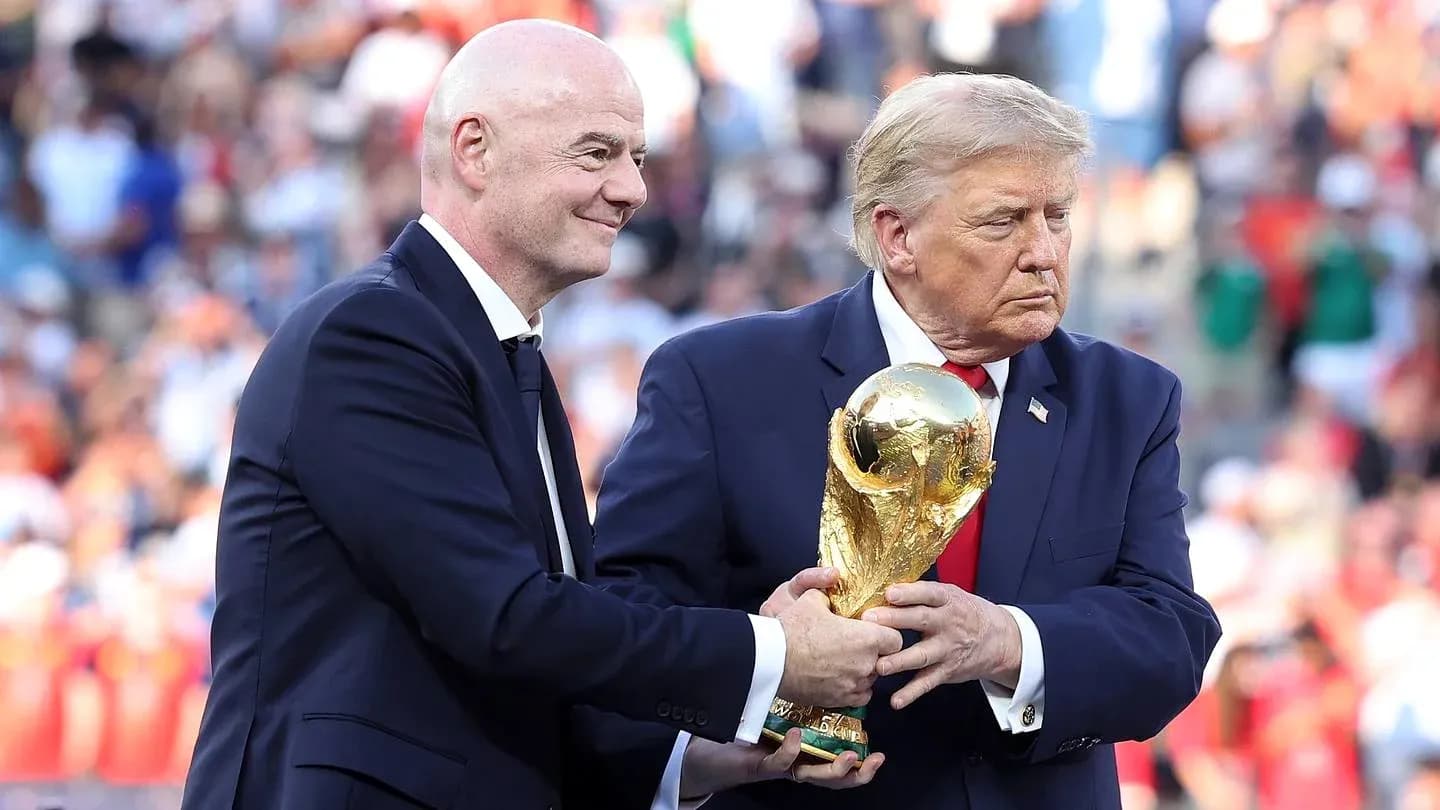
The FIFA president has been formally asked to appear before the House Judiciary Committee to explain, in detail, the scope of his relationship with U.S. President Donald Trump and the governing body’s dealings with his administration.
At the center of it all: power, access and a World Cup that made billions.
A Relationship Under the Microscope
Infantino and Trump have long projected a close alliance. That bond has now drawn the attention of Rep. Jamie Raskin, a leading Democrat on the committee, who has written a sharply worded letter demanding a transcribed interview and preservation of key communications.
Raskin wants Infantino to provide evidence of his interactions with Trump, including any dealings away from the public stage. His request covers all communication “between FIFA personnel and individuals affiliated with the Trump Administration or its inaugural committee.”
The political stakes are high, but so are the football ones.
Infantino’s tenure has already been marked by high-profile gestures toward Trump. He awarded the U.S. President the first-ever FIFA Peace Prize. He claimed an office in Trump Tower in New York City. The World Cup draw was shifted to Washington’s John F. Kennedy Center, a venue that had been taken over by Trump’s team.
Each move tightened the perception of a special relationship. Raskin’s letter treats it as something far more serious.
The Balogun Flashpoint
Concerns spiked during this summer’s World Cup.
When USMNT striker Folarin Balogun received a ban, Trump personally reached out to Infantino to push for it to be lifted. The ban was indeed overturned. The decision did not fade quietly into the background; it triggered a formal complaint from the Norwegian Football Federation, which has been openly critical of Infantino’s conduct.
For Raskin, this episode is not a quirky anecdote about presidential influence in sport. He frames it as part of a broader pattern.
“The most recent quid pro quo that FIFA and President Trump orchestrated is not a victimless crime,” he wrote. “It hurts Americans.”
He accuses FIFA of treating its “favored status” in the Trump Administration as a green light to “rip off its consumers,” citing alleged illegal price gouging and fraudulent sales tactics around the World Cup.
Echoes of Blatter
Raskin’s language is blistering. He directly compares Infantino’s relationship with Trump to the corruption scandals that engulfed former FIFA president Sepp Blatter.
The letter levels allegations of “outright bribery” at FIFA and claims Americans have been “defrauded and manipulated” by the organization over the massive finances tied to the tournament. Those finances are already under scrutiny from New Jersey attorney general Jennifer Davenport, whose office continues to investigate.
Raskin’s message is clear: this is not just about optics. It is about whether FIFA’s dealings with the Trump White House crossed legal and ethical lines.
His letter “serves as notice” that Infantino is expected to preserve and produce records that could reveal the true depth of that relationship.
Limited Power, Big Spotlight
For now, Raskin’s leverage is limited. Democrats sit in the House minority, which means he lacks the unilateral authority to compel Infantino, FIFA or Trump to comply in the short term.
Any move toward subpoenas or more aggressive legal action would require a majority vote on the committee. That turns November’s midterm elections into a key subplot. A Democratic surge could transform this from a pointed letter into a full-blown investigation.
In the background, FIFA’s calendar keeps moving. The process of awarding hosting rights for the 2031 Women’s World Cup is looming. The tournament is expected to be co-hosted by the U.S., Mexico, Costa Rica and Jamaica, and the politics surrounding that bid will now be watched with sharpened eyes.
If Infantino’s dealings with the Trump Administration are dragged into public hearings, every future FIFA decision involving the United States will face heavier scrutiny.
The White House Hits Back
The Trump camp did not let Raskin’s move go unanswered.
Asked by The Athletic to respond, White House spokesperson Davis Ingle launched a personal and political counterattack, dismissing the congressman and doubling down on Trump’s World Cup legacy.
“Lightweight Jamie Raskin [is] a stupid person’s idea of a smart person,” Ingle said in a statement.
He then pivoted to the 2026 FIFA World Cup, which the U.S. co-hosted and which the Trump team has aggressively claimed as a triumph of his leadership.
“No other president in history could have pulled off the historic feat that President Trump delivered for the American people and the world,” Ingle said, crediting Trump’s “bold vision and decisive leadership” for billions in revenue, a “massive economic boost” across host cities and what he called a “safe, secure and seamless experience” for millions of fans and athletes.
“It will undoubtedly go down as one of the greatest and most successful sporting events in history,” he added.
The message from the White House was unmistakable: Trump’s camp sees the World Cup as a cornerstone of his record, not a liability.
Football, Power and the Next Battle
This is where football and politics collide at full speed.
On one side stands FIFA, still trying to convince the world it has moved past the Blatter era. On the other, a U.S. political system that now sees the world’s biggest sport as another arena in which influence, access and money must be accounted for.
Infantino has been asked to walk into that arena and explain himself.
Whether he actually does so may depend less on FIFA statutes and more on how Americans vote in November.