Fulham vs Chelsea: Premier League 2026 Match Analysis
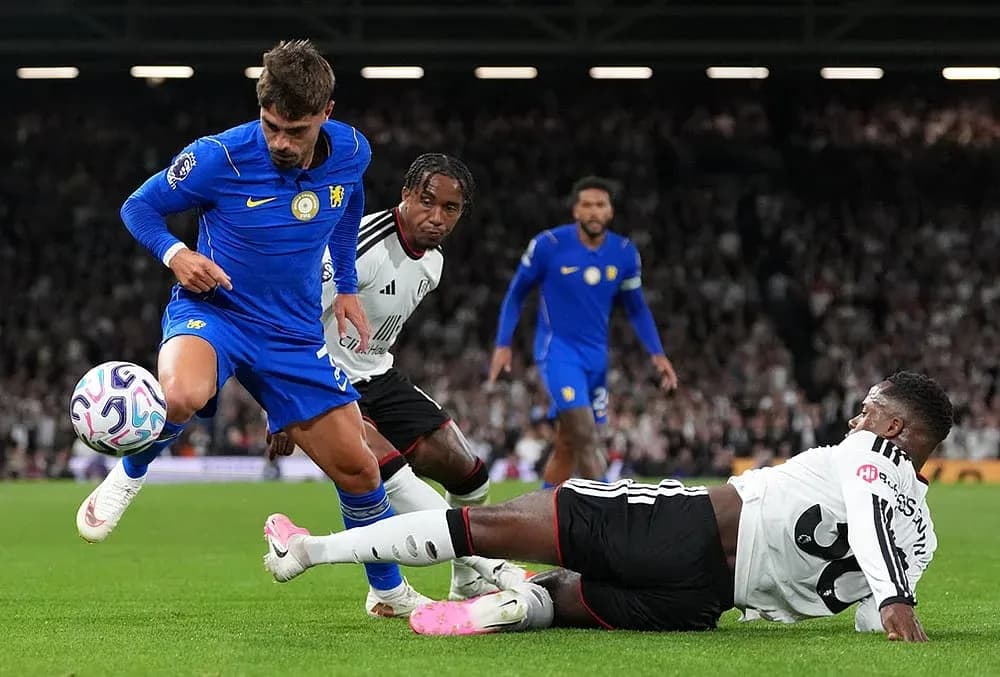
Craven Cottage under the lights, the Thames glinting just beyond the old stands, and the Premier League’s new season already baring its teeth. Fulham and Chelsea opened their 2026 campaign with a wild 3-2 away win for Xabi Alonso’s side, a match that felt less like a gentle curtain-raiser and more like a tactical stress test for both managers.
I. The Big Picture – Early Identities Taking Shape
This was Round 1 of the Premier League, and the table already sketches out contrasting moods. Following this result, Fulham sit 12th with 0 points, their overall record reading 1 defeat from 1 match, with 2 goals scored and 3 conceded. The goal difference of -1 underlines a side that can hurt opponents at home but remains fragile when stretched.
Chelsea, by contrast, emerge from their first away assignment in 6th place, with 3 points and a goal difference of +1, built on 3 goals scored and 2 conceded. On their travels, they have played 1, won 1, drawn 0, lost 0, with 3 goals for and 2 against. It is an away profile that, even this early, suggests a team comfortable playing with initiative on hostile ground.
Fulham’s season statistics reinforce the sense of a front-foot but vulnerable host. At home they have played 1, lost 1, scoring 2.0 goals per game and conceding 3.0. No clean sheets yet, but also no failure to score. Chelsea’s away averages mirror their ambition: 3.0 goals for and 2.0 against per game, again with no clean sheet but clear attacking intent.
II. Tactical Voids – Absences and Discipline
Both managers had to redraw their plans around significant absentees.
For Fulham, the loss of J. Andersen to suspension (red card) and T. Cairney to a knee injury forced Alvaro Arbeloa into a reshaped defensive spine and a different leadership dynamic. Without Andersen’s aerial dominance and Cairney’s calming influence in midfield, the Cottagers leaned heavily on the back four of B. Leno behind T. Castagne, C. Bassey, J. Cuenca and A. Robinson, with S. Berge asked to anchor and protect.
Chelsea’s absentee list was even longer: A. Anselmino (inactive), M. Caicedo and M. Sarr (injury), E. Emegha (hamstring), W. Fofana (red-card suspension) and J. Henderson (wrist injury). Alonso was effectively denied a natural destroyer in Caicedo, a key centre-back in Fofana, and extra depth in both defence and attack. That made the performances of M. Lacroix and L. Colwill in the back three even more critical, as they had to shoulder leadership and build-up responsibilities.
Disciplinary trends from the early-season data already hint at where games involving these sides might tilt. Fulham’s yellow cards have all come in a late-game surge: 100.00% of their cautions have been shown between 76-90 minutes. That suggests a side that either tires physically or becomes more desperate as the clock winds down. Chelsea’s bookings are front-loaded: 66.67% of their yellows have arrived in the opening 0-15 minutes, with another 33.33% between 61-75. They start aggressively, sometimes recklessly, before reasserting that edge as the second half opens up.
III. Key Matchups – Hunter vs Shield, Engine Room Battles
The headline duel of this fixture – and of Chelsea’s early season – revolves around Cole Palmer. Already among the league’s standout attackers, C. Palmer arrives from this game with 1 goal and 1 assist, a rating of 8.9, 4 shots (2 on target), and 32 passes at 87% accuracy. He is not just a finisher but a creative hub, adding 3 key passes, 8 dribble attempts with 5 successful, and winning 10 of 16 duels. He is the Hunter in Alonso’s structure.
Against Fulham, that Hunter targeted a defence still adjusting without Andersen. C. Bassey and J. Cuenca were forced to defend wide spaces, with T. Castagne and A. Robinson pushed back by the dual threat of M. Gusto and J. Hato as wing-backs. Fulham’s 4-2-3-1, with Berge and A. Iwobi as the double pivot and O. Bobb, J. King, C. Palacios behind G. Garcia, offered attacking layers but left moments where the back four were exposed in transition.
On Chelsea’s side, the Shield is personified by M. Lacroix and R. Lavia. Lacroix’s numbers from the opening match are imposing: 50 passes at 94% accuracy, 5 tackles, 1 block and 2 interceptions, plus 1 assist. He is both first passer and last barrier, stepping out of the back three to compress space on Fulham’s No. 10 and wingers. R. Lavia, for his part, logged 65 minutes with 22 passes at 95% accuracy, 3 tackles and 1 interception before his withdrawal. He did pick up a yellow card, underlining that his role as enforcer comes with disciplinary risk.
In Fulham’s Engine Room, S. Berge tried to screen and circulate, but the absence of Cairney meant more responsibility for progression fell to A. Iwobi and the advanced trio. T. Castagne, who appears among the league’s early assist leaders with 1 assist, 2 key passes and 1 blocked shot, often became an auxiliary playmaker from deep, stepping into midfield lanes to feed Garcia and the No. 10 zone.
Further forward, Chelsea’s front line was devastatingly efficient. Joao Pedro and M. Rogers each contributed 1 goal, with Joao Pedro also adding 1 assist. Joao Pedro’s 3 shots (1 on target), 2 key passes and 1 successful dribble paint the picture of a forward who drifts between lines, dragging centre-backs into uncomfortable areas. Rogers, with 1 shot on target, 5 key passes and 3 successful dribbles, attacked Fulham’s full-backs relentlessly, especially when transitions left Castagne or Robinson isolated.
IV. Statistical Prognosis – What This Game Tells Us
With no penalties taken or missed by either side so far this season, the story is built in open play. Chelsea’s overall averages of 3.0 goals scored and 2.0 conceded per match, combined with the creative output of Palmer, Joao Pedro and Rogers, suggest that Alonso’s team will lean into high-risk, high-reward football, especially away from home. Lacroix’s defensive metrics and passing accuracy give that approach a stable platform, even without Fofana and Caicedo.
Fulham, meanwhile, show promise in their attacking structure. Scoring 2.0 goals per game at home with G. Garcia leading the line and a technically gifted band of three behind him indicates they will trouble most visitors to Craven Cottage. But conceding 3.0 at home, and picking up all their yellows in the final 15 minutes, hints at a side that may repeatedly find itself chasing games, stretching its shape and paying for late lapses.
If we project forward, the statistical and tactical balance points to Chelsea continuing as one of the league’s more potent away sides, with their front three and Palmer in particular driving high xG returns. Fulham’s task will be to tighten the spaces around Berge and the centre-backs, especially in transitions, while managing their emotional and physical energy late on.
Following this result, the narrative is clear: Chelsea leave London’s riverside with an away win that fits their emerging identity as aggressive travellers, while Fulham are left with encouragement in attack but urgent questions at the back – questions that will define how far Arbeloa’s 4-2-3-1 can carry them this season.