France vs Paraguay: Round of 16 World Cup Clash
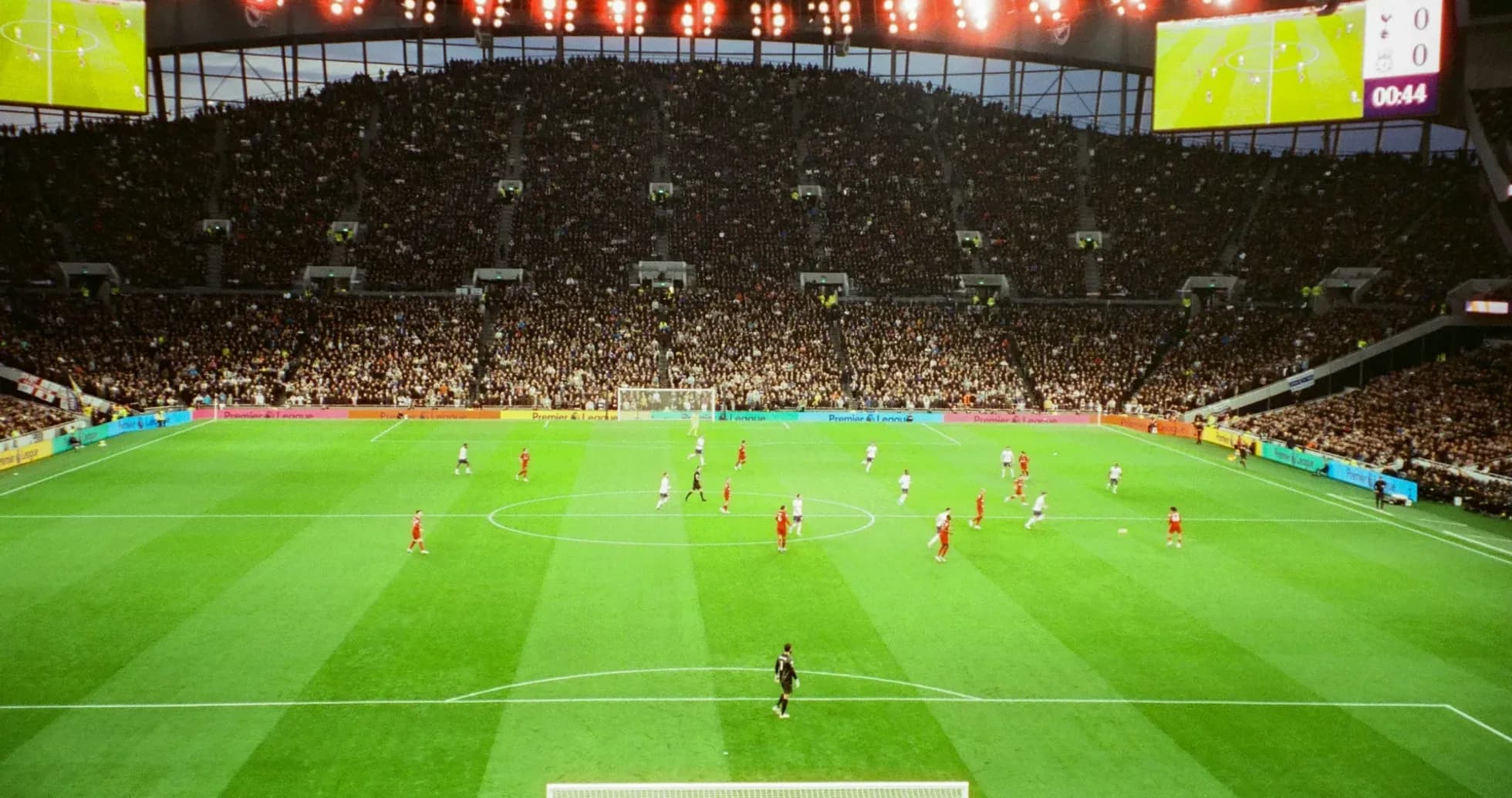
Under the lights of Lincoln Financial Field in Philadelphia, the Round of 16 brought together two very different World Cup stories. Paraguay arrived as a stubborn survivor from Group D, ranked 3rd in that pool with 4 points and a negative goal difference of -2, having scored 2 and conceded 4 in total during the group phase. France, by contrast, swept through Group I with authority: 3 wins from 3, 9 points, and a total goal difference of +8 from 10 goals scored and 2 conceded. The knockout meeting felt like a clash between a specialist in suffering and a side accustomed to dictating terms.
Paraguay’s seasonal DNA is clear in the numbers. Across the tournament they had played 5 fixtures in total, with 2 wins, 1 draw, and 2 defeats. Their attack has been modest: 4 goals in total, averaging 0.8 per match overall. The pattern is even starker when split by venue type: at home they have not scored at all, averaging 0.0 goals, while on their travels they have produced all 4 goals, at 1.3 per away game. Defensively, they have conceded 6 in total, 1 at home and 5 away, for an overall average of 1.2 goals against per match (0.5 at home, 1.7 away). This is a team that leans into control and containment, hoping to live long enough in matches to allow their individual talent to steal moments.
France’s figures tell the opposite story. In total this campaign they have played 5 matches and won all 5, with no draws and no defeats. Their attack has been relentless: 14 goals overall, split as 9 at home and 5 away, for an overall scoring average of 2.8 goals per match (3.0 at home, 2.5 on their travels). At the back, they have conceded only 2 goals in total, 1 at home and 1 away, for an overall average of 0.4 goals against (0.3 at home, 0.5 away). The goal difference checks out cleanly: 14 scored minus 2 conceded gives a total GD of +12. This is the profile of a heavyweight: high output, minimal damage taken.
Lineups
The lineups reflected that contrast. Gustavo Alfaro doubled down on resilience with a 5-4-1: O. Gill in goal behind a back five of J. Caceres, G. Velazquez, captain G. Gomez, O. Alderete, and J. Alonso. In front of them, the midfield band of four – M. Almiron, D. Gomez, A. Cubas, and M. Galarza – was tasked with both screening and springing the lone forward, J. Enciso. Paraguay’s previous use of three different systems (4-4-2, 5-3-2, and now 5-4-1) across the tournament underlines a reactive, opponent-specific approach, constantly adjusting the defensive block.
Didier Deschamps, meanwhile, stayed loyal to France’s established 4-2-3-1, a shape they have used in all 5 matches. M. Maignan started in goal, shielded by a back four of J. Kounde, D. Upamecano, W. Saliba, and L. Digne. In midfield, M. Kone and A. Rabiot formed the double pivot, freeing an aggressive line of three – O. Dembele, M. Olise, and B. Barcola – to orbit around K. Mbappe as the central forward. This is a structure built to keep pressure high and possession in advanced zones, with the front four constantly rotating lanes.
Disciplinary Records
The disciplinary and emotional undercurrent of this tie ran straight through Paraguay’s midfield. M. Almiron arrived as the tournament’s leading red-card collector, with 1 red and 1 yellow in his 4 appearances. D. Gomez and M. Galarza both sit high on the yellow-card charts with 2 bookings each. Paraguay’s season card profile shows a pronounced late-game spike: 33.33% of their yellow cards arrive between 76-90 minutes, with additional bookings scattered early (22.22% between 0-15) and in the 46-75 range. They have also seen a red card between 46-60 minutes, accounting for 100% of their reds. This data points to a midfield that plays on the edge, especially as fatigue and pressure build.
France’s disciplinary record is calmer but not spotless. Their yellows are spread more evenly in the second half of each period: 25.00% between 16-30, 25.00% between 61-75, 25.00% between 76-90, and 25.00% in added time from 91-105. The absence of red cards so far suggests control, but the concentration of bookings in the later stages hints at a side that can grow a little loose once the game state feels secure.
Key Players
The “Hunter vs Shield” matchup is brutally clear. Kylian Mbappe enters as one of the tournament’s most devastating forwards: 7 goals and 2 assists in 5 appearances, from 24 shots with 17 on target. His 8.38 average rating and 1 successful penalty from 1 attempt underline both volume and efficiency. Around him, Ousmane Dembele adds 4 goals and 2 assists, while Michael Olise leads the entire competition in assists with 5, adding 9 shots (5 on target) and a passing accuracy of 88%. This trio is the spearhead of France’s 2.8-goals-per-game machine.
Paraguay’s shield is collective rather than individual, but there are key pieces. G. Gomez marshals the back line in front of O. Gill, while the midfield triangle of D. Gomez, A. Cubas, and M. Galarza is built to disrupt. D. Gomez has already shown his defensive bite with 11 tackles, 2 blocked shots, and 9 interceptions, but his 2 yellow cards and 5 fouls committed highlight the disciplinary risk. Galarza offers a more two-way profile: 1 goal, 1 assist, 17 tackles, and 7 interceptions, yet also 10 fouls committed and 2 yellows. The plan is obvious: compress the central lane where Olise and Mbappe like to combine, and trust Enciso’s transitional quality.
Engine Room Duel
In the “Engine Room” duel, Olise stands out as France’s creative metronome. With 270 passes at 88% accuracy, 10 key passes, 5 assists, and 17 dribble attempts (10 successful), he is both the conductor and the line-breaker. Opposite him, Paraguay lean on Galarza and Enciso as their link players. Enciso, who has 1 goal and 2 assists in 5 appearances, thrives when he can carry the ball into space: 28 dribble attempts with 13 successes, 6 key passes, and 64 duels contested, of which he has won 27. If Paraguay can ever escape the press, Enciso’s duel with W. Saliba and D. Upamecano in open grass becomes their best route to goal.
From a statistical prognosis, the balance of probability tilts heavily towards France. Their total scoring average of 2.8 against Paraguay’s total concession rate of 1.2 suggests that the European side will create more than enough volume. At the other end, Paraguay’s total attacking average of 0.8 goals per match collides with France’s defensive record of just 0.4 goals conceded per game in total. France have also yet to fail to score in any of their 5 fixtures, while Paraguay have failed to score twice already in total.
The tactical blueprint for Paraguay is therefore narrow but clear: compress the central corridor in their 5-4-1, keep the game goalless for as long as possible, and hope that Enciso, Almiron, or a set-piece involving G. Gomez can tilt the margins. France, by contrast, will look to stretch that back five horizontally with Dembele and Barcola, drag the Paraguayan midfield out of shape through Olise’s roaming, and repeatedly isolate Mbappe against the outer centre-backs.
Over 90 minutes, the numbers and the structure both suggest that if this becomes a game of chances and rhythm, France’s relentless front four and their +12 total goal difference will eventually break through. For Paraguay to survive, they must turn it into something else entirely: a slow, suffocating contest where every duel, every foul, and every rare counterattack carries the weight of their entire World Cup.