Fifa's Confidence Crisis: Infantino's Controversial Proposal
Fifa says confidence is being restored. How do we know? Because Fifa says so.
In a sport that has spent the past decade trying to crawl out from under its own scandals, world football’s governing body has decided the real problem now is not its conduct, but the people pointing at it. The tone from Zurich is no longer contrite. It is combative.
A crisis made by one man
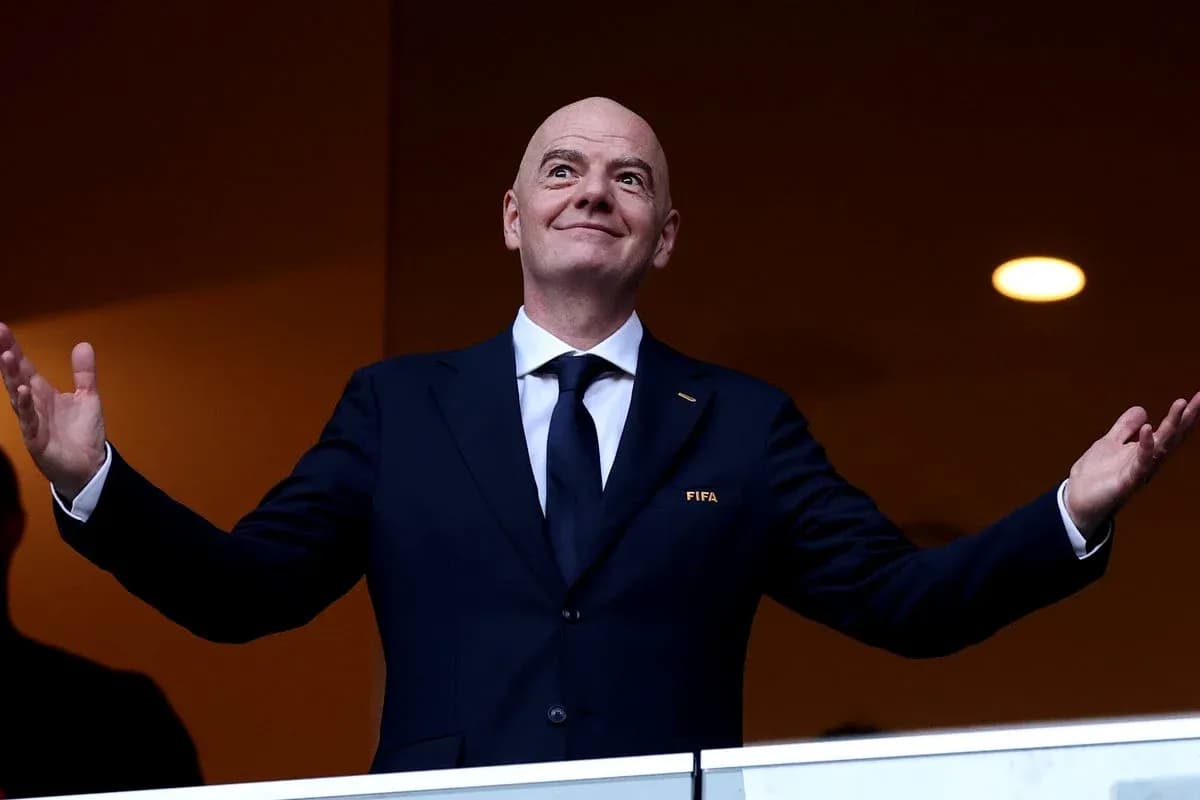
This latest storm did not creep up on the game. It was detonated by Gianni Infantino.
The president either floated a radical plan to effectively sell off the World Cup without properly telling anyone, or he tried to push through a coup on the sport itself. Take your pick. Both versions end in the same place: a global game thrown into chaos by a scheme that barely anyone inside Fifa – never mind outside it – was fully briefed on.
The “Fifa Forward Enterprise proposal” was presented to the world as if it had broad backing. It did not. Confederations were blindsided. National associations were furious. Clubs, players, fans, even senior Fifa staff such as chief operating officer Kevin Lamour and head of global football development Arsène Wenger were left on the outside looking in.
It was a plan so secret that, as critics have pointed out, it seemed to be known only to a tight inner circle and members of the Kushner family. Those who were expected to rubber-stamp it were reportedly promised more Fifa money than those who resisted. To many, that looked perilously close to a financial incentive for compliance. The word “bribery” never appears in Infantino’s communications, but it hangs over the whole affair.
Orwell in Rabat
When the backlash came, it was fierce and it was broad. A number of the 211 member associations, whose only elected representative at the top table is the president himself, began openly calling for Infantino to go. Others lined up against the proposal. The governing body had managed something rare in modern football: it united huge swathes of the sport, just not in the way it intended.
So Fifa retreated. The proposal was taken off the table after what was described as a “constructive and positive meeting held in Rabat, Morocco”. The statement that followed stretched the limits of Orwellian language.
“Fifa’s top management is fully confident that the outcomes of today’s meeting will help restore confidence in the organisation,” Infantino and secretary general Mattias Grafström wrote in a joint letter.
Nineteen words that laid bare the delusion. The people who caused the crisis now believe they are best placed to fix it. The man at the centre of the storm wants to stay in charge and insists that his handling of it all will somehow rebuild trust.
“Mistakes made were acknowledged,” the letter claimed, in a message otherwise drenched in unearned optimism.
Then came the closest thing to an apology: “It was agreed that it was not the intention for the Fifa council and Fifa member associations to feel excluded from the process.”
Not the intention. Yet they were excluded. Entirely. A major restructuring of the sport’s biggest tournament was hatched in private and dropped on the game without consultation. If that is not intentional exclusion, what is?
The review Fifa will give itself
Infantino has now promised there will be no repeat. A review will be conducted. By whom? By the Infantino faction of Fifa, of course. The same inner circle that drove the proposal is expected to examine it and deliver the conclusions everyone can already predict.
To question this is, in Fifa’s eyes, to attack its integrity.
“It was agreed that Fifa will no longer tolerate any attacks on its integrity, good governance and due process and will take all necessary measures to protect and safeguard its name and reputation,” the letter continued.
The sensitivity that has long been visible in Infantino’s public pronouncements, including his Instagram posts, now seems to define the organisation. Criticism is not a sign that something is wrong. It is an assault to be repelled.
The comparison with Donald Trump is hard to ignore. The former US president has built a political persona around being the victim of unfair attacks. Fifa now casts itself in the same role: persecuted, misunderstood, under siege.
A reputation already lost
The problem is that the reputation Fifa wants to “safeguard” has already been dragged through the mud under Infantino’s regime.
This is the administration that intervened to quash suspensions for Cristiano Ronaldo and Folarin Balogun. The one that bent its own rules to ensure Lionel Messi’s Inter Miami could appear in the Club World Cup. The one that allowed the United States to bar Somali referee Omar Artan from entering the country, without a convincing defence of a match official caught in the middle of geopolitics.
This is the presidency that cultivated a warm relationship with Trump and then introduced a “peace prize”, only to hand it to a man who went on to launch an illegal war.
Fifa has become a shorthand for greed. In the United States, ordinary fans did not just complain about ticket prices; they blamed Fifa by name for the sky‑high cost of watching the game they love. The governing body did not look like a neutral custodian. It looked like a commercial machine that tilted towards whichever political power could offer it the most.
Preferential treatment for the Trump administration. Decision‑making that seemed to bend under pressure from the White House. A strategy to carve up and sell the World Cup that was pushed without most of the football world even knowing. This is not how you represent a global sport. It is how you alienate it.
What real reform would look like
Fifa insists it can restore confidence. It cannot do it with letters from the same office that caused the damage. It cannot do it by declaring that criticism is now off limits. It certainly cannot do it by pretending that the only real issue is the tone of the debate.
If the governing body is serious about its reputation, the route is obvious and brutally simple: honesty and new leadership. Transparency instead of secrecy. Consultation instead of ambush. Accountability instead of self‑praise.
The latest dispatch from Infantino’s Fifa offered none of that. It offered a familiar message instead: trust us, we know what we’re doing.
The rest of football has to decide how much longer it is willing to believe that.