FC Cincinnati II vs Chattanooga: A Tactical Breakdown
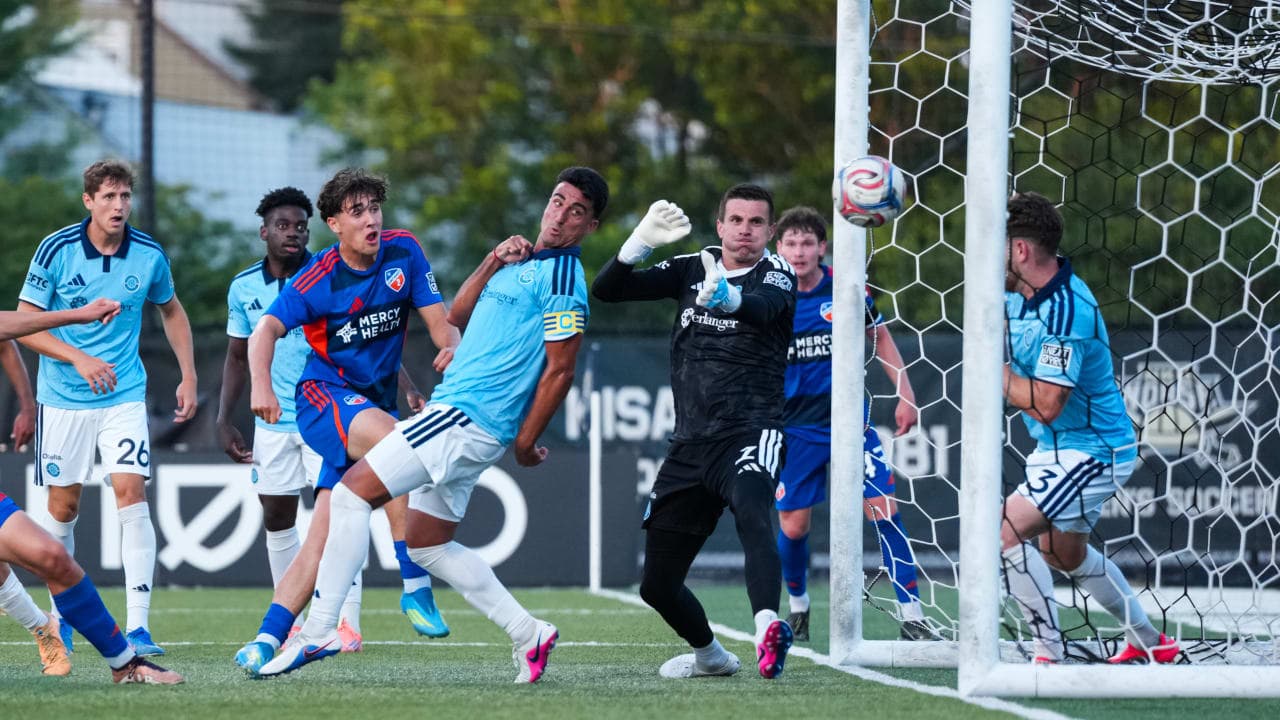
The lights at NKU Soccer Stadium had barely cooled when the story of FC Cincinnati II 1–3 Chattanooga began to crystallize. This was not just another Group Stage date in MLS Next Pro; it was a clash between a side clinging to its home identity and another accelerating toward the Eastern Conference play-off picture.
Heading into this game, FC Cincinnati II were a paradox. Overall, they had taken 9 points from 10 matches, with a goal difference of -7 (12 scored, 19 conceded). At home, though, they were a different animal: 3 wins from 5, 10 goals for and 7 against, averaging 2.0 goals for and 1.4 against. On their travels, Chattanooga arrived with the sharper edge in the standings: 16 points from 10 overall, a positive goal difference of 2 (18 for, 16 against), and a respectable away record of 2 wins from 5, scoring 8 and conceding 7, at 1.6 goals for and 1.6 against on the road.
Yet the narrative on the night was brutally simple: Chattanooga killed the contest in the first half. The 3–0 half-time scoreline underlined a ruthless efficiency that belied their inconsistent form line of WWLLW. FC Cincinnati II, whose broader form read LLLLWLWWLL, again found themselves chasing a game from a position of damage control.
I. The Big Picture: Styles Colliding
Cincinnati’s season-long DNA has been defined by volatility. Overall, they score 1.2 goals per match and concede 1.9. At home, their attacking numbers are bold—2.0 goals per game and not a single match at NKU where they failed to score—but the defensive structure remains fragile. Their heaviest home defeat, a 1–3 scoreline, foreshadowed exactly what unfolded against Chattanooga.
Chattanooga, by contrast, are built around sharp, decisive moments. Overall they average 1.8 goals for and 1.7 against, with both home and away profiles hinting at open, high-risk football. On their travels, their biggest win is 3–1, and their heaviest loss is a 3–2 defeat—scorelines that scream transition chaos and opportunistic finishing.
At NKU, that contrast played out early. Chattanooga’s front unit, spearheaded by the likes of D. Barker and supported by the creative lines of D. Mangarov and Y. Cohen, pressed Cincinnati II’s back line into rushed decisions. With no formal formation data provided, we read the structure through the personnel: a spine of E. Jakupovic in goal, F. Sar-Sar and M. Hanchard as central defensive pillars, and S. Louis anchoring midfield. It was a group clearly drilled to win the first half and manage the second.
II. Tactical Voids and Discipline
There were no listed absences or questionable players, so both coaches had their full squads at their disposal. That made the selection choices more revealing.
For Cincinnati II, B. Dowd, flanked by a defensive cast including F. Samson, S. Lachekar, W. Kuisel, and C. Holmes, struggled to impose any early control. The midfield band of D. Hurtado, M. Sullivan, and L. Orejarena never quite stemmed Chattanooga’s vertical surges, leaving A. Chavez, M. Vazquez, and S. Chirila feeding on scraps.
Disciplinary patterns this season hinted that tension would play a role. Heading into this game, Cincinnati II’s yellow cards were spread across the match, but with noticeable peaks in the opening 15 minutes and immediately after half-time—both at 21.74%—and a late-game flare-up of red at 76–90 minutes (100.00% of their reds in that window). Chattanooga, meanwhile, were more combustible in the middle phases: 27.27% of their yellows between 31–45 minutes, and 22.73% each in the 61–75 and 76–90 ranges, plus red cards clustered in the 61–75 and 76–90 zones (50.00% each).
In a match where Chattanooga had already built a 3–0 cushion by the break, these patterns shaped the second half: Cincinnati II needed aggression without self-destruction; Chattanooga needed to manage their tendency to pick up late cards while defending a lead.
III. Key Matchups: Hunter vs Shield, Engine Room vs Enforcer
Without explicit top-scorer data, the “Hunter vs Shield” duel becomes conceptual rather than individual. For Cincinnati II, the “Hunter” was their home attack—10 goals in 5 home matches—testing a Chattanooga away “Shield” that concedes 1.6 per game on the road. On the night, that contest only truly came alive after the interval, when Cincinnati II finally breached E. Jakupovic to make it 1–3. But by then, Chattanooga’s early storm had already broken the game.
In midfield, the “Engine Room” battle hinged on how Cincinnati’s trio could cope with Chattanooga’s central operators. S. Louis, flanked by L. Husakiwsky and the technical presence of D. Mangarov, acted as Chattanooga’s enforcer and distributor. They repeatedly found pockets between Cincinnati’s lines, forcing Dowd’s defense to retreat deeper, compressing the space for Cincinnati’s forwards to counter.
Cincinnati’s bench—featuring energetic options like D. Mosquera, C. Sphire, and C. Niang—offered potential course corrections. But every substitution vector, where [IN] replaced [OUT], was working against the scoreboard rather than shaping it. Chattanooga, in contrast, could introduce fresh legs such as A. Gordon, A. Garcia, or F. Amoateng to protect transitions and stretch counters, reinforcing a game state already in their favor.
IV. Statistical Prognosis and What It Tells Us
Following this result, the underlying numbers feel brutally coherent. Cincinnati II’s season-long defensive average of 1.9 goals conceded overall and 2.4 away underscored their fragility; at home they had been tighter at 1.4, but conceding 3 here fits the broader pattern of a side that can be overwhelmed when the first press is bypassed.
Chattanooga’s offensive profile—1.8 goals per match overall, 1.6 away—was slightly outperformed by the first-half blitz, but not by much. Their defensive average of 1.7 overall and 1.6 away made a single concession at NKU perfectly plausible, especially once game state dictated a deeper block and more conservative risk-taking.
In xG terms, the contest almost certainly tilted toward Chattanooga early, with high-quality chances in transition and in the box. Cincinnati II’s late surge and lone goal would have nudged their xG upward after the break, but the structural story remains: Chattanooga generate enough clear looks to live with a high defensive line, while Cincinnati II still rely heavily on home attacking bursts to mask a leaky rearguard.
As the MLS Next Pro Group Stage grinds on, this match reads like a tactical warning. FC Cincinnati II must tighten their first-half defensive schemes and better protect their vulnerable phases around the half-hour mark. Chattanooga, meanwhile, leave NKU Soccer Stadium with a statement win that aligns neatly with their numbers: dangerous, direct, and increasingly playoff-relevant when the stakes resemble a 1/8 final long before the knockouts officially begin.