Everton's Season Collapse: From European Dreams to 13th Place Finish
For much of last season, Everton’s gaze was fixed upwards.
Jack Grealish arrived on loan and lit the place up. Kiernan Dewsbury-Hall kept deciding tight games almost by himself. Thierno Barry and Beto, written off early, found their range and their rhythm. On 21 March, a 3-0 dismantling of Chelsea at Hill Dickinson Stadium pushed Everton up to eighth, three points off the Champions League places with seven to play.
The fanbase started to look at flight schedules, not relegation permutations.
Then the season fell apart.
Everton did not win another game. Not one. It became the longest winless run since David Moyes walked back through the doors at Finch Farm in 2025. A 2-2 draw at Brentford on 11 April, a result that looked acceptable at the time, proved to be the start of a slide that dragged them into the bottom three on form over the remainder of the campaign. Only relegated Burnley and Wolves matched their inability to win during that stretch.
The collapse did not immediately kill the dream. By the time Sunderland arrived on Merseyside for the final home match of 2025-26, European football was still within reach. In his programme notes, CEO Angus Kinnear chose the phrase “happily dissatisfied” to describe the season. It jarred, a strange mix of contentment and complaint, and looked even more misplaced after promoted Sunderland strode away with a 3-1 victory.
Sunderland finished seventh and booked a first European campaign in 53 years. Everton were left to pick through the wreckage of another 13th-place finish.
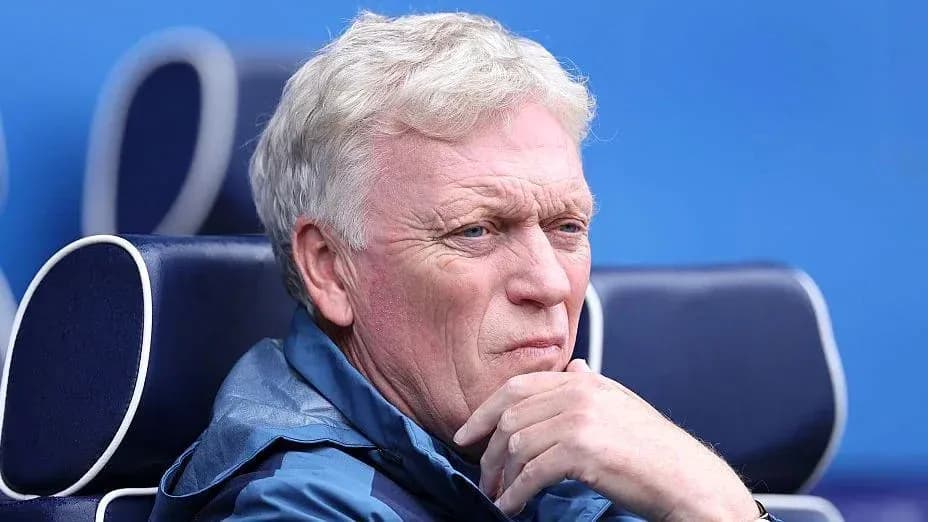
That, for Moyes, is the sting. Two seasons back in charge. Two 13th-place finishes. But two very different stories. When he returned 18 months ago, Everton were a point above the drop. They ended that first half-season 23 points clear of danger. Stability, at last, after years of financial breaches, points deductions and survival scrapes.
Last summer, armed with a record net spend of £97m under the Friedkin Group, Everton went again. New stadium, new money, new faces. Same league position, just one extra point.
To some, that feels like stasis. To Leon Osman, who played under Moyes and now watches the club’s every twitch, it still looks like a step forward.
“When David Moyes first came in, we flew out the blocks and had a great start,” he said. That surge lasted for more than a year before the first real dip arrived at the end of last season. Osman still calls it progress. Progress with a bruise.
Moyes, 63, has been blunt about the financial arms race at the top of the Premier League. Everton’s net spend over the past five years ranks only 15th among current top-flight clubs. The problem is that others are doing more with less. Bournemouth actually made a profit of £81m in last summer’s window and finished sixth. Brighton took £41m more in than they spent and still ended up eighth.
Everton’s grand move to the Hill Dickinson Stadium was supposed to change the mood, if not the balance sheet. Instead, it exposed a strange split personality. Their home return of 1.2 points per game was the worst by any club in Premier League history in the first season at a new ground. Away from home, they looked like a European contender, ranking in the division’s top seven on the road.
Osman argues that Bournemouth and Brighton are “further along in their development” than an Everton side still finding its feet in new surroundings after years of chaos. He also draws a straight line from Grealish’s January injury to the spring collapse.
The numbers back him up. With Grealish in the side, Everton won 45% of their matches and averaged 1.6 points per game. Without him, the win rate was sliced in half to 22%, and points per game dropped to one. The creative heartbeat went missing and the rest of the body never quite adjusted.
“David Moyes is an intense manager and by the end of the season, a small squad couldn't quite last,” Osman said. The legs went. So did the edge.
Yet the mood around the club is not one of outright alarm. “Changes take time,” Osman added. The word “relegation” barely surfaces now, which in itself is a measure of how far Moyes has dragged Everton from the brink. The manager has 12 months left on his contract. Osman expects him to see it out.
The question is what he can do with it.
Recruitment remains a live issue. Under Farhad Moshiri, eight players signed for at least £20m left for nothing. That era of waste still casts a long shadow. The Friedkin Group’s first proper window brought nine signings and a clear tilt towards youth, but the returns so far are mixed.
Grealish and Dewsbury-Hall have been undoubted hits. Around them, the picture blurs. Tyler Dibling, a £35m winger from Southampton, started only six league games. Adam Aznou, the young left-back signed from Bayern Munich, is still waiting for a Premier League debut. Barry, 23, dominated in the air more than any other player in his first top-flight campaign, yet lacked the ruthlessness to turn that dominance into a steady flow of goals. Merlin Rohl needed months to find a place in Moyes’ plans, then suddenly impressed with four strong starts in May.
There is also the matter of who stays. BBC Radio Merseyside’s Giulia Bould reports that Grealish is expected to return on loan later in the window as he continues to recover from a stress fracture in his foot, with wages around £200,000 per week. Iliman Ndiaye, one of Everton’s brightest attacking sparks, has been linked with a move to Saudi Arabia.
Osman would welcome Grealish back, but only on terms that make sense for a club still repairing its finances. Ndiaye, he insists, is the kind of player Everton should fight to keep, unless a fee arrives that can be flipped into “two or three players” of genuine impact.
Experience is draining away. Seamus Coleman and Idrissa Gueye depart with more than 600 Premier League appearances between them, a loss that helps explain Everton’s interest in a leader like Christian Norgaard. James Garner, a key figure in midfield, will miss the start of the season after groin surgery.
All of that leaves Moyes in an awkward position. He may have to lean on the very youngsters he has been slow to trust.
“They need to show they're capable and deserve to play,” Osman said. That is the challenge now for Dibling, for Youssef Chermiti, for Ishe Samuels-Smith, for the next wave trying to force their way in. “I'm hoping that a year in, understanding the demands that are required, players like Dibling and George will make that progression and then suddenly our squad looks more trustworthy.”
Everton stand at a familiar crossroads: ambition on paper, scars on the pitch, a manager who has steadied the ship but not yet changed its course. The table says mid-table. The mood says something more fragile, and more volatile.
The next 12 months will decide which one tells the truth.