Enzo Maresca's Challenge at Manchester City: A New Era Begins
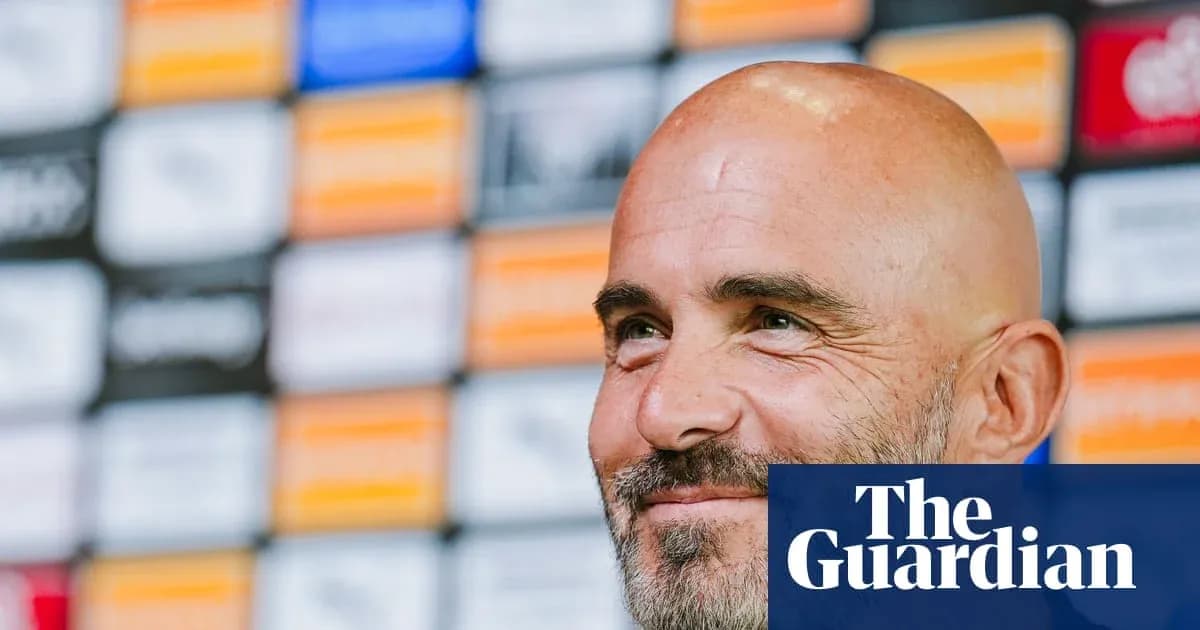
Enzo Maresca walked into Manchester City looking like a man back from holiday rather than one about to inherit the most intimidating job in English football. Relaxed, tanned, smiling. Then his first words cut straight through the sunshine.
“Before we start, I would like to send a message and a big hug to Kevin Keegan’s family for this moment,” he said, paying tribute to the former City manager after his death on Monday.
A soft opening. A hard reality.
Keegan’s name carries weight at City, but it also drags in an old rivalry. At Newcastle he went head‑to‑head with Sir Alex Ferguson, the man who defined an era at Manchester United, the club Maresca now has to beat to keep City on their perch. So when the Italian, sitting in the seat Pep Guardiola occupied for 10 gilded years, chose to reference Ferguson and Arsène Wenger unprompted, it was clear he understood exactly what he was walking into.
How do you follow a manager who won 20 trophies in a decade and sits in the same pantheon as Ferguson? You confront it. You say the quiet part out loud.
“The history of the manager with many years in the same club always struggled a little bit. After Sir Alex, after Arsène,” Maresca said. “But also, it’s a challenge to try to do the right things immediately for this organisation, for the fans, for everyone.”
The elephant in the room, named and nudged, if not yet tamed.
A club that does not panic
Behind Maresca, a giant “Welcome back Enzo” banner filled the backdrop. City framed this as a homecoming. He ran their elite development squad in 2020-21 and returned as Guardiola’s assistant for the treble season of 2022-23. He knows the corridors, the faces, the expectations.
He also knows the goodwill will evaporate quickly if results turn. Especially in a fanbase that has grown used to perfection.
So he reached for something City believe sets them apart: stability at the top.
“This club has had three managers in 17 years,” he pointed out. “This is not normal, so this is one of the things that I’m confident we can do a great job and continue to do the job that has been done in the last years. Roberto [Mancini] was here, then Manuel [Pellegrini] and then Pep – for 10 years.”
Mancini arrived in December 2009 and left in 2013, his reign volatile and often fraught, a style that jarred with chairman Khaldoon al-Mubarak and chief executive Ferran Soriano. Pellegrini was the opposite: calm, understated, a steady hand. Then came Guardiola, who turned City into a machine and the Premier League into his playground.
Al-Mubarak and Soriano know Maresca well from his previous spells at the club. They have seen him on the training pitch, in the building, in pressure weeks. They clearly believe he offers a blend of football intellect and emotional balance they can trust.
Yet his last job did not end quietly. His departure from Chelsea on New Year’s Day came with an apology from him and a £17m compensation cheque from City to the west London club. When the subject was raised, the shutters came down for the first and only time.
“I feel quite lucky in terms of my former clubs – Leicester, Chelsea – I think we did a great job,” he said. “In both clubs, the identity of the team was clear, the success of the team was clear, and I feel very lucky to be part of these clubs. But now we are here today. That is the most important thing, just about City. And nothing to add.”
No elaboration. No defence. Just a full stop.
A CV built for the elite
Maresca arrives with more than a glowing reference from Guardiola. He has recent, hard evidence of winning.
At Leicester he delivered the Championship title. At Chelsea he dragged a drifting giant to fourth in the Premier League, added a Conference League trophy, then underlined his credentials by lifting the Fifa Club World Cup last summer with a ruthless 3-0 dismantling of Paris Saint-Germain in the final. That night, on the global stage, may well have sealed his return to Manchester.
He did not shy away from the scale of his ambition at City. He spoke of “titles” for the coming season, not transition or consolidation.
The club have already armed him. Elliot Anderson has arrived from Nottingham Forest for £116m to add legs and incision in midfield. There is interest in Lille’s Ayyoub Bouaddi, a standout for Morocco at the World Cup, to deepen that area even further. Malo Gusto, one of his right-backs at Chelsea, remains on the radar. If Omar Marmoush moves on, City will go hunting for a similar pacy forward to stretch defences.
The plan is clear: refresh without ripping up, evolve without panic.
The Rodri question
One player Maresca has no desire to see refreshed, replaced or even discussed in those terms is Rodri. The midfielder has just lifted the World Cup with Spain, collecting the Golden Ball as the tournament’s outstanding player. In a domestic game that grows faster and more frantic by the season, his ability to slow the chaos and control a match is priceless.
Rodri, now 30, will undergo surgery on a back problem on Monday. The word from City is that it is not too serious, but serious enough to rule him out of the opening weekend when Bournemouth visit the Etihad.
That is a short-term concern. The long-term one sits on the calendar: 1 September, transfer deadline day. Real Madrid are watching a player with a year left on his contract who has so far declined to sign the new terms on offer. City insist they want him to stay. The market, and Madrid’s resolve, will decide how loud that story becomes.
For Maresca, who has built teams around control and structure, losing Rodri would be like removing the spine from his blueprint.
Asia tour, then the real thing
Before any of that, there is work to do. On Tuesday, City fly to Asia for a pre-season tour that will test Maresca’s methods against serious opposition: Inter in Hong Kong, then K-League All Stars and Atlético Madrid in Seoul.
He will finally be reunited there with the club’s A-listers who exited the World Cup early. Josko Gvardiol, Mateo Kovacic and Abdukodir Khusanov are among those rejoining the group.
“I’m working at the moment with many young players,” Maresca said. “That is always good because they are full of energy and some of them are very good. The last group of players are going to join three or four days before the Community Shield and we will have all the squad.”
That Community Shield, against Arsenal in Cardiff on Sunday 16 August, will be the first real glimpse of what a Maresca City looks like when the stakes rise. After that, the attempt to succeed Guardiola stops being theoretical.
A new version of City
Maresca knows he cannot simply photocopy Guardiola’s playbook. Opponents have adjusted. The game has shifted. So has he.
“You need to adapt, evolve,” he said, talking about his style. “Set pieces, man to man – it’s a little bit the direction where football is going. We managers, it’s our duty to find solutions.”
Guardiola’s decade at City was defined by answers: to deep blocks, to pressing traps, to fixture chaos. Maresca now steps into that shadow with his own ideas, his own scars, his own conviction that he can keep this team at the summit while the landscape changes around them.
The banners say “Welcome back.” The reality is harsher.
He is not just coming back to City. He is walking into the most demanding succession act in modern football. Now we find out whether he has the solutions to match the scale of the question.