England's World Cup Exit: Tuchel's Tactical Choices Under Scrutiny
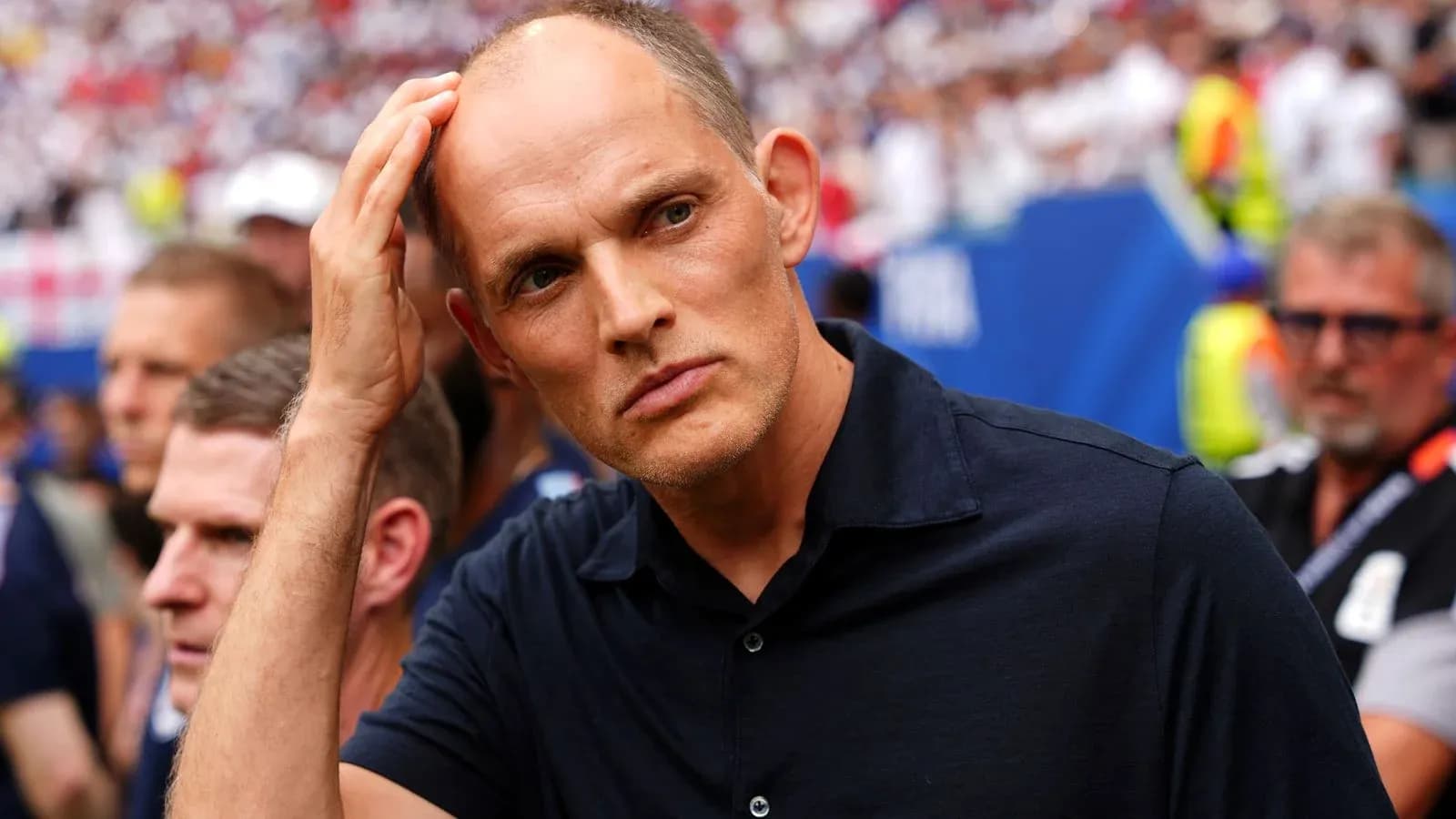
England’s World Cup exit to Argentina will be remembered for the late goals, the Messi surge, the Martinez dagger in stoppage time. Inside the dressing room, though, the conversation has fixed on something else: Thomas Tuchel’s substitutions, and a game plan that some of his own players felt dragged them towards defeat.
Defensive wall that trapped England in
Anthony Gordon’s opener on 55 minutes should have been the launchpad. England had targeted Argentina’s full-backs all week, built their attacking identity in this tournament on speed and width, and it paid off: Morgan Rogers on the right, Gordon on the left, a sweeping move and a finish that briefly silenced the Albiceleste.
Then the game tilted.
Argentina began to swarm, Messi drifting into clever pockets, the pressure climbing with every attack. As England sank deeper, Tuchel made his first big call: Gordon off, Ezri Konsa on, a shift to a back five with more than half an hour still to play.
Inside the camp, that change raised eyebrows. Sky Sports News understands more than one senior player was left bemused, convinced the switch blunted England’s threat and invited Argentina on. The side that had spent the tournament stretching teams suddenly had one fewer outlet and an extra centre-back.
The pattern worsened. Ten minutes later Declan Rice, who had battled through illness and fitness issues all tournament, was replaced by Nico O’Reilly. On paper, it added legs. On the pitch, it left England with six defenders on the grass, four of them natural centre-backs, and a team shape that screamed survival rather than control.
Harry Kane dropped deeper to help repel wave after wave of Argentina attacks, often defending on the edge of his own box. That left England with no one to hold the ball up, no one to spin into the channels, no one to run the flanks that had been identified as Argentina’s soft spot.
The numbers tell the story. Between Gordon’s goal and Lautaro Martinez’s stoppage-time winner, England had just 12 per cent possession. For a side that had led a World Cup semi-final, they barely touched the ball.
Wings clipped, bench unused
The irony was hard to ignore. Tuchel’s England had been built around pacy wide men, yet with the game slipping away, the wings stayed empty.
Noni Madueke, Bukayo Saka and Eberechi Eze remained seated, watching as the team retreated further and further. Marcus Rashford was finally sent on in the 96th minute, by which time Enzo Fernandez and Martinez had already completed the turnaround. Rashford entered a match that had effectively gone.
Those inside the squad who questioned the approach felt England had boxed themselves in. Without an out-ball, the defence never had a chance to breathe. Every clearance came straight back. Every regained possession felt like a brief interruption to another Argentine attack rather than the start of an English one.
Tuchel stands firm on tactics – and English ‘DNA’
Speaking afterwards, the England head coach insisted the problem ran deeper than an in-game tweak. He had not yet reviewed the match in detail, but pointed instead to what he sees as a wider, systemic flaw in English football.
Under intense pressure, he argued, English players struggle to keep the ball as well as their Spanish, Argentinian or Brazilian counterparts. The issue, in his view, lay not in the switch to a back five but in England’s inability to retain possession when Argentina went to a bold 4-2-4, introduced Nico Gonzalez on the left and moved Messi to the right.
Tuchel’s intention, he said, was clear: shore up the box, cut out the crosses, close down the spaces that Argentina were beginning to exploit. From his perspective, the defensive reinforcement was a logical response to an opponent throwing everything forward.
Some of his players did not agree. They believed the substitutions were too negative, that the tactical retreat stripped them of any chance to control the tempo or relieve pressure. The sense among those dissenting voices was that England had defended too long, too deep, and with too little ambition.
What they make of Tuchel’s comments about a weakness in English football’s DNA remains to be seen. That debate, about identity and technical ceiling, will not end with one semi-final.
No split – and no exit
What this is not, though, is a mutiny. There is no suggestion of a rift in the England squad, no fracture between dressing room and dugout. Tuchel remains a hugely popular figure with the players, an authoritative leader whose methods and personality still carry weight.
He also retains the full backing of his FA bosses despite the defeat. The message from the top is consistent: Tuchel stays. The coach himself has been unequivocal, declaring he is “100 per cent” committed to leading England into Euro 2028, when the country will share hosting duties with Scotland, Wales and the Republic of Ireland.
The semi-final in Argentina will linger, not only for the goals conceded but for the choices that framed them. The question now is whether Tuchel doubles down on his vision of what English football should become – or whether the voices in that dressing room force a rethink before a home tournament that will tolerate no such tactical retreat.