England's World Cup Journey: Facing DR Congo in Knockout Stage
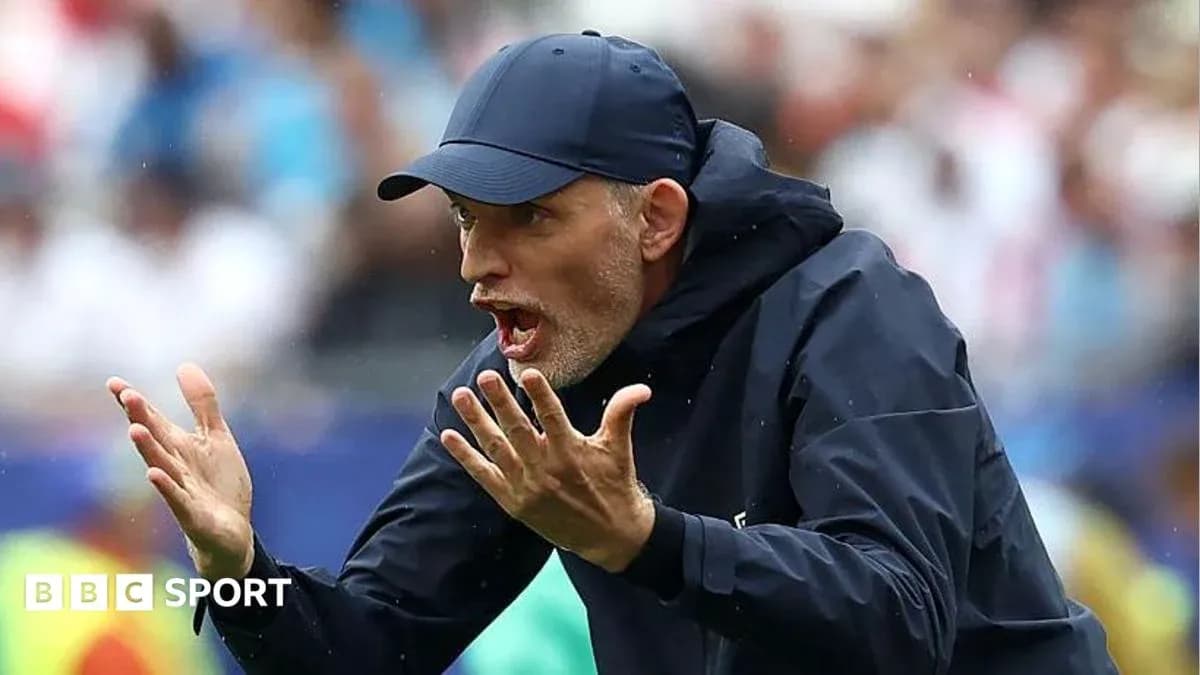
Thomas Tuchel has always loved a storyline. Now his England team walk into the part of the script where one wrong line ends the entire production.
The head coach calls it “the third chapter” of his World Cup plan. Miami was the prologue, the training camp where he drilled, tweaked and talked about ending 58 years of hurt. Group L, topped with a game to spare, was chapter two – efficient, sometimes dull, rarely thrilling. Croatia beaten, Panama beaten, Ghana endured.
Now the book changes genre. No safety net. No second chances.
On Wednesday in Atlanta, against DR Congo, England step into knockout football with the sense this World Cup is tilting towards chaos. Germany out to Paraguay on penalties. The Netherlands ambushed by Morocco. Brazil needing Gabriel Martinelli in stoppage time to survive Japan. The giants are wobbling.
Tuchel insists England will not join them.
A Fragile Back Line in a Ruthless Tournament
For all the talk of chapters and destiny, one truth stalks England’s campaign: their defence looks like the weak seam in an expensive suit.
Wayne Rooney summed it up bluntly on BBC Sport: “The area of the pitch you want stability in is your goalkeeper and back four. With the back four we haven't had that.”
He is right. The warning lights flashed even before a ball was kicked. Tino Livramento never made it to the World Cup. Reece James arrived with a medical file as thick as a playbook and, sure enough, his hamstring gave way against Croatia. Tuchel said he was surprised. Few others were.
The situation worsened when Jarell Quansah, James’ deputy, limped off against Panama. One position, right-back, suddenly looked like a trapdoor.
James and Quansah are both out of the DR Congo tie. Tuchel insists “they are getting closer and closer”, with Quansah “a bit ahead” of James, but that does not help him in Atlanta. For now, Djed Spence is the last specialist right-back standing. The alternative is to drag Ezri Konsa across and reopen the debate about John Stones.
Stones, once the automatic pick, is now a puzzle. Tuchel started him alongside Konsa in the 4-2 win over Croatia, then dropped him for Marc Guehi. Part of the caution stems from the defender’s season: just five Premier League starts before leaving Manchester City. James, another cornerstone of Tuchel’s ideal XI, only started 20 league games for Chelsea.
Tuchel’s preference for versatility – full-backs who can flip sides, centre-backs who can step wide – has left England with flexibility on paper and fragility in practice. It is the sort of idea that looks clever in a tactics seminar and brutally exposed when Vinicius Jr is running at you in a potential quarter-final in Miami.
If England do reach that stage, Tuchel will want a fully fit, specialist right-back. At the moment, he is left hoping his optimism about James’ recovery is more than wishful thinking.
The Non-Negotiables: Rice, Kane, Bellingham
If the back four is a moving target, the spine in front of it is not. Jordan Pickford remains the one fixed point in goal. Ahead of him, three names have become untouchable: Harry Kane, Jude Bellingham and, more than ever, Declan Rice.
Tuchel’s rotation has been pragmatic. He wrapped Rice in cotton wool for the Panama game, aware the Arsenal midfielder was on a yellow card and nursing a hamstring problem, with a sore calf from the Ghana match thrown in. England still won, but the performance told its own story.
Panama took 13 shots. Thirteen. They broke on England with alarming ease. Elliot Anderson fought a losing battle in central midfield, outnumbered and overworked as Bellingham and Morgan Rogers pushed on. The attacking gamble paid off in moments, yet it left a hole in front of an already uncertain defence.
A better side than Panama would have torn it open.
That 90 minutes underlined Rice’s importance as starkly as any highlight reel. He is not just a screen; he is the organiser, the tempo-setter, the man who reads danger before others see it. He builds attacks, he kills counters, he delivers from set pieces. He is, quite simply, the one player England cannot replace.
Remove Kane and England lose their focal point. Remove Bellingham and they lose their spark. Remove Rice and they lose their structure. In a tournament of thin margins, that is the most frightening scenario of all for Tuchel.
Saka, Fitness Calls and the Fine Print of Knockout Football
Selection now becomes an exercise in risk management. Bukayo Saka, eased into the tournament because of an Achilles problem, started against Panama and lasted 63 minutes. He brings incision and balance from the right, but every extra minute on the pitch is a calculated gamble with his body.
Tuchel knows the equation. “We know these are the moments where we have to find ways to win. We need to dig in and to play at the highest level,” he said in Atlanta. England, he added, are “the favourites” against DR Congo and “play against our own expectations”.
That last line matters. This team expects to go deeper than the last 32. So does the country. Tuchel, never one to duck responsibility, accepts that weight. From here, his margin for error is as thin as his back-line options.
He cannot misjudge Rice’s fitness. He cannot get Saka’s minutes wrong. He cannot be caught between systems at the back. Every decision now carries consequence.
Lessons From Other Giants’ Falls
If anyone inside England’s camp needed a reminder of what happens when a favourite stumbles, they only had to glance at the other side of the draw.
Germany’s exit to Paraguay on penalties has left Julian Nagelsmann under siege, with a powerful lobby already calling for Jurgen Klopp. The Netherlands’ defeat to Morocco cost Ronald Koeman his job within 24 hours. One bad night, one misjudged game plan, and the fallout is immediate.
Tuchel sees the trend not as a reason to panic, but to sharpen focus. “There is no percentage of over-confidence in our approach,” he said. The round-of-32 ties, he argued, “speak a very clear language. It is very narrow margins.”
He is right. Brazil versus Japan looked like a quarter-final on paper. Netherlands against Morocco felt like a knockout tie from a later round. The badge on the shirt no longer guarantees anything.
“This is the nature of knockout football,” Tuchel said. “It can help us not to over-expect. Teams are well prepared. It is difficult for any team to break another down.”
The Setting and the Stakes
At least England will not have to battle the Atlanta heat. The closed roof and climate control of the $1.6bn Atlanta Stadium remove one variable from the equation. No draining humidity, no sapping sun. Just 90 minutes – or more – of pure football.
Up to now, England’s World Cup has felt like a controlled operation. A solid camp in Miami. Group winners. No drama beyond the goalless slog against Ghana. “Job done” has been the phrase attached to them.
That changes now. This is the point where favourites fall, where defensive lapses turn into headlines and where the absence of one midfielder can flip a tournament.
Tuchel has built this campaign on the idea of a story with a glorious final chapter. To reach it, his defence must hold, his key players must stay upright, and his own judgment must be flawless.
Against DR Congo, in a World Cup already littered with shocks, we find out whether England are authors of this story – or the next big name written into its list of casualties.