England vs Norway: World Cup Quarterfinal Clash in Miami
Miami will drip with heat and tension on Saturday night, the humidity rolling in off the water as England and Norway walk into a World Cup quarterfinal that feels bigger than the bracket suggests. One is a serial contender desperate to avoid yet another stumble in the last eight. The other is a resurgent outsider, riding a story that grows more improbable with every game.
England are chasing a fourth World Cup semifinal, trying to dodge an eighth exit at this stage. Norway, back on this stage for the first time since 1998, have already made history: first two knockout wins, Brazil sent home, and a nation suddenly believing again.
Now comes the collision. Haaland vs Kane. Odegaard vs Rice. And the Miami heat vs two squads built for cooler nights.
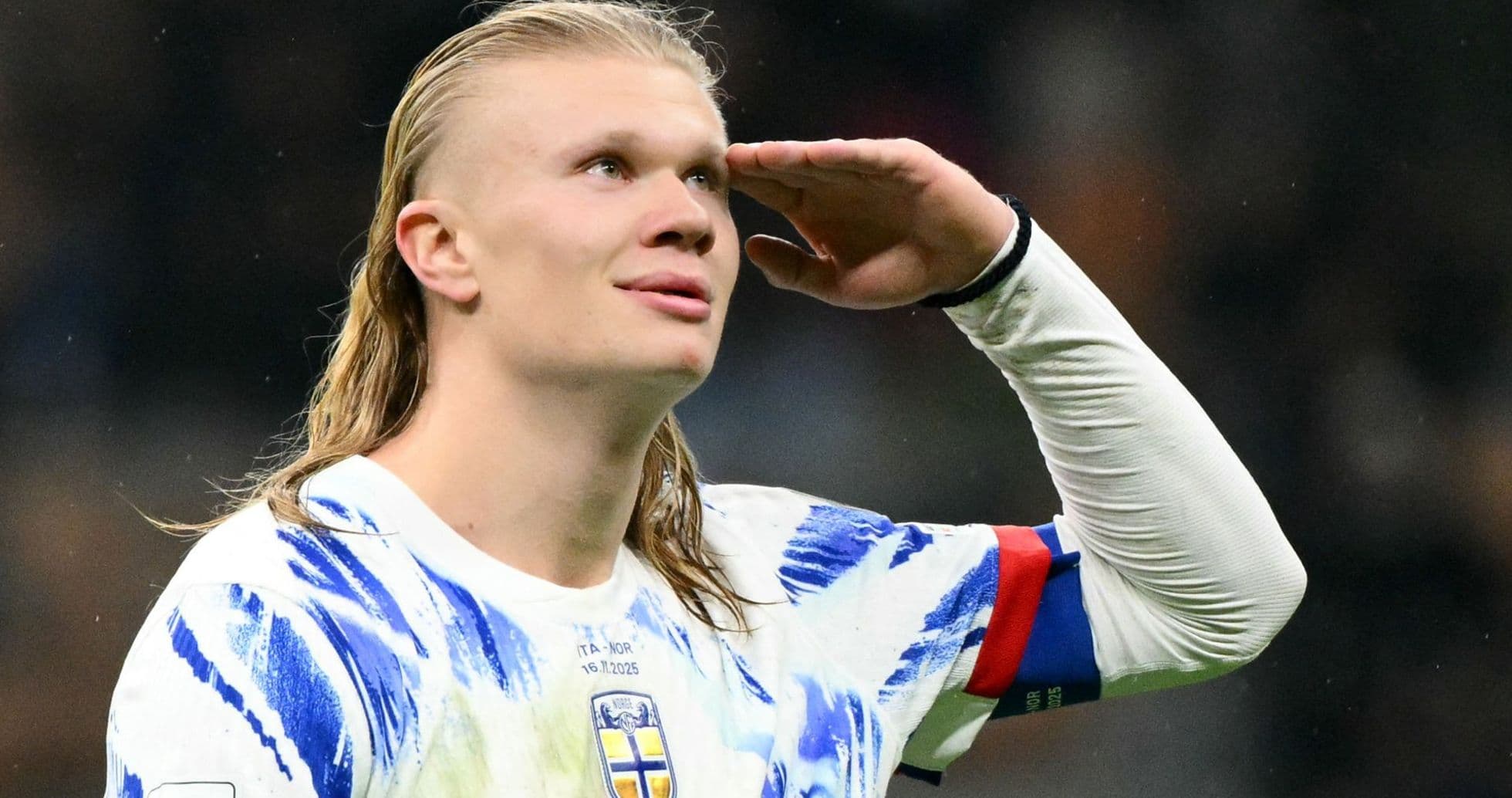
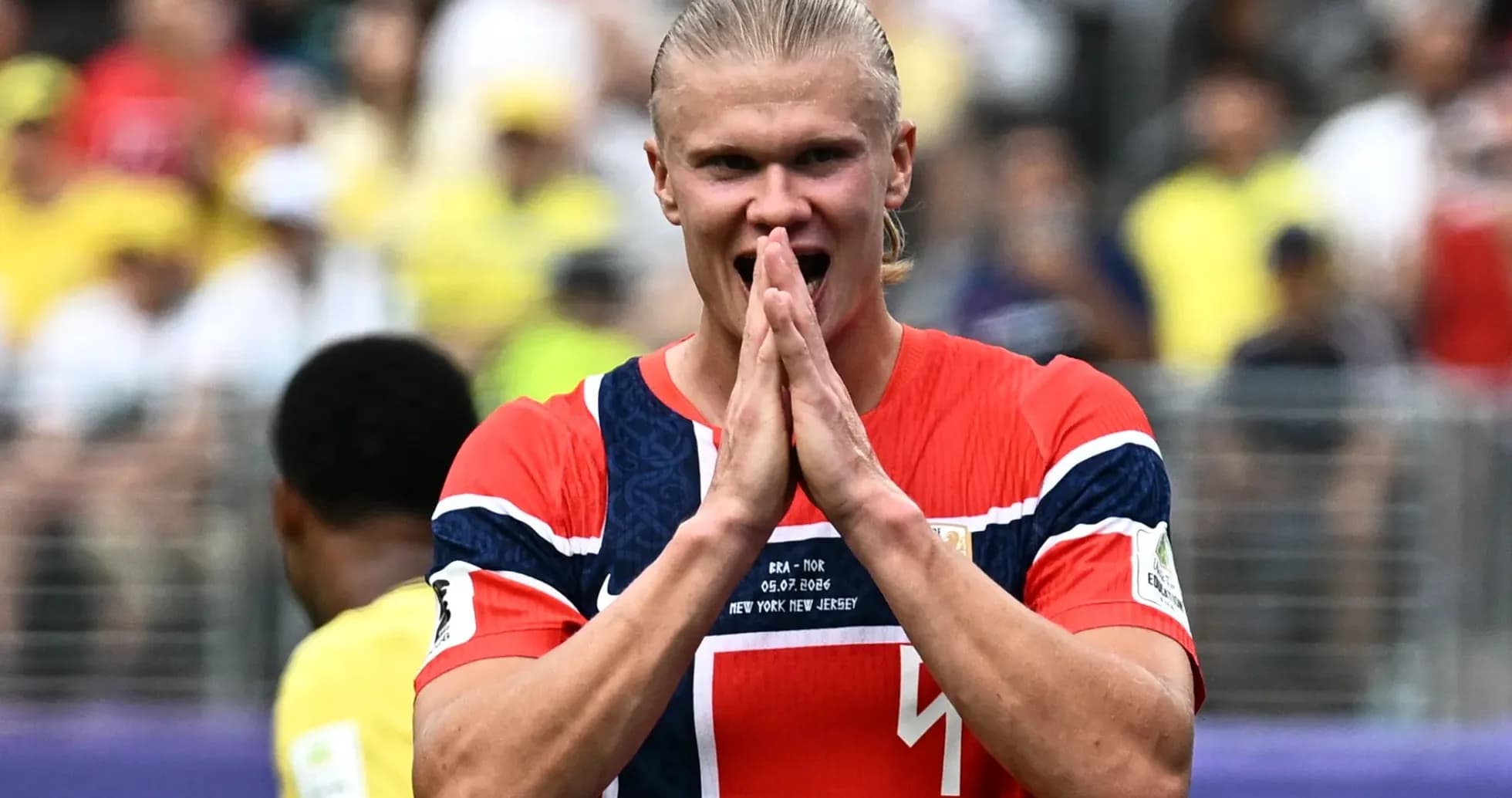
Haaland, Kane and a Golden Boot shootout
For the first time in this tournament, two of the Golden Boot frontrunners share the same pitch. No rotation, no resting, no hiding.
Stale Solbakken delayed this duel in the group stage, leaving Erling Haaland on the bench against Kylian Mbappe and France with qualification already wrapped up. Haaland had already scored twice against Iraq and twice against Senegal. The job was done; the star striker was protected.
He has been ruthless since. The winner against Ivory Coast in the first knockout game. Both goals in the 2-1 win over Brazil. Seven goals in four appearances at this World Cup, stretching his run to 14 consecutive Norway games with a goal – 27 in that spell, 62 in 54 caps overall. Those are video-game numbers.
At 25, he arrives in Miami one behind Mbappe and Lionel Messi in the Golden Boot race, and one ahead of Harry Kane.
Kane’s tournament has been a slower burn but no less decisive. Two goals in the opener against Croatia. One more in the win over Panama that sealed top spot. Both goals in the late turnaround against DR Congo in the Round of 32. Then the pressure penalty that proved the winner in that wild 3-2 victory over Mexico.
He is 32 now, but the instincts have not dulled. Like Haaland, he has three Premier League Golden Boots. Like Haaland, he has thrived in Germany. Their paths crossed only twice in England, in 2022/23, when Tottenham and Manchester City traded a win apiece and the strikers took a goal each.
This feels like the rubber match. Not in a league season, but on a World Cup stage, with the Golden Boot and the “best striker in the world right now” argument hanging in the thick Miami air. One moment, one finish, could tilt that debate.
The Haaland puzzle: does Burn hold the key?
Stopping Haaland is usually a theory exercise. England have data. And a giant.
Dan Burn’s selection in Thomas Tuchel’s squad raised eyebrows. A 6’7” centre-back who only made his England debut shortly before his 33rd birthday in March 2025, with just four starts – all against Andorra and Albania – in qualifying. It felt like a niche option.
On Sunday against Mexico, he became essential. Thrown on for the final 15 minutes, Burn turned into a one-man barrier. He headed everything. He threw himself into blocks. As England clung to a 3-2 lead with 10 men through a long, anxious period of added time, his presence shifted the tone of the game.
He is older than Haaland by nine years, slower over the ground, but he is also two inches taller and has already gone toe-to-toe with him in England. The numbers from those duels matter.
Since Haaland joined Manchester City in 2022, he has faced Burn eight times: six in the Premier League, two in domestic cups. Across more than 10 hours on the pitch together, Haaland has scored just once – their very first meeting, in August 2022.
For a striker who averages a goal every 73 minutes at international level, that is not a coincidence England can ignore.
Ezri Konsa has a similar record. Haaland has scored only once in 406 minutes against him, across five matches, and that goal also came in their first clash, against Aston Villa in September 2022.
These are rare outliers in Haaland’s career. He has 112 goals in 132 Premier League games across four seasons, with three Golden Boots to show for it. When defenders limit him, coaches remember.
By contrast, he managed seven goals in five matches against Marc Guehi before the Crystal Palace defender became a Manchester City teammate. And he has never faced John Stones in opposition, having shared a dressing room with him at the Etihad since his arrival.
Tuchel knows the patterns. The question is whether he trusts Burn’s awkward, towering presence in a World Cup quarterfinal, or sticks with a more orthodox pairing and risks giving Haaland the kind of space he usually punishes.
Odegaard vs Rice: the midfield fault line
If Haaland is the finisher, Martin Odegaard is the architect. Brazil discovered that the hard way.
The Norway captain carried the ball forward 61 times and completed 101 of his 109 passes in that last-16 upset. Brazil, as a whole, completed just 331 passes, at a far lower success rate, and were squeezed down to 33.6 percent possession – their lowest ever share in a World Cup match.
Norway turned a global superpower into passengers. Odegaard drove it.
England, remarkably, saw even less of the ball in their own last-16 thriller. Reduced to 10 men and forced deep by Mexico, they finished with a smaller possession share than Brazil had managed against Norway. It was the lowest England have recorded since such data has been tracked.
If they want to reach a first World Cup semifinal since 2018, and only their third since lifting the trophy in 1966, that has to change. That means breaking Odegaard’s rhythm.
Declan Rice should know how. He has stood alongside Odegaard in Arsenal’s midfield 117 times over the past three seasons. Together they ended the club’s long wait for a Premier League title and marched to a Champions League final. Few players on the planet understand Odegaard’s passing lanes and triggers as well as Rice.
But Rice is not at full tilt. Neural pain has nagged at his lower back and hamstring for months. Odegaard knows this too.
The workload tells its own story. Rice played 3,094 Premier League minutes this season; his England partner Elliot Anderson played even more. Odegaard logged just 1,369. The Norwegian arrives fresher, lighter, with more left in the legs.
If Rice cannot close those gaps as quickly as he does for Arsenal, if England’s midfield cannot lean on him to step up and disrupt, Odegaard will dictate again. And once he does, Haaland usually appears on the end of something.
Heat, humidity and survival
Miami does not care for reputations. It cares about hydration, lungs and who can keep running when the air feels like a wet blanket.
Neither England nor Norway come from climates anything like this. Yet their preparation has diverged.
Norway have lived in the heat more often. They opened in Boston against Iraq, then headed to New York/New Jersey to beat Senegal. Back to Boston for the defeat to France, where Solbakken rotated heavily, changing 10 players. Then came their one enclosed match, the win over Ivory Coast in Dallas, before returning to the heat and humidity of New York/New Jersey to topple Brazil.
England’s path has been kinder. Croatia in the closed roof of Dallas. A goalless draw with Ghana in rainy Boston. A 2-0 win over Panama in a wet New York/New Jersey. Then the air-conditioned comfort of Atlanta for the DR Congo tie. Even Mexico City, thunderstorm delay and all, brought cooler conditions than Miami will.
The two hottest group games of the tournament so far were both in Miami: Uruguay’s 2-2 draw with Cape Verde and 1-1 with Saudi Arabia. Saturday is expected to push those limits again: around 33C, 58 percent humidity, a 5pm local kickoff, and the threat of thunderstorms hanging over the stadium.
Tactics will matter. So will substitutions. But this quarterfinal may tilt towards whichever team can still sprint in the 85th minute, whichever full-back still has the legs to overlap or recover.
Norway’s left vs England’s right: a live wire of a duel
One flank, one problem: Norway’s left against England’s right.
Reece James is the only recognised right-back in Tuchel’s squad. He has missed the last three matches with a hamstring injury picked up against Ghana. Tino Livramento never even made it to kickoff, ruled out by a calf problem on the eve of the tournament.
Since then, England have improvised. Djed Spence, Ezri Konsa, John Stones and Jarell Quansah have all taken turns on the right. At one point against DR Congo, Rice even shuffled out there.
Quansah’s red card against Mexico removes one more option. That makes James’s fitness a major storyline. If he is passed fit, Tuchel regains a specialist defender, a player used to dealing with elite wingers in the Premier League and Champions League. If not, Konsa is expected to reprise the role he filled so impressively in the backs-to-the-wall finish against Mexico.
Whoever starts will face a rotating threat.
Antonio Nusa offers raw speed and trickery off the left, cutting in on his right foot. His curling strike into the top corner against Ivory Coast in the Round of 32 was one of the goals of the tournament, and he has flashed menace in other games.
But the Brazil match showed Norway’s depth there. At half-time, with the tie still alive, Solbakken turned to Andreas Schjelderup. The Benfica winger produced his best performance of the World Cup. First, he delivered the cross that Haaland buried for the opener. Later, he teed up the second, rolling the ball into Haaland’s path for a low, ruthless finish into the bottom corner from the edge of the box.
England’s right-back will not simply be defending one man. He will be tracking fresh legs, different angles, and constant runs in behind – all under punishing heat.
The stage, then, is set: a roaring, sticky Miami evening; a Norway side playing with nothing to lose and a generational striker in full flow; an England team trying to prove that this version can do what so many before them could not.
By Wednesday night, one of these countries will be preparing for a World Cup semifinal. The other will be asking how close they came, and whether this was a beginning or a missed chance that will haunt a generation.