England’s Statement Win and Norway’s Rise in World Cup
England’s statement win, Norway’s rise and the World Cup cast left standing
England
FIFA ranking: 4
The red card has caught up with them. News of Jarell Quansah’s two-game ban for his last-16 dismissal against Mexico strips England of a key defender just as the tournament hardens into its decisive phase. As if that were not enough, Marc Guehi, Declan Rice and Reece James are all carrying knocks before Saturday’s quarter-final with Norway.
They arrive there on a surge of belief. Beating co-hosts Mexico at the Azteca, a ground that swallows visiting teams whole, was more than a result; it was a statement of intent. Jude Bellingham and Harry Kane again drove England forward, extending superb individual tournaments, but it was the back line that really bristled. Jordan Pickford was razor-sharp, Dan Burn came on and locked things down, and 10-man England clung to their lead after Quansah’s early bath.
Now comes a very different problem. Thomas Tuchel has earned the luxury of spending the week plotting how to contain Erling Haaland. At the start of the tournament, England would have grabbed this quarter-final draw with both hands. They still will. But the margin for error just narrowed.
Norway
FIFA ranking: 21
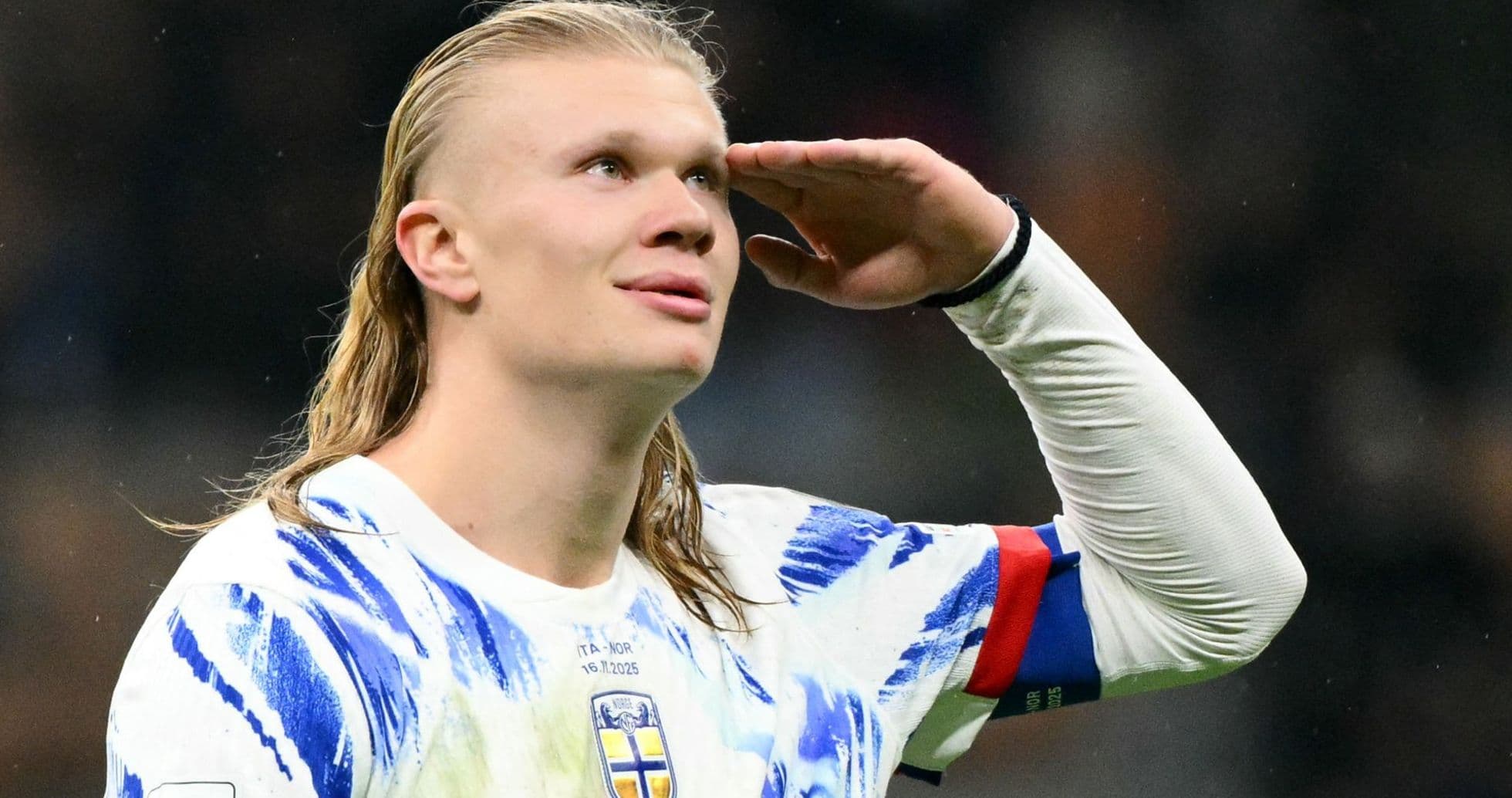
Norway have arrived. Against Brazil, they showed what it means to have the most ruthless striker on the planet. Haaland’s double dragged them into their first World Cup quarter-final and sent a shudder through the bracket.
Behind him, the foundations look solid. Goalkeeper Orjan Nyland is playing out of his skin, repelling everything in sight. Martin Odegaard dictates tempo in that unhurried, icy way of his, and this is a side that can both cherish the ball and happily trade tackles with anyone.
Now Manchester City’s Haaland and Arsenal’s Odegaard run into a cluster of familiar Premier League faces in England. It’s not just a quarter-final. It feels like a reunion with a grudge.
Belgium
FIFA ranking: 9
Written off, then reborn. Belgium trudged through flat displays against Egypt and Iran before finally bursting into colour. A 5-1 demolition of New Zealand jolted them awake at the end of the group stage, and from there they staged an improbable comeback against Senegal in the round of 32.
Those who had consigned this generation to history have been forced to look again. Victory over the United States carried them into the quarter-finals and gave this run a sense of momentum. Now comes Spain, and the question that hangs over them: is there one more upset left in these legs?
The news on Amadou Onana is a gut punch. The Aston Villa midfielder has suffered an anterior cruciate ligament injury and will miss the rest of the tournament, stripping Belgium of energy and bite in the middle just when they needed it most.
Switzerland
FIFA ranking: 15
Switzerland always seem to be there. Always in the knockouts, always awkward, always hard to kill off. But this time they went somewhere new.
Against Colombia, they finally won a World Cup penalty shootout and booked their first quarter-final since they hosted the tournament in 1954. A generational wait, ended in the most nerve-shredding way possible.
They did it without Johan Manzambi, their breakout attacker with three goals and two assists, whose injury dulled their edge. Without him, the Swiss mustered only two shots on target, yet their defensive discipline and calm under pressure carried them through. Argentina await next. Grind like this again, and they will back themselves.
Morocco
FIFA ranking: 6
Morocco could not quite scale the heights of 2022, but they carved out another slice of history. They became the first African nation to reach successive World Cup quarter-finals, a feat that underlines their new status among the elite.
Their route was not the most treacherous, but they handled it with poise. A draw with Brazil set the tone, they edged the Netherlands on penalties, then ruthlessly dumped co-hosts Canada out with a 3-0 win despite creating little and shooting just five times.
France, though, proved a step too far. Without the injured Ismael Saibari up front, Morocco lacked a cutting edge and never truly unsettled a star-studded side. The performance fell short of their own lofty standards, but given the expectations at home, this still felt like a strong, if bittersweet, campaign.
Paraguay
FIFA ranking: 34
Paraguay touched a high they will talk about for years. Beating Germany in the last 32 ranks among the greatest nights in their football history. Matching that against France was always going to be another level.
They barely laid a glove on Didier Deschamps’ side, yet they were stubborn, organised and awkward, hinting at a blueprint for others who will fancy their chances against France later on.
Given they were dismantled 4-1 by the U.S. in their opener, Paraguay’s run was far better than expected. They leave with scars, but also with pride.
Mexico
FIFA ranking: 10
Heartbreak in the Azteca. Mexico had never lost a World Cup match there, a 10-game streak that had become part of the stadium’s mythology. England shattered it.
They arrived in the last 16 without conceding a goal, only for Jude Bellingham’s quickfire double to rip through that record. Even after England went down to 10 men before the hour, Mexico could not make the advantage count. Cross after cross rained into the box, and each one died the same way.
The quality gap in the final third told. Julian Quinones, with four goals in five games, will be the enduring memory of this team. The setting, and the manner of their exit, will sting for a long time.
Colombia
FIFA ranking: 11
Colombia had the chances. They had the platform. They just did not have the finish.
Against Switzerland, they carved out the better openings in their last-16 tie but were dragged into a penalty shootout and lost it by the finest of margins. The defeat closed the door on a possible grudge quarter-final with Argentina, who had beaten them in the Copa America final two years earlier.
Their group campaign had promised much. They outplayed Portugal in a goalless draw to top Group K, then beat Ghana in the round of 32. There was a sense this team could go deeper. Instead, they leave with regret and a feeling of what might have been.
United States
FIFA ranking: 16
The U.S. ran into a wall. Belgium brushed them aside in the round of 16, extending a barren run against top European nations and underlining how far there is still to climb.
All the optimism of the group stage and the last-32 win over Bosnia and Herzegovina evaporated in one flat performance. The Folarin Balogun saga, with all its noise and controversy, hung over the squad, but how much it truly affected them will remain guesswork.
What is clear is that this was not the version of the U.S. that had raised hopes earlier in the tournament. On home soil, that cuts deep.
Egypt
FIFA ranking: 24
Egypt finally turned up at a World Cup and refused to play the underdog. Against reigning champions Argentina in the last 16, they countered with menace, took a lead and held it for most of the night before collapsing late on.
They had already ripped up their reputation as serial underachievers. A first World Cup win, against New Zealand, set the tone, followed by a first knockout triumph on penalties against Australia.
At 2-0 up on Argentina, they stood on the brink of something seismic. Game management deserted them: they could have sat deeper, killed the tempo, bled the clock. Instead, they were dragged into chaos and punished. The exit was brutal, but the impression they left was lasting.
Canada
FIFA ranking: 30
Canada’s tournament sits on a knife-edge between progress and disappointment. They earned their first World Cup point, reached the knockout phase for the first time, and still walked away wondering if this was enough.
A 3-0 defeat to Morocco in the last 16 looks harsh on paper. In reality, they squandered a string of first-half chances and paid heavily for it. Their group was forgiving, and their only wins came against Qatar and South Africa, which dulls the shine on their achievement given the years of investment poured into the national programme.
Perhaps the real victory will be measured later: if this campaign becomes the springboard that makes Canada a World Cup regular.
Cape Verde
FIFA ranking: 64
Cape Verde were one of the stories of the summer. They arrived as outsiders and left as everyone’s second team.
They opened by holding European champions Spain to a goalless draw, then somehow finished above Uruguay to reach the last 16 with three draws from three. Against Argentina, they saved their best for last, twice coming from behind to rattle the world champions.
Goalkeeper Vozinha became a breakout star, producing eight saves, including a brilliant one-on-one stop from Messi. Roberto “Pico” Lopes again marshalled the defence superbly, but the moment of the day belonged to full-back Sidny Lopes Cabral, whose outrageous curling finish from an almost impossible angle will live among the goals of the tournament. They go home, but not quietly.
Brazil
FIFA ranking: 5
Brazil are stuck in a drought that does not suit them. Five-time champions, yet by the next World Cup it will be 28 years since they last lifted the trophy — their longest barren stretch.
Even Carlo Ancelotti, the serial collector of silverware, could not steer them past the last 16. Norway, a team Brazil have still never beaten in five meetings, made them look passive and strangely blunt.
Neymar’s late cameo will be remembered for all the wrong reasons: trash-talking Nyland before a consolation penalty, clashing with Odegaard, then breaking down in tears at the whistle. Another World Cup ends with Brazil staring at the gap between their mythology and their reality.
Portugal
FIFA ranking: 7
Portugal’s star power never fully translated into dominance. Only against debutants Uzbekistan, in a 5-0 rout, did they look clearly superior.
In the round of 16, Roberto Martinez’s side drifted. They lacked urgency, failed to stamp their authority, and only snapped awake after Spain scored in stoppage time. By then, it was too late.
This was the end of Cristiano Ronaldo’s World Cup story. He scored in a record sixth edition and finally added a knockout goal, a penalty against Croatia, but from open play he was a shadow of his old self. The era closes with a whimper, not a roar.
Netherlands
FIFA ranking: 7
The Netherlands’ group stage promised much. They thrashed Sweden 5-1, with Cody Gakpo, Brian Brobbey and Crysencio Summerville combining in a fluid, dangerous front line.
Then the draw turned cruel. Morocco, another top-10 side, awaited in the last 16. Ronald Koeman switched to a back five, a cautious tweak that stifled their attacking rhythm. It almost worked — Morocco needed a late equaliser — but the cost came in the shootout, where the Dutch missed three of five penalties and went out.
The disappointment ran deep enough that Koeman resigned. For a team that had finally returned to the World Cup after long absences, this felt like a chance wasted.
Germany
FIFA ranking: 12
Germany’s tournament was a study in contradiction. They looked formidable in their first two group games, hammering Curacao and edging the Ivory Coast late on, only to lose 2-1 to Ecuador with something close to their strongest XI.
The warning signs were there, and Paraguay punished them in the last 32. Jonathan Tah thought he had rescued them in extra time, only for his goal to be ruled out for blocking the goalkeeper. Given Paraguay had been thrashed 4-1 by the U.S. earlier, Germany will know it should never have come to that.
This is another early exit in a grim sequence. After failing to escape the group in 2018 and 2022, they now bow out in the knockouts and suffer their first ever World Cup penalty shootout defeat. Julian Nagelsmann has departed, and with him goes any illusion that Germany’s problems are short term.
Japan
FIFA ranking: 17
Japan lit up the group stage with their egoless, high-tempo football. They looked so sharp that many believed they could trouble Brazil in the last 32 — and they did, taking the lead through Kaishu Sano.
Brazil matched their intensity and eventually found a way, scoring in added time to break Japanese hearts. Injuries to Kaoru Mitoma, Takefusa Kubo and Wataru Endo before and during the tournament robbed them of key pieces. You are left wondering what this side might have done at full strength.
Senegal
FIFA ranking: 18
Senegal were minutes from a famous win. They led Belgium 2-0 in the 86th minute of their round-of-32 tie, only to collapse and lose to Youri Tielemans’ extra-time penalty.
The scenes at full-time were raw. Players in tears, staff stunned, the pain sharpened by the memory of losing their AFCON crown only months earlier. Yet for most of that match they were outstanding. Ismaila Sarr’s chest control and thunderous finish was one of the goals of the tournament, and they had also pushed France hard in the group stage.
The meltdown will define their exit, but the performance showed they can still stand toe-to-toe with Europe’s best.
Ivory Coast
FIFA ranking: 31
Ivory Coast leave with credit, but also with a clear to-do list. They only lost to Germany in the group and Norway in the round of 32, and beat both Ecuador and Curacao, marking them out as one of the strongest of the chasing pack.
They brought the youngest squad in the tournament, and it showed in flashes of fearless talent. Amad shone, scoring a winner against Ecuador and a brilliant solo goal versus Norway. Yan Diomande hinted at a level that could earn him a major move this summer.
Yet none of their strikers scored. That lack of a reliable No 9 proved fatal, forcing Amad and Diomande to shoulder too much of the creative and finishing burden.
Croatia
FIFA ranking: 13
The era of Croatia as World Cup specialists may be closing. After finishing runners-up in 2018 and third in 2022, they went out in the round of 32, undone late on by Portugal.
They had already been roughed up by England in a 4-2 opening defeat but recovered to finish second in Group L with wins over Panama and Ghana. Still, they never quite looked like the hardened knockout machine of previous years.
All eyes now turn to Luka Modric. At 40, the 2018 Ballon d’Or winner may have played his last international match. There is no replacing him. Only learning how to live without him.
Sweden
FIFA ranking: 37
Sweden’s presence here felt improbable not long ago. At the end of last year they finished bottom of their qualifying group, behind Kosovo, Slovenia and Switzerland, without a win.
Under Graham Potter, the turnaround has been stark. They beat Ukraine and Poland in the play-offs, smashed Tunisia 5-1 in their opener and drew with Japan. With Alexander Isak, Viktor Gyokeres and Anthony Elanga, the raw material is there.
France ended their run in the last 32, but there was no shame in that. The task now is consistency, not survival.
Ecuador
FIFA ranking: 25
Ecuador defended stoutly but never truly found their scoring touch. Across four games they managed just two goals, both in a 2-1 win over Germany that became their high point.
They could not crack Curacao’s resistance, and in the knockouts they were outgunned by Mexico’s sharper attack. Enner Valencia, 36, never really got going, and their other key names — Moises Caicedo, William Pacho, Piero Hincapie — are all defensive pillars.
Hincapie’s dismissal in added time against Mexico, for covering his mouth during a confrontation, summed up a campaign that never quite settled.
Ghana
FIFA ranking: 65
Ghana arrived as the world’s 73rd-ranked side, the second-lowest at the tournament. That always felt wrong, and four games here proved it.
They beat Panama in their opener, then went toe-to-toe with England in a 0-0 draw and were desperately unlucky not to get a late penalty. Qualification was secured, and for a moment it looked like the start of something big.
Colombia’s quality eventually overwhelmed them in the knockouts, with the absence of the injured Mohammed Kudus leaving them short of attacking spark. Yet this felt like a foundation, not a ceiling, for a team that has lurched between extremes in recent years.
Austria
FIFA ranking: 22
Austria clung to the knockout stage by their fingernails, edging through after a dramatic final group game against Algeria. Once there, Spain exposed their limits with a comfortable round-of-32 win.
Ralf Rangnick’s side carried a threat — they scored three goals in two separate group matches — but when the opposition level rose, against Spain and Argentina, they could not match it at either end of the pitch. For a first World Cup since 1998, it was a respectable return, but not a breakout.
Australia
FIFA ranking: 28
Australia delivered one of the tournament’s first real jolts by beating Turkey 2-0. From there, they leaned into their identity: compact, resilient, waiting to spring on the counter.
The final third, though, betrayed them. They could not reproduce the ruthless edge of that Turkey win, even when they fought back to level against Egypt. The round-of-32 rematch with the same opponents went to penalties, and this time Egypt held their nerve.
Back-to-back knockout appearances underline Australia’s progress. They leave with heads high and a clear sense of who they are.
Algeria
FIFA ranking: 29
Algeria never quite caught fire. In the round of 32 against Switzerland they struggled to create clear chances and drifted out of the competition.
There were glimmers. Riyad Mahrez, at 35, finally scored his first World Cup goals, while winger Anis Hadj Moussa, 24, hinted at a bright future. But the spine of the team sits awkwardly between generations, and they lag behind African rivals such as Senegal, Ivory Coast and Morocco.
The rebuild cannot wait much longer.
DR Congo
FIFA ranking: 41
DR Congo’s second World Cup, and their first since the days of Zaire in 1974, became a breakthrough. They reached the knockouts as one of nine African teams in the last 32, drawing with Portugal and beating Uzbekistan in Group K.
Against England, they struck first through Brian Cipenga and rattled the favourites early. Goalkeeper Lionel Mpasi seemed destined to join Vozinha and Eloy Room as one of the cult heroes of this World Cup before England finally found a way past him.
Even in defeat, DR Congo left a powerful impression. They will not wait another half-century for their next appearance.
Bosnia and Herzegovina
FIFA ranking: 61
Bosnia and Herzegovina ticked off milestones. A win over Qatar and a draw with Canada carried them into their first knockout game as an independent nation.
The U.S. ended their run there, but their place in the story is secure. They will always be the team that knocked Italy out in the European play-offs to get here.
South Africa
FIFA ranking: 54
South Africa were not meant to be here, not really. After losing their opener to Mexico, even the optimists would have doubted a route out of the group. Yet they reached the knockouts for the first time in their history.
Their exit, to co-hosts Mexico in stoppage time, came with all the anguish that late goals bring. They were minutes from extra time, and perhaps penalties, where anything might have happened. Hugo Broos leaves as the oldest man to coach in a World Cup knockout game, and with a team that has finally stepped back onto the main stage.
Iran
FIFA ranking: 21
Iran left the tournament without losing a game and with a deep sense of injustice. Against Egypt, they had a stoppage-time winner ruled out for a marginal offside, then hit the crossbar even later. A single goal would have sent them through.
Instead, they had to wait on other results. When Algeria scored what looked like a last-gasp winner in their final group game, Iran were going through as one of the best third-placed teams. Austria’s equaliser in the dying moments flipped the script and knocked them out.
All this unfolded against a backdrop unlike any other: a country in military conflict with co-hosts the U.S., forced initially to fly in and out of the U.S. around matches before that decision was reversed. They handled it with resilience, but the manner of their elimination will haunt them.
New Zealand
FIFA ranking: 86
New Zealand will remember this World Cup for Elijah Just’s emergence and those vintage Chris Wood touches against Iran. Just scored three times, announcing himself on the biggest stage.
The rest was harsh. Egypt and Belgium overwhelmed them, exposing the gap in quality. Yet for a first World Cup since 2010, they made their mark, not least through full-back Tim Payne, who became a viral cult figure.
The target remains unchanged: reach the knockouts for the first time.
Turkey
FIFA ranking: 27
Turkey might be the tournament’s biggest disappointment relative to expectation. Many had them pencilled in ahead of Australia and Paraguay. Instead, they were out with a game to spare.
They at least salvaged a little pride in their final match, scoring their first goals and beating the U.S. 3-2. It was too late. The sense of an opportunity squandered will linger.
Uruguay
FIFA ranking: 19
Uruguay boxed themselves into a corner. Two points from games against Saudi Arabia and Cape Verde left them needing a result against Spain. It never looked likely.
They clearly have quality — they finished qualifying level on points with Brazil and Colombia — but they never showed it here. A goalkeeping howler and a red card capped a self-inflicted implosion in a tournament that promised far more than it delivered.
Saudi Arabia
FIFA ranking: 58
Saudi Arabia regressed. After winning group games in both 2018 and 2022, they failed to reach the knockouts and still have only one such appearance, in 1994.
They were, at least, hard to beat this time, grinding out two draws. With the rapid growth of their domestic league and the 2034 World Cup on home soil, this may yet be remembered as a staging post rather than a step back.
South Korea
FIFA ranking: 32
South Korea started with a 2-1 win over the Czech Republic and then simply faded away. Back-to-back defeats to Mexico and South Africa, without scoring, left them on three points and minus one goal difference — not enough to sneak through as a best third-placed side.
It marks a step back from 2022, when they advanced ahead of Uruguay and Ghana. Captain Son Heung-min struggled to impose himself and was dropped from the starting XI for the final game. A reset is coming.
Scotland
FIFA ranking: 42
Scotland’s fate was sealed not on the pitch but by results elsewhere. When elimination was confirmed, Steve Clarke resigned after seven years in charge.
They beat Haiti, but a 3-0 defeat to Brazil left them with a minus-three goal difference and just three points, not enough to progress as one of the best third-placed teams. After a 28-year wait to return to the World Cup, going out at the first hurdle hurts. The question now is whether this was a one-off return or the start of a new era.
Curacao
FIFA ranking: 82
Curacao, the smallest nation ever to grace a World Cup, leave with more than memories. They earned a point against Ecuador thanks to the heroics of goalkeeper Eloy Room and celebrated their first World Cup goal, scored by Livano Comenencia.
The 7-1 hammering by Germany in their opener could have broken them. Instead, they recovered to compete credibly in their remaining games. For a debut at this level, that resilience matters.
Czech Republic
FIFA ranking: 48
The Czech Republic fought their way here through bruising play-off wins over the Republic of Ireland and Denmark. Once at the finals, they never hit that level again.
They needed a win against Mexico in their final group game and were blown away 3-0. A solitary point against South Africa left them bottom of Group A. The underdog spirit of qualifying never truly reappeared.
Uzbekistan
FIFA ranking: 60
Uzbekistan’s debut ended without a point, but not without moments. They pushed Colombia and even led DR Congo before being overrun.
They also shared a pitch with Cristiano Ronaldo in what is surely his last World Cup, watching him score in a sixth edition as Portugal hit them for five. Even with Fabio Cannavaro in the dugout, they conceded 11 goals in three games. Organisation and defensive steel will be the focus if they are to return.
Panama
FIFA ranking: 44
Panama were already out when they faced England, and a 2-0 defeat meant they left as the only team not to score at this World Cup.
There were positives. They were stubborn, losing by just a single goal to both Ghana and Croatia — a clear improvement on 2018, when they shipped 11. If they can add even a modest attacking threat to that defensive base, they will be back.
Jordan
FIFA ranking: 73
Jordan’s first World Cup ended early, with elimination confirmed after defeats to Austria and Algeria. They did at least find the net in every game, including against Argentina, but they lacked the defensive steel that other debutants discovered.
The challenge now is to bottle the experience and build a side that can frustrate as well as entertain.
Haiti
FIFA ranking: 88
Haiti played with a freedom that belied their situation. Already out before facing Morocco, they still threw punches and scored twice in a 4-2 defeat, including a standout strike from Sunderland’s Wilson Isidor.
This was their first World Cup since 1974, and the draw did them no favours, pitting them against two top-10 nations in Morocco and Brazil. They will hope for kinder luck next time — and another chance to show this was more than a one-off.
Qatar
FIFA ranking: 59
Qatar’s campaign unravelled quickly. After an encouraging opening draw with Switzerland, they imploded against Canada, losing 6-0 and finishing with nine men. The 3-1 defeat to Bosnia and Herzegovina sealed their fate.
Julen Lopetegui could not prevent them from sliding towards one of the poorest group-stage performances of the tournament. The hosts in 2022 now find themselves searching for a new identity.
Iraq
FIFA ranking: 63
Iraq ran into a brutal reality: Haaland and Mbappe in the same group. They never got close to their opponents’ level.
The highlight came when captain Aymen Hussein scored against Norway, days after being held for several hours by U.S. immigration officials on arrival. Any hope of a late charge disappeared when they conceded inside four minutes to Senegal and then saw red soon after. A 5-0 defeat closed their first World Cup since 1986.
Tunisia
FIFA ranking: 57
Tunisia endured a nightmare. A 5-1 opening defeat to Sweden cost Sabri Lamouchi his job, and Herve Renard could not stem the tide, suffering further heavy losses to Japan and the Netherlands.
They finished with a minus-10 goal difference, better only than Iraq. For a country used to being awkward and hard to beat, this was a humbling experience that demands answers before the next cycle begins.