England's Midfield Debate: Rice or Anderson?
England’s midfield argument has rumbled on all week. Declan Rice and Elliot Anderson: one or the other, or can Gareth Southgate really afford to start both?
The call from the bolder corners of the fanbase is clear – less caution, more incision. Two No10s, not two No6s. More risk in the final third, fewer safety-first passes in the middle of the pitch.
Yet strip away the noise and you’re left with a simple truth: Rice and Anderson are two of the Premier League’s most complete central midfielders. Different tools, same high level. Anderson brings disguise and variety in his passing. Rice covers grass like a centre-half in a sprinter’s body, eating up space and plugging gaps others don’t even see.
At club level, both are used to starting the play, not finishing it. They sit, they screen, they build. They are the launchpad, not the man on the end of the move. For England, that double lock in front of the back four offers obvious insurance. It frees the full-backs to surge high, to pin the opposition back, to give width and crossing angles that stretch a low block.
That structure makes sense. Until it doesn’t.
If, by the hour mark, England are again shuffling the ball in front of a packed defence with little penetration, the equation has to change. That’s the moment for positive substitutions, not another ten minutes of sterile dominance. Managers live and die by those calls. Get them right and you’re hailed as a genius. Get them wrong and a game you were controlling can flip in an instant, especially when you’ve committed bodies forward and left space behind.
And this is not a night to be loose in transition. DR Congo carry far more threat on the break than Panama. They’ve earned their place on this stage and they have the weapons to punish England if the shape unravels.
What England cannot do is play with the handbrake on. The passes between the lines, the brave balls into tight areas – those have to be played, even if some go astray. Attacking against a low block is an exercise in persistence. You probe, you fail, you go again. You keep knocking until something gives.
This will almost certainly be another game where England see most of the ball. That demands variety. Not just intricate moves around the box but shots from distance, efforts that force blocks, spills, deflections. A goal from 20, 25 yards would change the entire mood and drag Congo’s defenders out of their comfort zone.
The approach has to be different to long spells against Ghana and Panama. Not just tactically, but mentally. This is knockout football. Lose and you’re on the next plane home.
Pulling on an England shirt always brings weight. In a World Cup knockout, in a tie that “on paper” you’re supposed to win, that weight doubles. The scars of Iceland in 2016 still sit close to the surface for anyone who lived it. That was another game England were “meant” to win. They didn’t. Complacency and lapses of concentration at this level are punished without mercy.
So the mindset has to be ruthless. Full focus, no assumptions.
DR Congo arrive with more than just underdog spirit. Their AFCON run underlined that. There is genuine quality in this squad, including a core with Premier League experience. Yoane Wissa stands out in the forward line – a relentless worker who never lets centre-backs rest, always darting, always probing. He may not have exploded at Newcastle yet in the way he would have wanted, but this World Cup has lit a spark. Congo lean on him heavily in the final third.
Behind him, Axel Tuanzebe has quietly become a central pillar. Those who watched him closely at Burnley know the level. His recovery pace bails out danger, allowing the team to squeeze higher and defend on the front foot. He’s deceptive – he doesn’t always look electric over the first stride, but he eats up ground, strong in the duel and calm when the space opens up.
Tuanzebe’s journey has not been smooth. Injuries have stalled momentum, forced him into the gym, into rehab, into lonely work away from the lights. The way he’s handled that – the professionalism, the preparation, the leadership once he steps onto the pitch – says as much about him as any tackle or interception. He organises, he talks, he drags the line with him. That presence at the back will be vital against England’s movement.
You don’t come through Manchester United’s academy, break into the first team and survive at that level if you’re anything less than top class. Tuanzebe did that, climbed to the peak of one of the hardest ladders in the game. He listens, he learns, he adapts. He can slot in at centre-back or right-back with equal comfort, which gives Congo options.
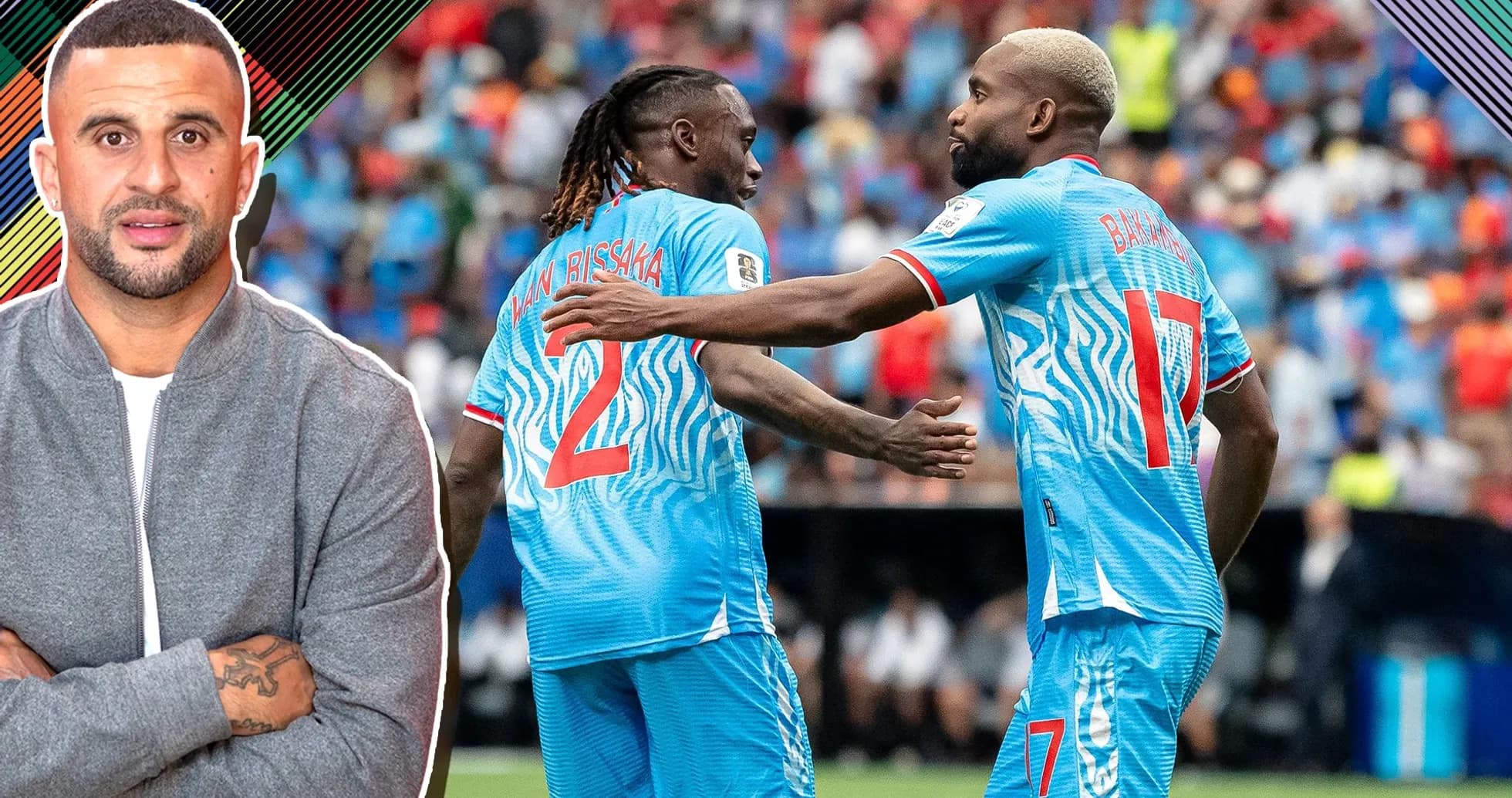
But on that right side there is another formidable figure: Aaron Wan-Bissaka. For years in English dressing rooms he’s been known as “Go-Go Gadget” – you think you’ve skipped past him, then one of those telescopic legs appears from nowhere, nicking the ball away with immaculate timing. One-v-one, he is as tough as they come. He takes pride in it, just as the best defenders do, relishing the chance to shut down elite attackers.
If Marcus Rashford starts, he’ll know exactly what’s coming. Countless training-ground duels at Manchester United have written that script: Rashford’s pace and trickery against Wan-Bissaka’s telescopic tackles. On this stage, that battle could be decisive down England’s left.
So the scene is set. England, with their superior depth and expectation, against a DR Congo side laced with Premier League steel and belief. It should be an England win. It rarely is that simple.