England vs Mexico: World Cup Showdown at Azteca
England walk into the Estadio Azteca tonight with the noise already ringing in their ears.
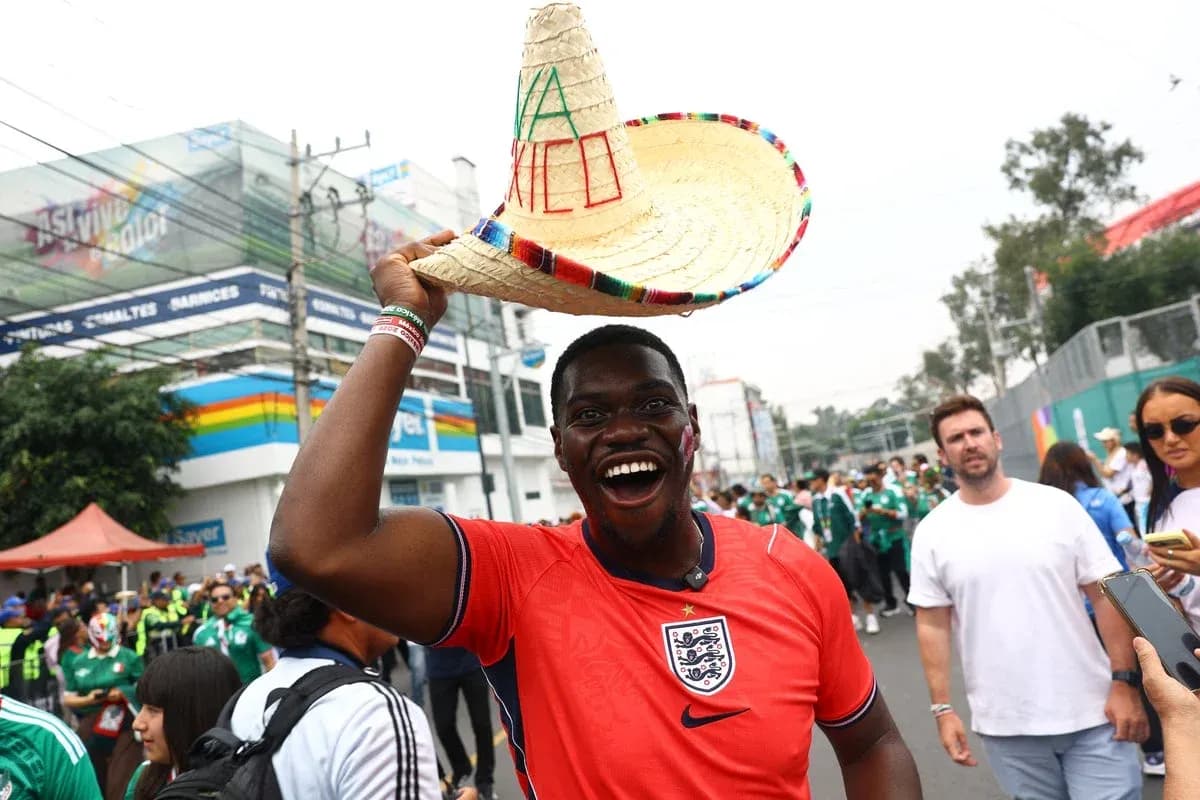
Mexico, co-hosts and true believers in their own World Cup destiny, have turned this last‑16 tie into a national event. Horns, fireworks, motorbikes, riot police – the build-up has felt closer to a political rally than a football match. England, led by Thomas Tuchel, are walking a tightrope between opportunity and ordeal.
A city on edge, a stadium on a pedestal
Mexico City has been simmering all week. The Azteca – 7,220ft above sea level and forever haunted by Diego Maradona’s double act in 1986 – will not just host a football match. It will test lungs, legs and nerve.
Tuchel’s players have been granted extra security at their hotel after ugly scenes earlier in the tournament, when fans used loudspeakers, horns and motorbikes to torment the Ecuador squad through the night. This time, the Mexican National Guard greeted England on arrival.
The welcome, Tuchel insisted, has been “respectful and emotional”. The authorities are taking no chances. More than 100 riot police in bullet-proof vests are guarding the team base after England’s arrival drew boos and jeers from local crowds. The UK’s top football police chief has warned travelling supporters they will be “massively outnumbered” and urged them to be sensible in a city already on a knife edge following a fatal crush after Mexico’s win over Ecuador.
Inside the stadium, the imbalance will be even more stark. This is El Tri’s house. England are walking into it at midnight, local time, with the volume turned up.
Kick-off chaos and a question of integrity
As if the altitude and atmosphere were not enough, England’s preparation has been jolted by Fifa’s handling of the kick-off time. World football’s governing body considered dragging the match forward by six hours because of the threat of storms, only to reverse course and stick with the original slot.
Gary Neville, speaking on ITV, did not bother to sugar-coat his view.
“I would find it disruptive as a player,” he said. “Conditions are huge for England, playing at 12pm in Mexico vs playing at 6pm, it's very different, for our players, it's worse, let's be clear.
“It's a sporting disadvantage to England, there's a sporting integrity issue here. I've never seen a League Two game moved back, Fifa are just willy nilly making it up and moving a game, it feels strange.”
Neville pointed out that the Azteca has long-established procedures for dealing with storms and lightning delays. Matches pause, players go below, the game resumes. To toy with the schedule two days out, he argued, made no sense.
That sense of blurred lines around sporting fairness has hung over the wider tournament, too. In Seattle, the United States have seen Folarin Balogun’s one‑match ban for a red card against Bosnia and Herzegovina “suspended” by Fifa, a decision that stunned Belgium before their own last‑16 tie. It has given Mauricio Pochettino his main striker back and raised fresh questions about who, exactly, Fifa listens to when the stakes rise.
Tonight in Mexico City, England are left dealing with the practical fallout.
Azteca altitude: the invisible opponent
The most dangerous opponent for England might not be wearing green.
Mexico City’s thin air changes everything. At 2,240m above sea level, the Azteca forces players to fight for breath, to adjust their running, to think about every sprint. The science is clear: with less oxygen available, physical performance drops. The reality is simpler: it “catches you off guard”.
England have tried to prepare. They have managed workloads, tweaked training, leaned on sports science. But there is no true rehearsal for a competitive knockout tie at this altitude, in this cauldron, against a team raised on it.
Mexico have already shown how powerful that cocktail can be. Against Ecuador in the last 32, a weather delay only cranked up the tension. When play resumed, Julian Quinonez and Raul Jimenez struck with the kind of ferocity that suggested they were playing the final, not just another step along the way. Ecuador never recovered.
England know that if they misjudge their energy, Mexico will pounce late. The clock, the air and the crowd will all be against them.
Tuchel’s puzzle at right-back
As the tactical boards come out and the noise builds, Tuchel still has a very specific problem: right-back.
Declan Rice’s return to full fitness offers a major boost in midfield, but the defensive picture on England’s right flank is far from ideal. Jarell Quansah is poised to start there, according to widespread reports, a significant call in such a volatile environment.
“That means he didn't want to bring Stones at centre-back,” Neville noted. “It's a big game for him, he's got to do the job, it's not ideal.”
Quansah, a centre-back by trade, now faces the task of patrolling the channel against a Mexico side that love to overload wide areas and whip the ball into the box. With Djed Spence a doubt due to a muscle problem and Reece James only edging towards the matchday squad, Tuchel’s options have narrowed at exactly the wrong time.
It has sparked talk of a shift in shape. A back three, with wing-backs offering protection and outlets, would not be out of character for Tuchel. The question is whether he trusts his squad to absorb that change on the eve of a knockout tie at altitude, or whether he backs Quansah to cope in a more conventional back four.
One decision, one flank, and potentially the entire rhythm of England’s night.
Mexico’s moment – and a nation’s push
While England calculate and recalibrate, Mexico are riding a wave.
Cycling star Tadej Pogacar offered a snapshot of the mood on Sunday’s second stage of the Tour de France, gifting victory to his Mexican teammate Isaac Del Toro. The young rider crossed the line in tears, overwhelmed by what it meant.
“I’m super proud to have the level to manage these kind of situations,” Del Toro said. “I cannot believe I just did this, just full emotions. You cannot believe how it feels for me, especially for my country.”
His thoughts quickly turned to the Azteca and El Tri.
“Of course we have these 11 guys ripping it up in the soccer,” he added. “They’re doing amazing.”
That is the backdrop for England: a country in full voice, their co-hosts advancing, their athletes feeding off each other’s success. Every Mexican fan descending on the Azteca tonight will arrive believing this is their time, their stadium, their tournament.
Three hours to decide a direction
As the clock ticked past the three-hour mark to kick-off, attention turned to predictions. In the UK, fans prepared for a sleepless night. In Mexico City, they poured towards the Azteca.
England have already navigated noise, logistics and off-field distractions at this World Cup. Now comes the purest test so far: 90 minutes, maybe more, at altitude, in a stadium built on legend and controversy.
Tuchel has his team. Rice is ready. Quansah stands on the brink of the biggest game of his career, in a position that still feels like a compromise. Neville has called it “not ideal”. Fifa’s handling of the schedule has hardly helped.
None of that will matter when the whistle goes and the roar hits.
In a World Cup already wrestling with questions of fairness and authority, England’s night at the Azteca strips everything back to something simple: can this team keep its head, and its breath, when the air gets thin and the pressure finally bites?