England’s Argentina Collapse: The Cruelty of Hope and Fear
The line has been doing the rounds for years, passed from dressing room to pub table to social media meme: “It’s the hope that kills you.”
Rebecca Solnit would disagree. In Hope in the Dark, she leans on Maria Popova’s neat equation: “Critical thinking without hope is cynicism, but hope without critical thinking is naivety.” Hope, in that world, is a tool. A catalyst. Something that pushes societies forward.
Football has never been that noble.
Ask Graham Burrell, who typed those same words – “It is the hope that kills you” – after Lincoln City’s 2-1 home defeat to Wigan in 2024, convinced their playoff push had finally died at Sincil Bank. Or ask anyone who watched England fold against Argentina on Wednesday and tried, in the rubble, to work out where exactly that ranks on the private scale of sporting suffering.
Somewhere between philosophical treatise and pub wisdom sits this England team. And its fans.
“It’s not the hope…”
Nobody really knows who first coined the phrase. Shakespeare? Peter Ustinov? Some bloke in the back bar of a fourth-division ground? It has been reworked often enough.
Ted Lasso spins it on its head: “I think it’s the lack of hope that comes and gets you. See, I believe in hope. I believe in belief.” Jackson Lamb in Slow Horses takes it darker: “It’s not the hope that kills you. It’s knowing it’s the hope that kills you – that kills you.”
On Wednesday night, you could have made a case for either of them in the England dugout. Lasso, refusing to sink into a back six, demanding his side stay on the front foot. Lamb, calling them idiots, telling them to get on with it, kicking backsides rather than patting shoulders.
Arm round the shoulder or boot up the backside. England sampled the full emotional spectrum without either of them.
Because what every England supporter understands, deep down, is that hope is the most paralysing emotion of all. Fear comes first. Always.
- Fear in the buildup.
- Fear in that absurd 10‑second countdown.
- Fear as the ball rolls back to Jordan Pickford and the entire country’s pulse rate doubles.
Hope doesn’t really exist at kick-off. It sits behind the curtain, waiting.
As the game settles, the heart doesn’t. It drops into a kind of base-level anxiety, spiking into fury every time Giuliano Simeone hacks, harries and snarls his way through another challenge. Where’s the yellow? Are the conspiracists right?
He then somehow contrives not to kick Marc Guéhi, instead launching himself head-first like a shark biting at air. By that point, even Argentina’s clean tackles feel malevolent. England’s fouls feel righteous. Another pint of myopia, please.
When the goal changes everything
Half-time is where the pessimism first seeps in. The longer this stays tight, the more you remember that Argentina do this for a living. They manage jeopardy. They bend time.
So you mutter useless phrases like “muscle memory” and more accurate ones like “wily bastards” and try not to picture the inevitable.
Then comes the goal.
The cross is perfect. The finish is perfect. The release is total. Joy, relief, possibility – all detonating at once. It’s the first real surge of hope, the first time the mind jumps ahead to the calculation: “Well, at least they need two now.” Every England fan knows that mental arithmetic. It’s a reflex, built on scars.
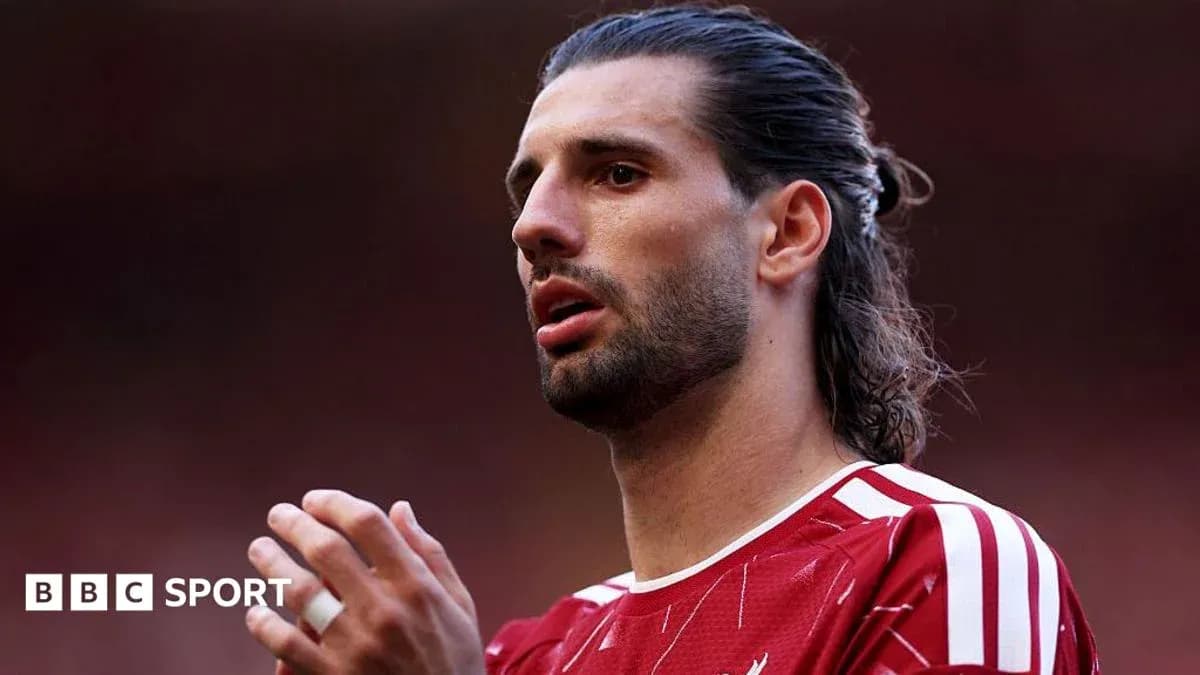
There is one other moment of pure ecstasy: Djed Spence’s tackle.
Up to then he has floated through the game, unruffled, almost detached, as if his plan is to be quietly excellent and then go home to the washing-up. Then he flies in, perfectly, and celebrates like Giorgio Chiellini and Leonardo Bonucci rolled into one.
“Yes, Djed!”
It feels like the greatest England tackle since Eric Dier on Sergio Ramos, only more important, more loaded. In another universe, that’s the clip that leads every montage, the freeze-frame that ends up in bronze.
The retreat
Somewhere in the noise, people start talking about England dropping too deep. Maybe it’s Thomas Tuchel. Maybe it’s the players. Maybe it’s just the country’s default setting when a lead appears on a big stage.
The tactical autopsy can wait. Everyone has seen enough stills of back lines on their own six-yard box to last a lifetime.
This is about the small window when hope felt real.
Those few minutes when thoughts drifted to a World Cup final. When the best part of a tournament – simply still being in it – briefly looked safe. That’s the real drug: watching other matches knowing your team still has a stake in the story. The games themselves are the ordeal you must endure to earn that feeling.
The retreat starts even before the hydration break. You see the line edging back, the gaps widening. Some of us say, out loud or under our breath: “Too soon to defend this.”
At the Azteca in 1986, with 10 men, it made sense. Here, even if England see it out, what then? Ninety minutes of torture, maybe more. But the clock keeps moving, and with every missed chance, every save, hope creeps in anyway.
In the 82nd minute, Nico O’Reilly blocks a pass, chases it, blocks again. England are in Argentina’s half. It feels like trespassing.
“That’s saved eight seconds,” comes the shout to John Brewin.
A minute later, Lionel Messi floats a cross harmlessly out of play for a goal-kick. That’s the moment it shifts. Maybe. Just maybe.
Thoughts jump ahead again. England in a World Cup final. A few delirious days in New York. Preview podcasts and radio shows writing themselves. A column about hope – but the other kind, the fulfilled kind. What a luxury that would be.
Two minutes and 55 seconds
Goal-kick to England.
Scoring is hard, even with Messi. John Stones is juggling the ball, ticking down the clock. Pickford launches long. O’Reilly gets there. Throw-in to Argentina, deep in their own half.
“Eighty-four minutes on the clock now,” says Guy Mowbray.
“I keep looking at that clock and thinking it’s going ever so slow,” replies Alan Shearer.
84:24. Enzo Fernández lets fly from distance. Pickford tips it over. It’s drifting high anyway, but no matter. Reset. Keep your shape.
84:55. Fernández again. Too much time on the edge of the box. Too much space. He shoots. He scores.
Everyone knows, instantly, that it’s done.
Two minutes and 55 seconds. That’s how long the hope was pure, uncut, utterly convincing.
It didn’t kill anyone. It electrified them. It terrified them. It reminded them they were alive.
There is a lingering question for England’s followers: will they ever be ready, truly ready, to see the men’s team actually win something? Maybe that test never comes. Maybe it does, and the country fails it in its own unique, chaotic way.
For now, hope itself is enough. Just a sliver of it. A morsel.
If it can fuel social movements, if it can nudge the world on its axis, then it can also carry one small, stubborn image: Adam Wharton, somewhere in 2028, lifting the European Championship trophy.
Even if it only lives for another fleeting 2 minutes and 55 seconds.