Emiliano Martínez's Journey to European Glory with Aston Villa
Twelve months ago, Emiliano Martínez stood on the Villa Park pitch in tears, waving to the supporters as if it were the end. It looked like a farewell. It felt like one too.
Now he stands on the brink of history.
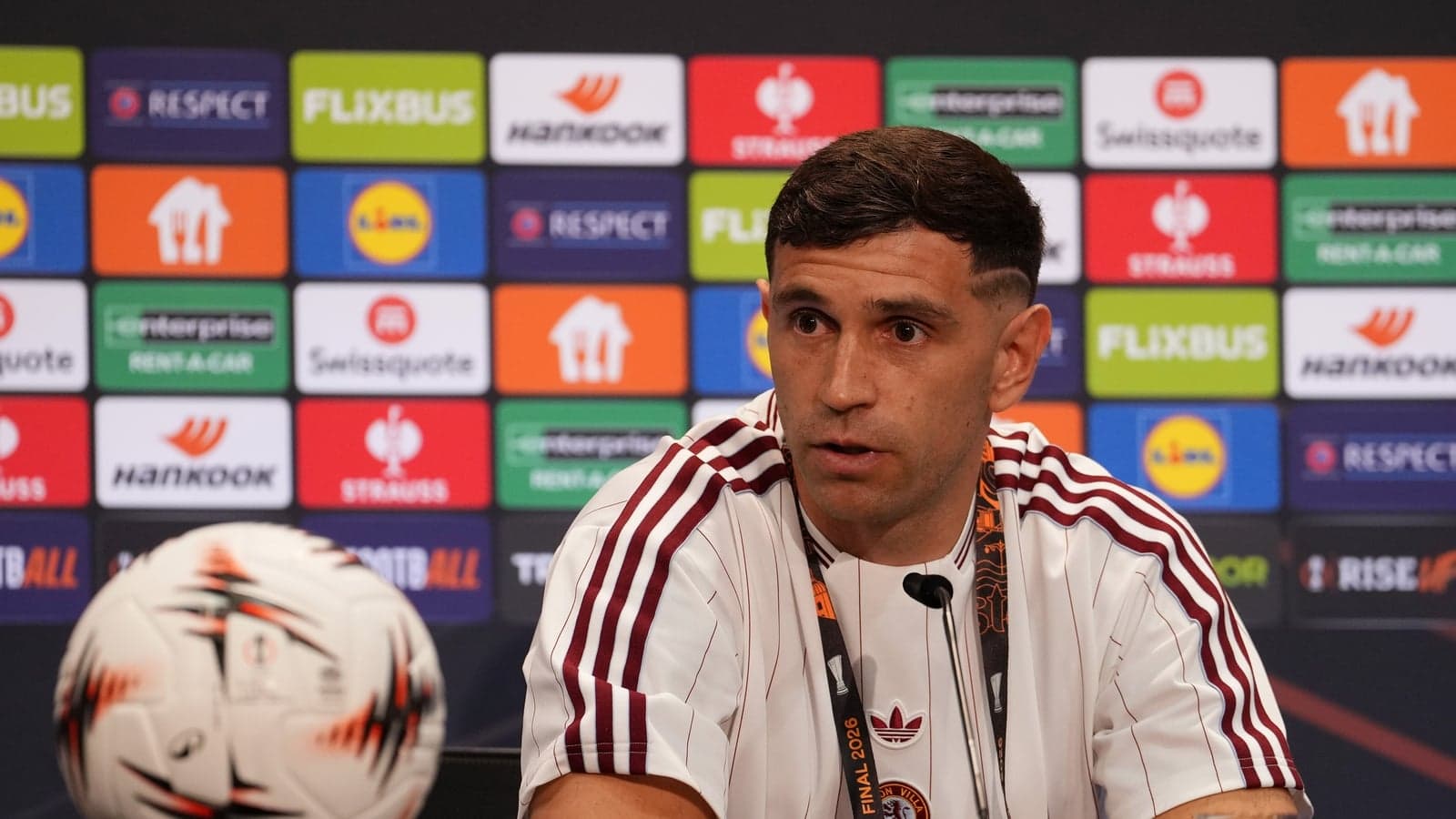
On Wednesday in Istanbul, the 33-year-old World Cup winner will walk out for Aston Villa against Freiburg with a chance to become a European champion and help deliver the club’s first major trophy in three decades. The man who thought his story in claret and blue might be over now calls staying put the best decision he could have made.
From almost gone to all-in
Martínez arrived at Villa in September 2020. He came as a goalkeeper looking for a permanent home after years of loans and uncertainty. He has become something far bigger: a symbol of Villa’s resurgence, a World Cup winner in their colours, a double Golden Glove holder and the emotional anchor of Unai Emery’s side.
Last season’s final-day win over Tottenham appeared to be his curtain call. The wave, the emotion, the visible struggle to hold back tears – all the signs of a player preparing to move on. Interest in him was real, the exit door seemingly half open.
He stayed.
Now, on the eve of the Europa League final, his bond with the club sounds stronger than ever. He speaks about leaving his family in Argentina for England, about the pain of that first separation, and how Villa have become an extension of that family. Managers may come and go, he says, but his respect and affection for the club have not shifted. He talks about commitment, about what it means to win the World Cup and Golden Gloves as an Aston Villa player, and about a love for the badge that will outlast his time between the posts.
One day, someone else will stand in his place. For now, the spot is his, and he intends to make it count.
Emery, belief and a united dressing room
If Martínez is the heartbeat, Unai Emery is the conductor. The goalkeeper is unequivocal about the man on the touchline. Villa, he insists, do not want anyone else leading them. Emery has taken them from a side flirting with the wrong end of the table to a team 90 minutes away from European glory.
Inside the dressing room, that clarity of leadership has bred belief. Martínez talks about togetherness, about a group that, when it sticks and fights as one, feels it can beat anybody. That isn’t empty rhetoric; it’s a reflection of a season in which Villa have gone toe-to-toe with some of Europe’s best and refused to blink.
He is “really proud” he stayed. Nights like Istanbul are the reason.
The penalty king who’d rather not need them
Of course, when Martínez is involved, one subject always lurks in the background: penalties.
He doesn’t hide from it. He leans into it. Shoot-outs live rent-free in his mind, he admits, but in a good way. For him they are almost a separate sport, a different kind of contest that he relishes and prepares for obsessively. Few goalkeepers in world football project such confidence from 12 yards.
Yet he would rather this final did not come to that.
His hope is simple: John McGinn, “Ginny” to his teammates, scores twice, Villa finish the job inside 90 minutes and the drama of spot-kicks stays in the notebook, not on the pitch. If it does go the distance, though, Martínez backs himself “every day of the week” in a shoot-out. That assurance, that edge, is part of what makes him such a formidable figure in these moments.
McGinn’s proudest walk
If Martínez embodies Villa’s recent rise, John McGinn represents the full arc of the journey.
Signed in 2018, the midfielder has lived almost every version of Aston Villa: the scrap to get out of the Championship, the fear of falling back into it, the grind of consolidation, and now the leap onto one of European football’s grandest stages. He has scored 10 goals across all competitions this season, driving the team with his blend of industry and invention.
On Wednesday, he will lead them out as captain in a European final. For a player who has ridden every bump in the club’s modern history, it is hard to imagine a more fitting reward.
Asked if this will be the proudest moment of his career, he doesn’t hesitate for long. Yes, he says. This is it. The journey has been “full of ups and downs, close moments, very close to going back to the Championship,” but that is precisely what makes this night so significant. It fills him with pride – not just for where Villa are now, but for where they might go next.
McGinn is clear: this is not a sightseeing trip, not a one-off to be dined out on for years. Villa are not in Istanbul for the fanfare. They are there to win a football match. They know how hard it is to reach a final; they have no intention of treating it as a souvenir.
For McGinn, lifting a European trophy as Aston Villa captain would not just be the proudest moment of his time at the club. It would redefine what this era of Villa stands for.
Thirty years of waiting, one night to change everything
Aston Villa’s last major trophy came 30 years ago. Generations of supporters have grown up on memories and stories rather than new silverware. Now they have a team that has dragged the club back to the sharp end of the European game, led by a manager with a deep history in this competition and powered by a core that has lived the hard years as well as the good.
Martínez, once on the verge of goodbye, now stands one match away from becoming a European champion in claret and blue. McGinn, the captain who helped haul Villa out of the Championship, prepares for the proudest walk of his career.
Istanbul will decide how this chapter is written. For Villa, it is not just a final. It is a chance to turn three decades of waiting into a single, defining night.